Anti-aging · Study
Semaglutide Extended Lifespan in Older Mice. What Does It Mean for Human Aging?
Lifespan, 4 September 2026 · 15/09/2026 · added by men35 desk
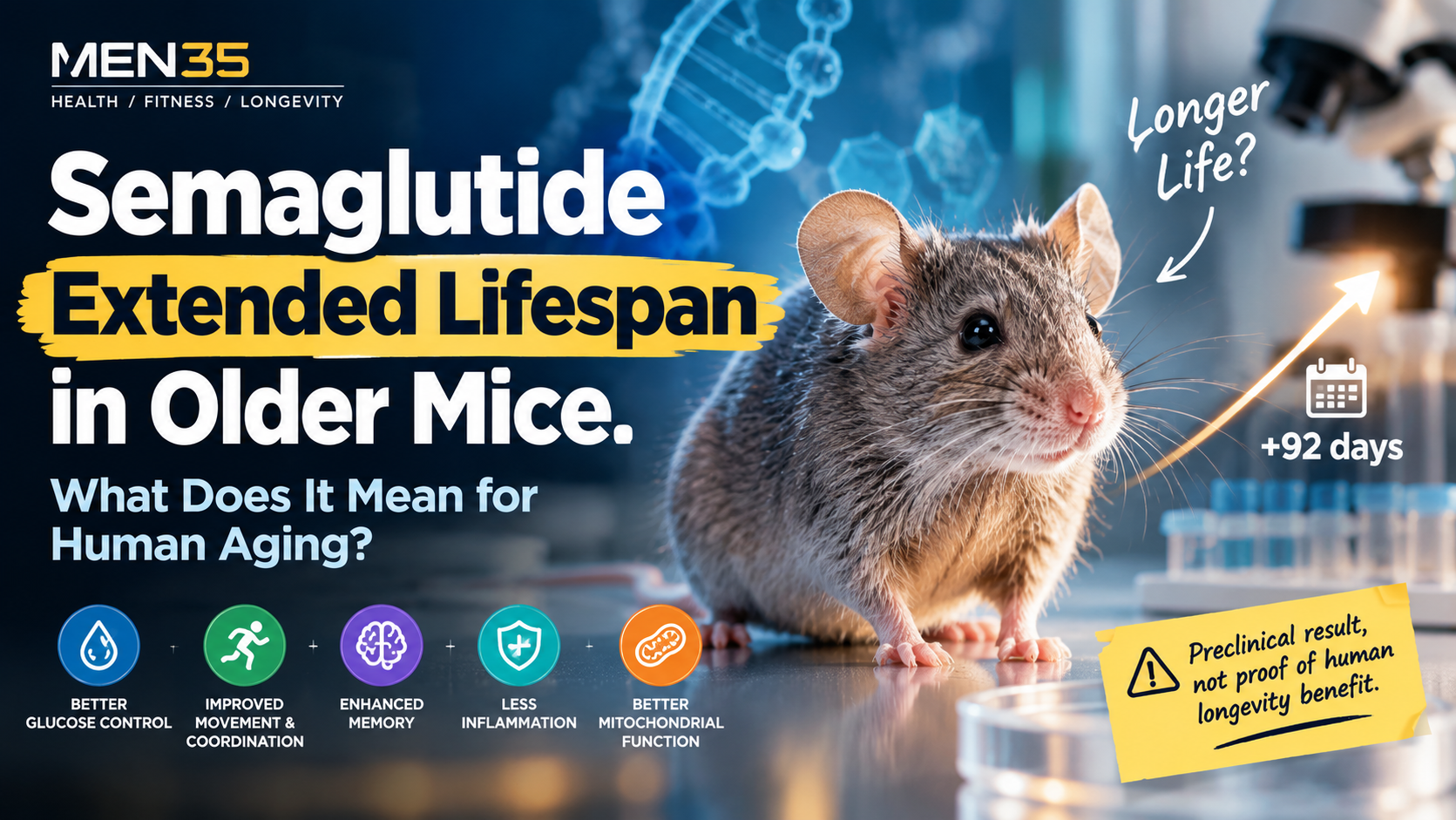
A new study published in Nature is adding an intriguing chapter to the science of longevity. Researchers found that semaglutide, a GLP-1 receptor agonist used in medications for conditions such as type 2 diabetes and obesity, extended the median lifespan of already-aged female mice. Treatment began when the mice were 20 months old. The median lifespan was 834 days in the semaglutide group, compared with 742 days in the control group—a difference of 92 days, or approximately 12% relative to the control median. The researchers also observed improvements in several measures of physiological and cognitive function, alongside changes in biological markers associated with aging. These included glucose regulation, movement, coordination, memory-related performance, inflammation, cellular senescence, and mitochondrial function. The finding is significant because the intervention began late in life. It suggests that some aging-related changes may remain responsive to intervention even after substantial aging has occurred. But the scientific boundary is essential: this was a study in female mice, not a human anti-aging trial. The results do not establish that semaglutide extends human lifespan, reverses aging, or should be prescribed to healthy people for longevity. Long-term human studies are still needed. Benefits / Key Takeaways Late-life intervention changed the trajectory in mice: Semaglutide treatment beginning at 20 months was associated with longer median survival. Median lifespan increased: Treated mice reached 834 days versus 742 days for controls. Glucose control improved: The study reported better glucose-tolerance outcomes in treated animals. Physical function showed improvements: Researchers observed benefits in measures involving movement, coordination, and exercise-related performance. Cognitive measures were affected: The study reported improvements in selected memory and exploratory-behavior tests. Aging-related markers changed: Treatment was associated with reduced markers involving inflammation, cellular senescence, and mitochondrial dysfunction. The human question remains open: These are promising preclinical findings, not proof of a human longevity benefit.
For informational purposes only. This is not medical advice — consult a doctor before changing medication, supplements or training.