Longevity · Study
The 72% Oxidative-Stress Finding: What GlyNAC Really Changed
Journal of Gerontology: Medical Sciences — Randomized Clinical Trial · 05/10/2026 · added by men35 desk
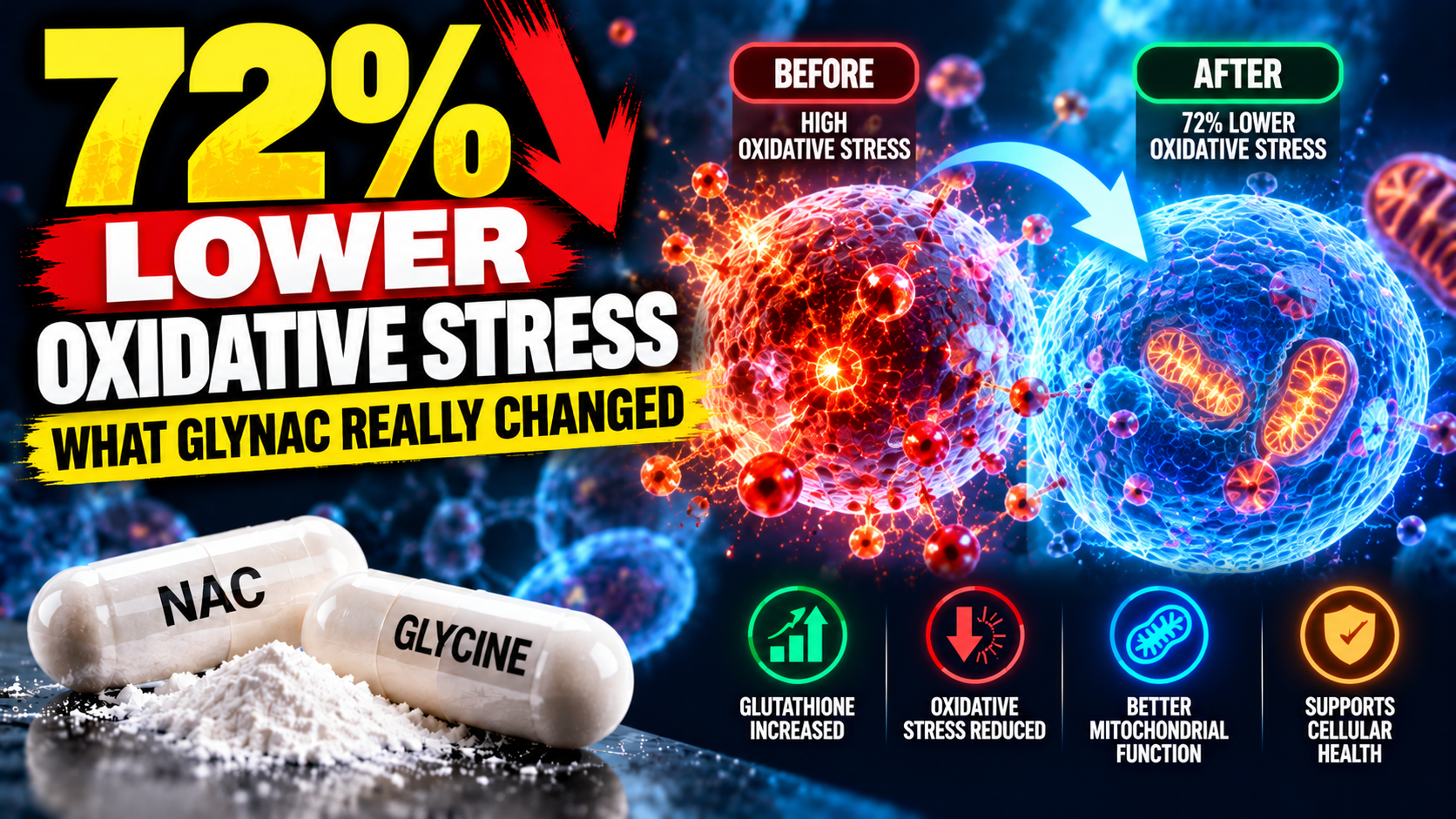
One of the most striking numbers in the GlyNAC discussion is a reported 72% reduction in two oxidative-stress markers after supplementation. Here's what that number actually represents—and why it should not be confused with a 72% reduction in aging.
𝗞𝗘𝗬 𝗕𝗘𝗡𝗘𝗙𝗜𝗧𝗦
• Explains the 72% figure • Identifies the markers that were measured • Separates oxidative stress from biological aging • Shows the limitations of a small clinical trial
𝗪𝗛𝗔𝗧 𝗧𝗛𝗘 𝟳𝟮% 𝗠𝗘𝗔𝗡𝗦
In the 16-week randomized clinical trial, GlyNAC supplementation produced large reductions in measured oxidative-stress markers, including TBARS and F2-isoprostanes. The widely quoted 72% figure refers to these measured markers—not to aging itself.
That distinction is critical.
𝗪𝗛𝗔𝗧 𝗜𝗦 𝗢𝗫𝗜𝗗𝗔𝗧𝗜𝗩𝗘 𝗦𝗧𝗥𝗘𝗦𝗦
Oxidative stress describes an imbalance involving reactive oxygen species and the body's antioxidant defenses.
It is relevant to many biological processes, but it is not a single disease and there is no single “aging percentage” that can be reduced.
𝗧𝗛𝗘 𝗦𝗧𝗨𝗗𝗬'𝗦 𝗟𝗜𝗠𝗜𝗧𝗦
Only 24 older adults entered the randomized comparison: 12 GlyNAC and 12 placebo.
That makes the magnitude interesting, but it also means the finding needs replication in larger populations.
𝗪𝗛𝗔𝗧 𝗧𝗛𝗘 𝗥𝗘𝗦𝗘𝗔𝗥𝗖𝗛 𝗗𝗢𝗘𝗦 𝗡𝗢𝗧 𝗦𝗔𝗬
It does not show that GlyNAC:
• reduces human aging by 72% • extends lifespan by 72% • prevents cancer or heart disease • makes someone biologically 72% younger
𝗠𝗘𝗡𝟯𝟱 𝗧𝗔𝗞𝗘𝗔𝗪𝗔𝗬
The 72% number is interesting because it came from a real human clinical trial.
Its meaning is narrower than social-media headlines suggest.
𝗧𝗛𝗘 𝗕𝗢𝗧𝗧𝗢𝗠 𝗟𝗜𝗡𝗘
A large change in a biomarker deserves attention—but not exaggeration.
For informational purposes only. This is not medical advice — consult a doctor before changing medication, supplements or training.