Anti-aging · Study
Magnetic Bacteria Extended Worm Lifespan by More Than 43%
ScienceDaily Healthy Aging · 04/10/2026 · added by men35 desk
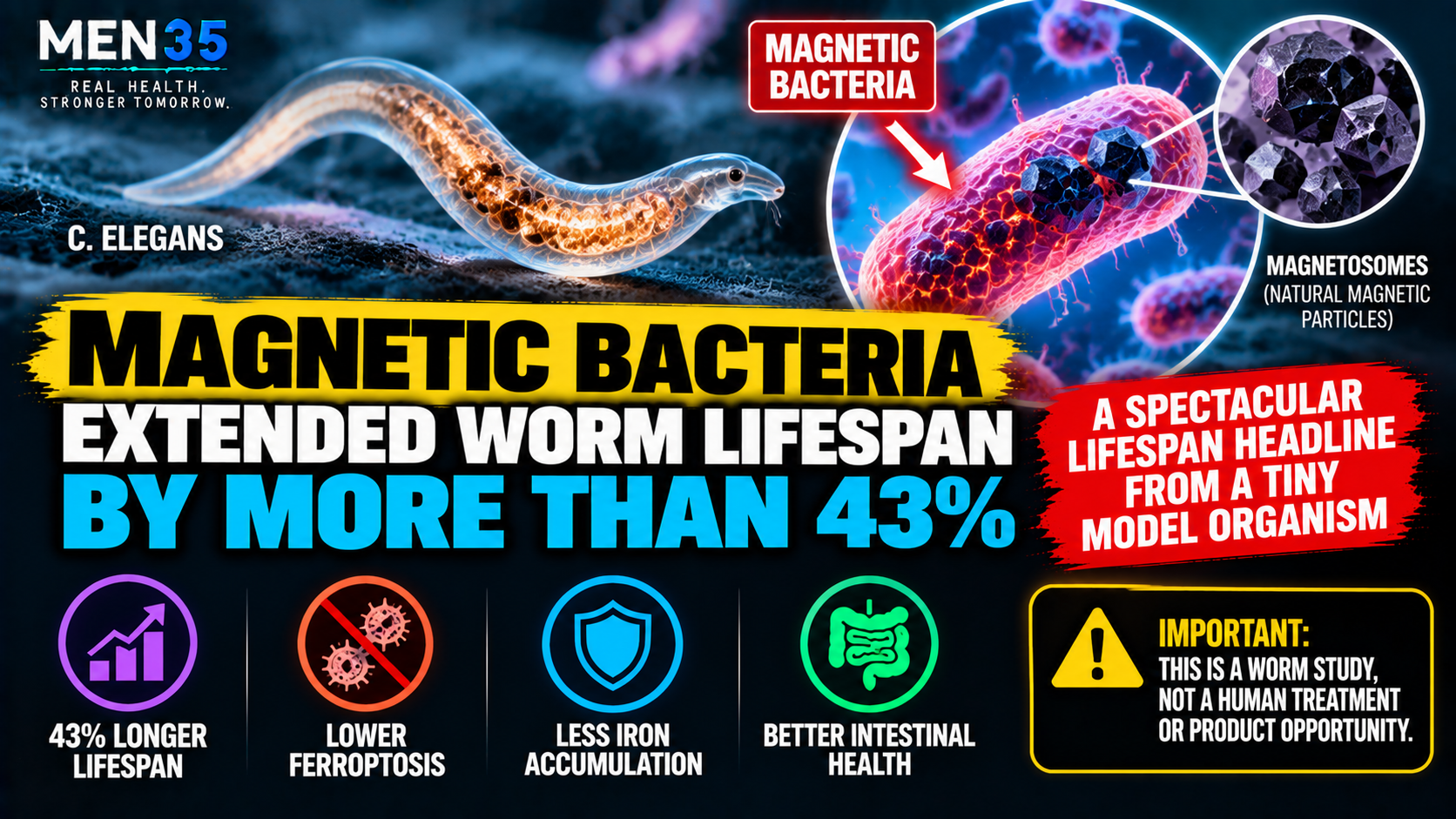
A magnet-producing bacterium extended the average lifespan of Caenorhabditis elegans worms by 43.39% in a new study. Researchers linked the effect to reduced iron accumulation, lower lipid damage and suppression of ferroptosis. The striking result is interesting—but it happened in a tiny model organism, not humans.
𝗞𝗘𝗬 𝗕𝗘𝗡𝗘𝗙𝗜𝗧𝗦
• Explains the 43.39% lifespan finding • Introduces magnetotactic bacteria and magnetosomes • Explains the possible role of ferroptosis • Shows why worm research cannot be treated as human evidence • Highlights a new direction in longevity research
𝗪𝗛𝗔𝗧 𝗧𝗛𝗘 𝗦𝗧𝗨𝗗𝗬 𝗙𝗢𝗨𝗡𝗗
Researchers fed C. elegans the magnetotactic bacterium Magnetospirillum magneticum AMB-1.
The worms receiving AMB-1 lived an average of 24.62 days versus 17.17 days in the comparison group—a 43.39% increase in mean lifespan. Older treated worms also showed better neurological function and preserved intestinal integrity.
𝗪𝗛𝗬 𝗧𝗛𝗘 𝗕𝗔𝗖𝗧𝗘𝗥𝗜𝗨𝗠 𝗜𝗦 𝗨𝗡𝗜𝗤𝗨𝗘
AMB-1 is a magnetotactic bacterium, meaning it produces microscopic magnetic structures called magnetosomes.
Researchers compared normal AMB-1 with versions that lacked or had reduced magnetosome-related properties. The normal strain produced the stronger lifespan effect, while a non-magnetotactic strain did not extend lifespan. This suggests that the bacterium's unusual magnetic biology may be relevant to the finding.
𝗙𝗘𝗥𝗥𝗢𝗣𝗧𝗢𝗦𝗜𝗦 𝗠𝗔𝗬 𝗕𝗘 𝗣𝗔𝗥𝗧 𝗢𝗙 𝗧𝗛𝗘 𝗦𝗧𝗢𝗥𝗬
The researchers found that AMB-1 reduced Fe²⁺ accumulation by 34.11% and lipid-peroxide levels by 52.19% compared with controls.
These changes were associated with lower ferroptosis—a regulated form of cell death involving iron and oxidative damage to cell membranes. Genetic experiments also implicated ferroptosis-related genes including ftn-1, bli-3 and ads-1.
This gives the lifespan result a potential biological mechanism, rather than simply showing that “bacteria made worms live longer.”
𝗪𝗛𝗔𝗧 𝗧𝗛𝗘 𝗥𝗘𝗦𝗘𝗔𝗥𝗖𝗛 𝗗𝗢𝗘𝗦 𝗡𝗢𝗧 𝗦𝗔𝗬
The study does not show that:
• Magnetic bacteria extend human lifespan • Probiotic supplements can reproduce the effect • Eating fermented foods produces the same result • Reducing iron intake will extend lifespan • Ferroptosis supplements are an anti-aging treatment • AMB-1 is safe or appropriate for human consumption
The experiment was performed in C. elegans. Human biology is substantially more complex, and a large lifespan effect in worms does not establish a human intervention.
𝗪𝗛𝗬 𝗧𝗛𝗜𝗦 𝗦𝗧𝗨𝗗𝗬 𝗠𝗔𝗧𝗧𝗘𝗥𝗦
The value of the research is its mechanistic clue.
It suggests that a specific microbial property may influence iron handling and ferroptosis in an aging model. That gives researchers another pathway to investigate—but the next steps would require testing the mechanism in increasingly complex biological systems before any human application could be considered.
𝗠𝗘𝗡𝟯𝟱 𝗧𝗔𝗞𝗘𝗔𝗪𝗔𝗬
A 43% lifespan increase sounds extraordinary because it is.
But the correct headline is:
Magnetic bacteria extended lifespan by 43.39% in a worm model.
That is a discovery signal—not a human longevity protocol.
𝗧𝗛𝗘 𝗕𝗢𝗧𝗧𝗢𝗠 𝗟𝗜𝗡𝗘
AMB-1 produced a substantial lifespan increase in C. elegans, with evidence pointing toward reduced iron-related oxidative damage and ferroptosis.
For MEN35 readers, the important lesson is evidence literacy: an impressive animal result is the beginning of a research story, not the end of it.
For informational purposes only. This is not medical advice — consult a doctor before changing medication, supplements or training.