Longevity · Expert
5 Foods That Support Your Body's Nitric-Oxide Pathway
Dr. William Li · 16/09/2026 · added by men35 desk
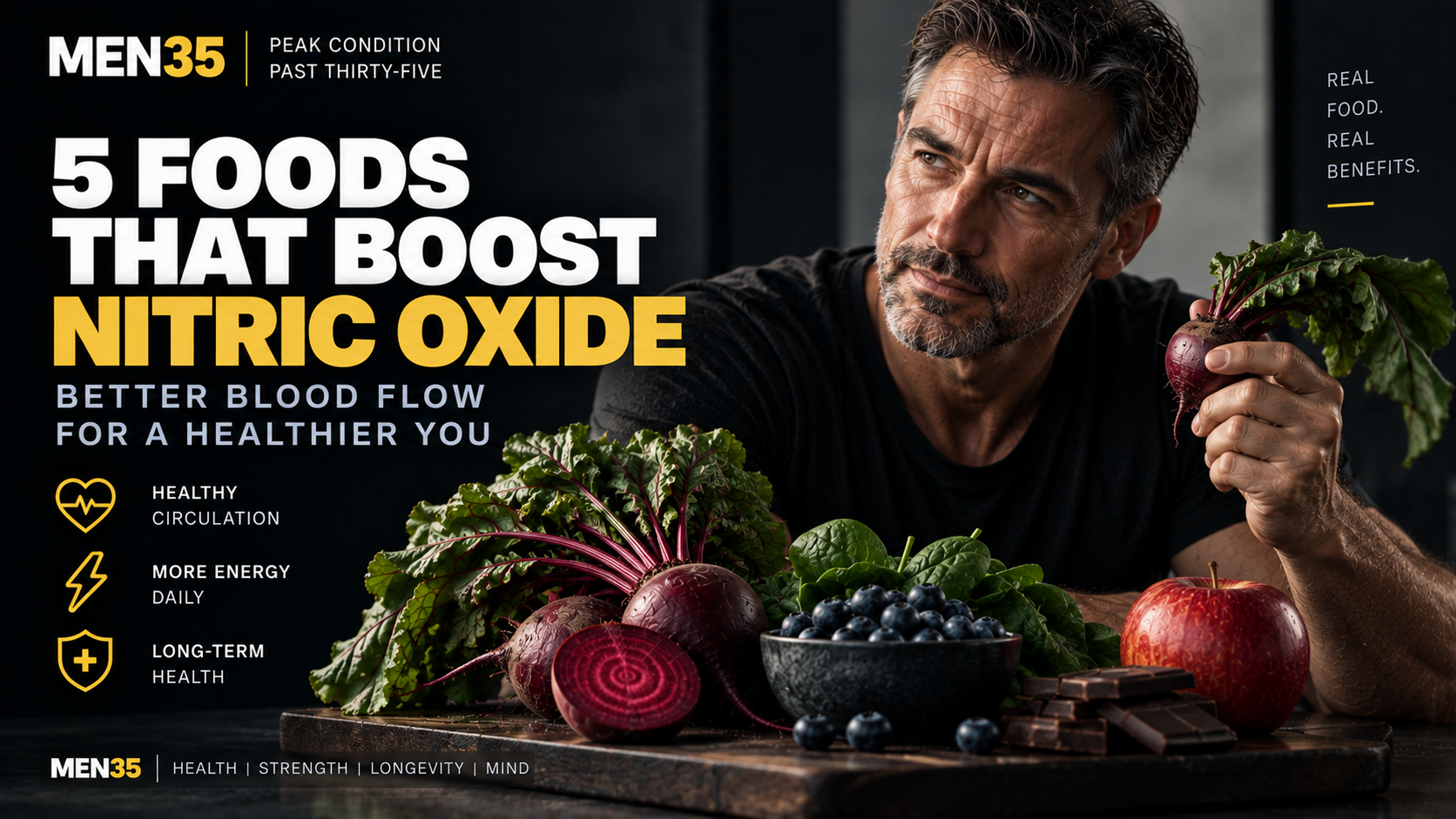
You don't need an exotic supplement to start supporting vascular health. Several everyday foods contain nitrates or polyphenols that may improve markers of endothelial function. Key Benefits Identifies practical nitric-oxide-supporting foods Explains dietary nitrate vs. polyphenols Focuses on human evidence Avoids “miracle food” claims Turns the science into an everyday eating strategy 1. Beets Beets are one of the best-known dietary sources of nitrate. Dietary nitrate can be converted through the nitrate–nitrite–nitric oxide pathway, potentially increasing nitric-oxide availability. Human research has found that dietary nitrate can influence vascular function, although results vary by population, dose and outcome measured. A 2025 systematic review and dose-response meta-analysis included 75 randomized trials involving 1,823 participants and found that dietary nitrate reliably increased circulating nitrate and nitrite; effects on blood pressure and vascular markers were more variable. 2. Leafy Greens Spinach, rocket/arugula and other leafy greens can also provide substantial dietary nitrate. They are particularly useful because you're getting nitrate inside a nutrient-dense food, rather than relying on a standalone supplement. 3. Blueberries Blueberries are different: their interest comes mainly from polyphenols and anthocyanins, rather than nitrate. A 2026 meta-analysis of 14 randomized trials involving 632 healthy participants found that blueberry interventions significantly improved flow-mediated dilation, a measure of endothelial function. 4. Cocoa Cocoa contains flavanols that have also been studied for vascular function. A meta-analysis of randomized trials found that cocoa flavanols improved flow-mediated dilation, although the authors noted substantial variation between studies and concerns about risk of bias. The practical distinction matters: cocoa flavanols aren't the same thing as sugary chocolate products. 5. Apples Apples contribute polyphenols and dietary fibre and fit naturally into a plant-rich diet. But don't treat apples—or any individual food—as a nitric-oxide medication. The bigger strategy is dietary pattern. The MEN35 Strategy Think: Leafy greens + beetroot + berries + minimally processed cocoa-rich foods + plenty of fibre. Then combine that with exercise, healthy blood pressure, adequate sleep and not smoking. That's a far more defensible vascular-health strategy than chasing a single “NO booster.” MEN35 Takeaway Eat the pathway, don't chase the shortcut. Foods rich in nitrate and polyphenols can support vascular function, but no individual food has been shown to reverse ageing. Bottom Line The evidence is strongest for improvements in vascular-function markers, not dramatic anti-aging effects. Build these foods into a healthy diet because they're nutritious first—and potentially useful for vascular health second.
Dr. William W. Li, MD
President and Medical Director, The Angiogenesis Foundation · Angiogenesis, vascular biology and food-as-medicine research.
For informational purposes only. This is not medical advice — consult a doctor before changing medication, supplements or training.