Mind · Podcast
Stop Fighting What You Cannot Change: Radical Acceptance and Rumination
Huberman Lab · 22/10/2026 · added by men35 desk
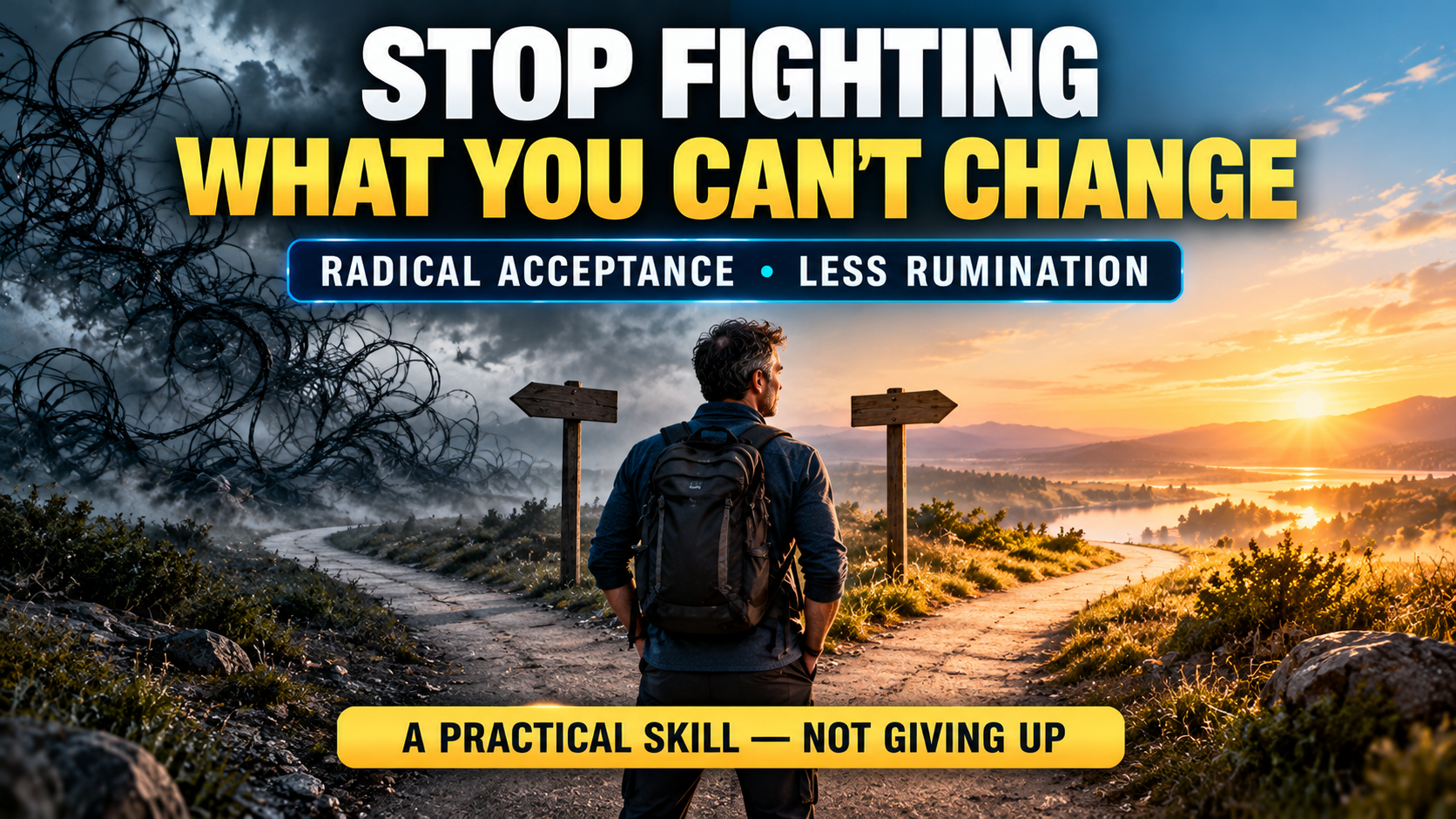
Some problems can be solved. Others cannot be changed immediately—or at all. Dr. Elissa Epel explains why repeatedly wishing reality were different can prolong distress, and how radical acceptance may help you reclaim attention for the parts of life you can influence.
KEY BENEFITS
• Understand the difference between problem-solving and rumination.
• Learn what radical acceptance means in everyday life.
• Practise separating controllable problems from uncontrollable circumstances.
• Discover how present-moment attention may support emotional wellbeing.
𝗪𝗛𝗘𝗡 𝗬𝗢𝗨𝗥 𝗠𝗜𝗡𝗗 𝗪𝗢𝗡’𝗧 𝗟𝗘𝗧 𝗚𝗢
A family member is ill. A decision at work has already been made. A difficult event happened months ago.
You cannot change what happened, but your mind keeps returning to it.
You replay conversations, imagine alternative outcomes and search for a solution that may not exist.
This is where thinking can stop helping and start exhausting you.
In her Huberman Lab discussion, Dr. Elissa Epel describes how repeatedly wishing an unchangeable situation were different can keep stress active. One approach she discusses is radical acceptance.
𝗔𝗖𝗖𝗘𝗣𝗧𝗔𝗡𝗖𝗘 𝗜𝗦𝗡’𝗧 𝗚𝗜𝗩𝗜𝗡𝗚 𝗨𝗣
Radical acceptance means acknowledging reality as it is right now, even when you dislike it.
It does not mean approving of unfair treatment, abandoning your responsibilities or refusing to improve a bad situation.
It means recognising the difference between what you can change and what you cannot.
If a work problem has a practical solution, take action. If you are waiting for a decision outside your control, repeatedly rehearsing every possible outcome may not help.
Acceptance creates space to choose a more useful response.
𝗧𝗥𝗬 𝗧𝗛𝗘 𝗧𝗛𝗥𝗘𝗘-𝗤𝗨𝗘𝗦𝗧𝗜𝗢𝗡 𝗧𝗘𝗦𝗧
When you notice yourself going around in circles, ask:
• Can I change this now? If yes, identify one realistic action.
• Can I influence it, but not control it? Do your part, then recognise the limits of your influence.
• Is it outside my control? Acknowledge the situation and deliberately return your attention to something meaningful in the present.
You may need to repeat this process many times. Acceptance is a practice, not a switch you flip once.
𝗗𝗥𝗢𝗣 𝗧𝗛𝗘 𝗥𝗢𝗣𝗘
Imagine a tug-of-war with a problem that cannot be resolved. The harder you pull, the more energy you spend—but the situation remains unchanged.
“Dropping the rope” means stepping out of that unproductive struggle.
You might redirect your attention toward a conversation with someone you care about, a walk, a task you can complete or a small part of your routine that remains within your control.
This does not erase grief, uncertainty or legitimate concerns. It simply stops those concerns from consuming every available moment.
𝗪𝗛𝗬 𝗜𝗧 𝗠𝗔𝗧𝗧𝗘𝗥𝗦 𝗔𝗙𝗧𝗘𝗥 𝟯𝟱
Adults often face stressors that cannot be resolved quickly: caregiving, health uncertainty, financial pressure or complicated family relationships.
Constantly demanding certainty from an uncertain situation can create additional distress.
Acceptance-based approaches may help people relate differently to difficult thoughts and feelings. However, they are not guaranteed to work for everyone, and persistent anxiety or depression may require professional support.
𝗧𝗛𝗘 𝗠𝗘𝗡𝟯𝟱 𝗧𝗔𝗞𝗘𝗔𝗪𝗔𝗬
Choose one problem that has been occupying your mind. Write down what you can influence and what you cannot.
Take one useful action where possible. For the rest, practise acknowledging the facts without replaying the same argument in your head.
You do not need to like reality to stop fighting its existence.
BOTTOM LINE
Acceptance is not passivity. It is recognising where your effort can make a difference—and where continued mental struggle may only drain your energy.
For informational purposes only. This is not medical advice — consult a doctor before changing medication, supplements or training.