Longevity · Expert
WHAT EXERCISE SCIENTISTS WANT 35+ TO KNOW ABOUT CREATINE
Dr. Scott Forbes, Ph.D. · 18/09/2026 · added by men35 desk
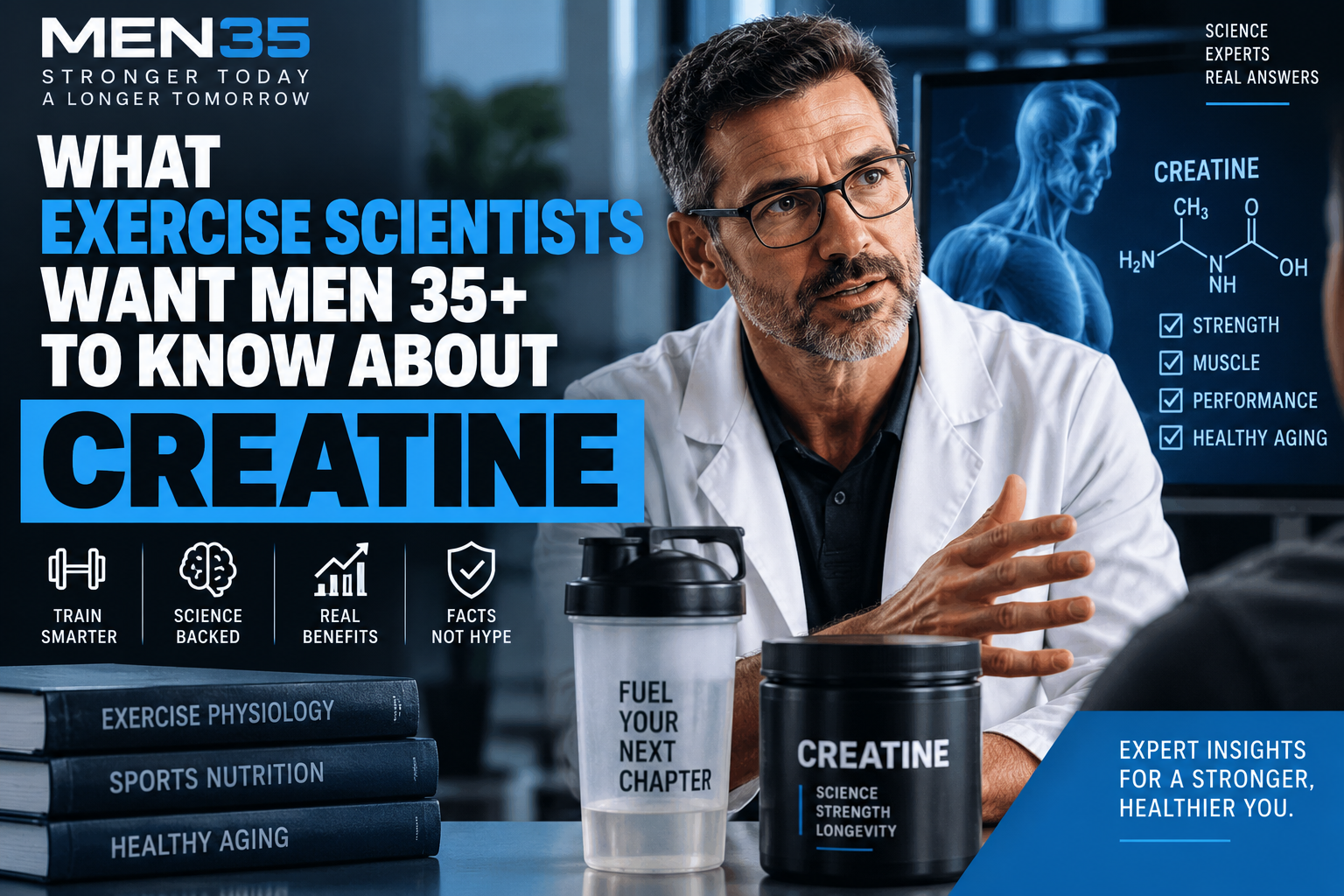
Creatine research has moved well beyond bodybuilding. Dr. Scott Forbes, a sport-nutrition and exercise-physiology researcher, has published extensively on creatine, exercise and muscle health, including research involving older adults. 𝗞𝗘𝗬 𝗕𝗘𝗡𝗘𝗙𝗜𝗧𝗦 • Understand why researchers pair creatine with resistance training. • Learn what experts actually study about creatine. • Put creatine's benefits into an aging-muscle context. • Separate research from supplement marketing. 𝗧𝗛𝗘 𝗘𝗫𝗣𝗘𝗥𝗧 Dr. Scott Forbes is a full professor in Physical Education at Brandon University. His training includes a Ph.D. in Physical Education and Recreation from the University of Alberta, an International Olympic Committee diploma in Sport Nutrition, and certification as a Clinical Exercise Physiologist and sport nutritionist. His research focuses on nutritional and exercise interventions, including creatine and muscle and brain health in older adults. That makes him particularly relevant to the MEN35 audience. 𝗖𝗥𝗘𝗔𝗧𝗜𝗡𝗘 𝗜𝗦 𝗡𝗢𝗧 𝗧𝗛𝗘 𝗪𝗢𝗥𝗞𝗢𝗨𝗧 One of the most important ideas in the research is that creatine is generally studied alongside exercise, not as a replacement for it. Forbes' research portfolio includes work examining nutritional supplements together with exercise and resistance training, including creatine research in older populations. That's a useful lesson for men 35+. If your training program is inconsistent, adding a supplement doesn't solve the underlying problem. 𝗪𝗛𝗔𝗧 𝗧𝗛𝗘 𝗥𝗘𝗦𝗘𝗔𝗥𝗖𝗛 𝗦𝗔𝗬𝗦 Recent evidence reinforces this point. A 2026 meta-analysis of 11 randomized controlled trials in adults aged 60+ found that creatine combined with resistance training produced a small improvement in muscle strength compared with training alone. Effects on muscle mass and physical function were less certain. That is a more useful conclusion than saying: “Creatine builds muscle.” The real scientific question is: Does creatine add something to a good training program? The evidence increasingly suggests that it can. 𝗧𝗛𝗘 𝗢𝗟𝗗𝗘𝗥 𝗔𝗗𝗨𝗟𝗧 𝗖𝗢𝗡𝗧𝗘𝗫𝗧 Forbes has also contributed to research and reviews involving creatine and older adults. His university research profile lists work examining creatine monohydrate supplementation for older adults and clinical populations, alongside research into nutritional and exercise interventions for older-adult muscle and brain health. This is particularly relevant as MEN35 readers move from their late 30s into their 40s, 50s and beyond. 𝗪𝗛𝗔𝗧 𝗪𝗘 𝗦𝗛𝗢𝗨𝗟𝗗𝗡'𝗧 𝗖𝗟𝗔𝗜𝗠 The research does not justify telling every man that creatine will: • reverse aging • dramatically increase muscle • burn fat • improve every aspect of health • prevent disease Those claims go beyond the evidence. The more defensible position is narrower: Creatine is a well-studied supplement that can complement resistance training, with particularly useful evidence for strength and lean-tissue outcomes. 𝗠𝗘𝗡𝟯𝟱 𝗧𝗔𝗞𝗘𝗔𝗪𝗔𝗬 The expert perspective makes the message simple: Creatine works best as part of a training strategy — not as a substitute for one. For men 35+, that means the priority remains resistance training, adequate nutrition, recovery and consistency. Creatine can sit on top of that foundation. 𝗧𝗛𝗘 𝗕𝗢𝗧𝗧𝗢𝗠 𝗟𝗜𝗡𝗘 The interesting story isn't that creatine is a miracle supplement. It's that decades of exercise and nutrition research continue to find a practical role for one of the most studied performance supplements — particularly when it is combined with resistance training. The training remains the engine. Creatine is potentially an additional tool.
Dr. Scott Forbes, Ph.D.
Professor, Physical Education, Brandon University · Exercise physiology, sport nutrition, creatine, muscle and brain health in older adults
For informational purposes only. This is not medical advice — consult a doctor before changing medication, supplements or training.