Health · Expert
Creatine and Your Kidneys: What Men 35+ Should Know
The Diary of a CEO — Steven Bartlett, interview with Dr. Darren Candow · 16/09/2026 · added by men35 desk
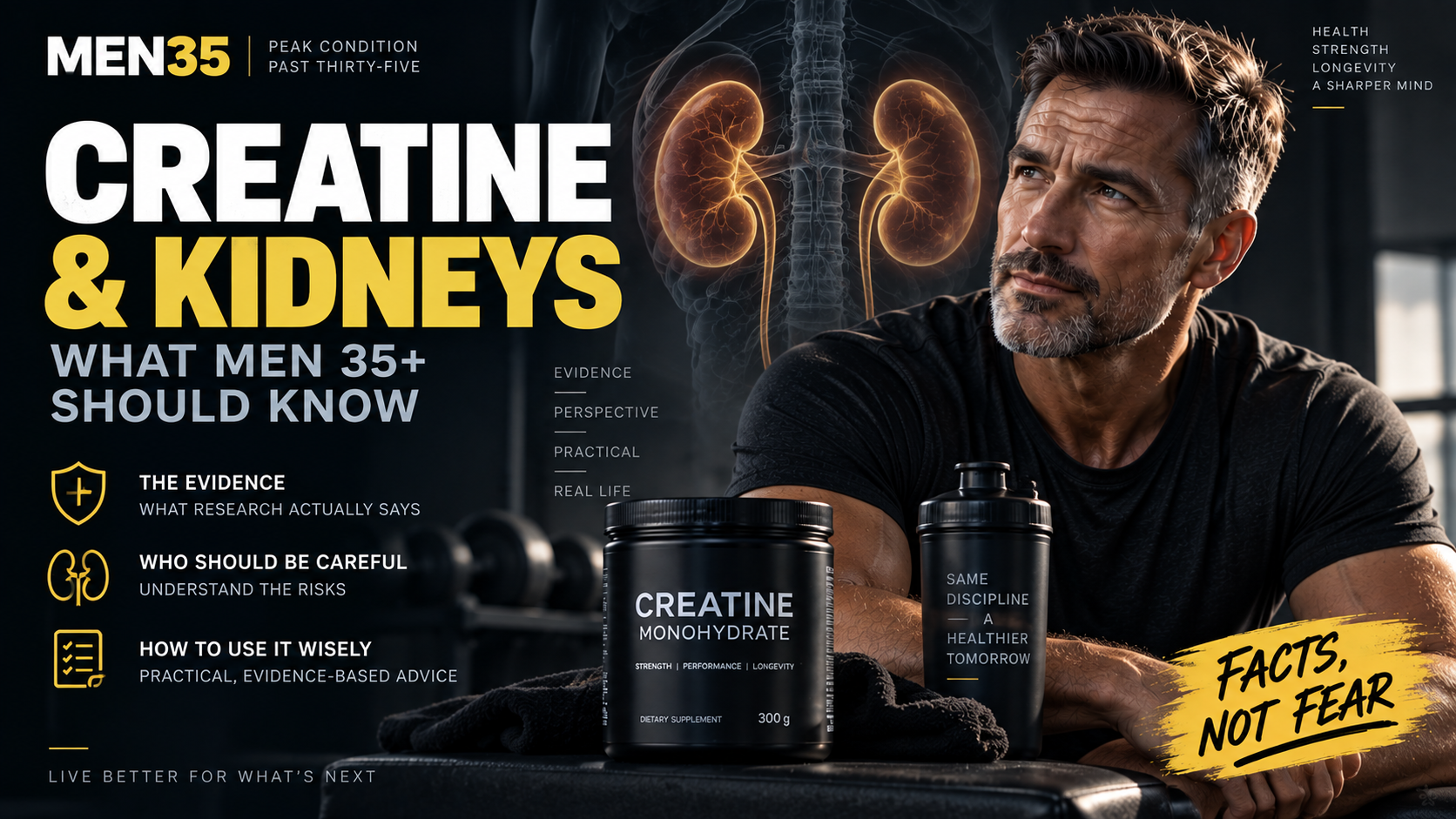
Kidney concerns are one of the biggest reasons men hesitate to use creatine. The evidence is more reassuring than the internet often suggests — but there are important distinctions to understand. Key Benefits Explains creatine vs. creatinine Clarifies what kidney-function tests actually measure Reviews recent safety evidence Identifies who should exercise caution What the Evidence Says Creatine supplementation can increase serum creatinine, a blood marker commonly used when assessing kidney function. That does not automatically mean kidney damage. A 2025 systematic review and meta-analysis found a modest increase in serum creatinine with creatine supplementation but no significant change in glomerular filtration rate (GFR), suggesting preserved kidney function in the populations studied. A 2026 systematic review of randomized trials reached a similar conclusion: creatine increased serum creatinine, but researchers found no significant difference in GFR or urea between creatine and control groups. The authors also noted that longer-term trials are still needed. The Important Exception This evidence should not be interpreted as a green light for everyone. Men with existing kidney disease or impaired kidney function should speak with a healthcare professional before using creatine. It's also sensible to tell your doctor that you use creatine if you're having kidney-function blood tests. MEN35 Takeaway For healthy adults, current evidence is generally reassuring. But a higher creatinine reading isn't the same thing as proven kidney damage, and individual medical conditions still matter. Bottom line: Creatine has a strong safety record, but men with kidney problems should get medical guidance first.
Dr. Darren G. Candow, PhD, CSEP-CEP, FISSN
Professor and Director, Aging Muscle and Bone Health Laboratory, University of Regina · Creatine supplementation, exercise physiology, muscle, bone and healthy ageing.
For informational purposes only. This is not medical advice — consult a doctor before changing medication, supplements or training.