Strength · Expert
WHAT EXERCISE EXPERTS SAY ABOUT PROTEIN AFTER 40
PubMed — Protein and Exercise for Optimal Muscle Function With Aging · 20/09/2026 · added by men35 desk
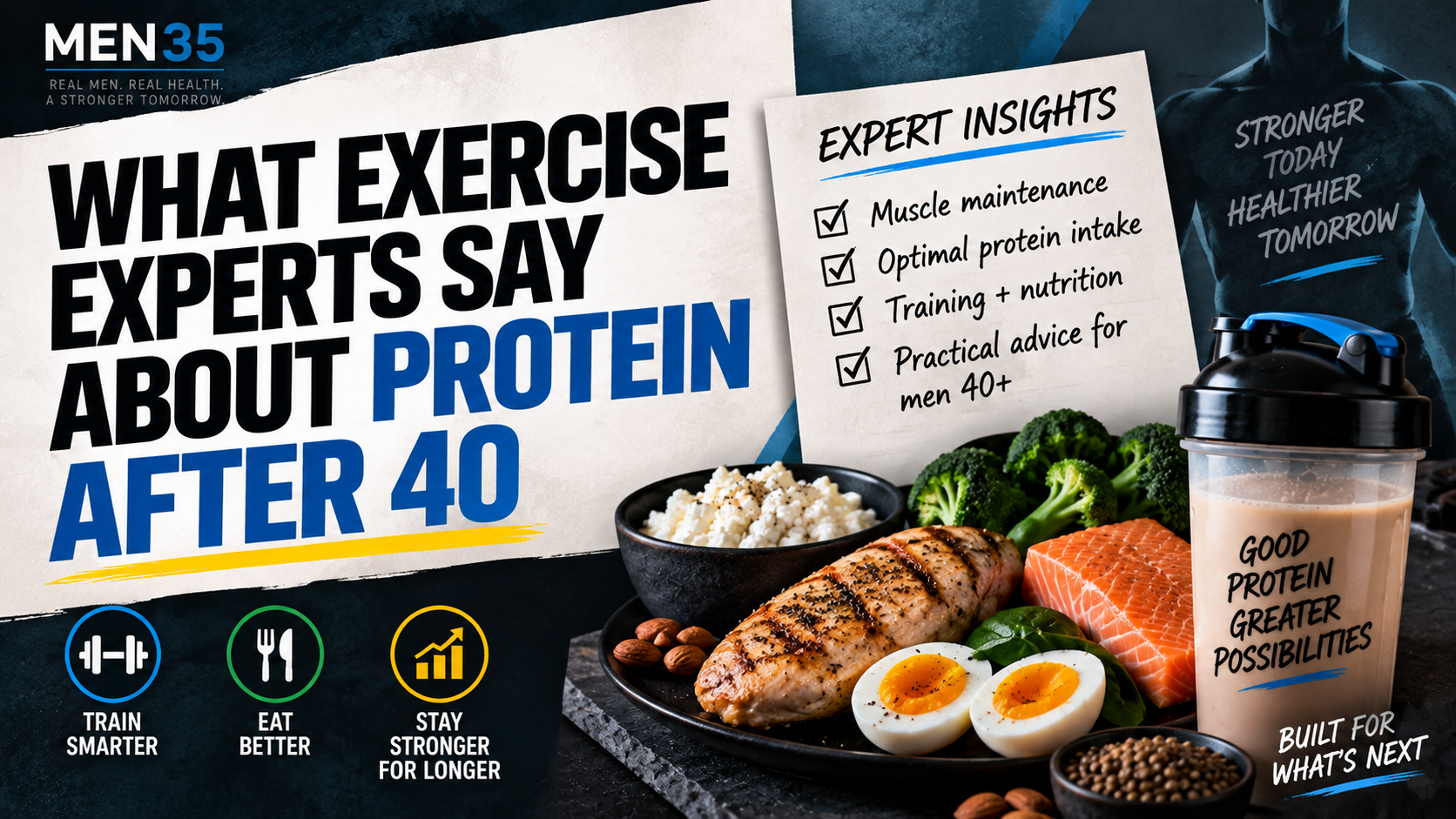
As men move through their 40s, preserving muscle becomes increasingly important. Exercise and nutrition researchers consistently point toward the same basic strategy: resistance training plus adequate protein, rather than chasing extreme diets or complicated supplement protocols. 𝗞𝗘𝗬 𝗕𝗘𝗡𝗘𝗙𝗜𝗧𝗦 • Understand why protein becomes more important with age. • Learn how exercise and protein work together. • See why total intake matters more than supplement timing tricks. • Understand where protein supplements fit into a normal diet. 𝗧𝗛𝗘 𝗘𝗫𝗣𝗘𝗥𝗧 𝗩𝗜𝗘𝗪 Protein is not simply a bodybuilding nutrient. It is a structural nutrient involved in maintaining muscle tissue, enzymes, hormones and many other biological functions. Exercise scientist and protein researcher Stuart Phillips has spent decades studying muscle protein metabolism, resistance training and dietary protein. His research has helped shape modern understanding of how protein intake interacts with exercise and aging. The broader research consensus is straightforward: resistance training and adequate protein are complementary. 𝗪𝗛𝗬 𝗔𝗚𝗜𝗡𝗚 𝗖𝗛𝗔𝗡𝗚𝗘𝗦 𝗧𝗛𝗘 𝗘𝗤𝗨𝗔𝗧𝗜𝗢𝗡 Muscle does not disappear because someone turns 40. The problem is that the biological response to dietary protein and exercise can change with aging. This is one reason researchers often recommend that older adults consume more protein than the basic population-level minimum. The PROT-AGE Study Group recommended at least 1.0–1.2 g/kg/day for healthy older adults, with higher intake for active people and those dealing with illness or other stressors. For men in their late 30s and 40s, this does not mean a medical requirement suddenly appears at age 40. Instead, it provides useful context: protein requirements can become more important as maintaining muscle becomes a greater priority. 𝗣𝗥𝗢𝗧𝗘𝗜𝗡 𝗪𝗢𝗥𝗞𝗦 𝗕𝗘𝗦𝗧 𝗪𝗜𝗧𝗛 𝗧𝗥𝗔𝗜𝗡𝗜𝗡𝗚 One of the clearest findings in sports nutrition research is that protein supplementation does not replace resistance exercise. A major meta-analysis found that protein supplementation enhanced muscle and strength gains during prolonged resistance training. The training stimulus remains fundamental. Protein helps provide the raw material for adaptation. That distinction matters because a protein shake cannot compensate for a sedentary lifestyle. 𝗪𝗛𝗔𝗧 𝗔𝗕𝗢𝗨𝗧 𝗪𝗛𝗘𝗬? Whey is popular because it is convenient, rich in essential amino acids and relatively easy to consume. But “whey” does not automatically mean better results. A study involving whey isolate and concentrate during concurrent training found no meaningful difference between the two forms for strength or performance adaptations. This is important for consumers: the more expensive product is not automatically the more effective product. 𝗧𝗛𝗘 𝗦IMPLE EXPERT RULE Think about protein in this order: Get enough total protein. Eat a varied diet. Perform resistance training. Use protein powder when convenience helps. Do not confuse higher price with higher effectiveness. 𝗠𝗘𝗡𝟯𝟱 𝗧𝗔𝗞𝗘𝗔𝗪𝗔𝗬 The strongest message from exercise and nutrition research is not complicated. Men over 35 do not need a magical protein strategy. They need a sustainable one. Adequate protein plus progressive resistance training gives the body both the stimulus and the raw materials required to maintain muscle. 𝗧𝗛𝗘 𝗕𝗢𝗧𝗧𝗢𝗠 𝗟𝗜𝗡𝗘 Protein becomes increasingly valuable as muscle preservation becomes a long-term priority. The goal is not to consume the maximum amount possible. The goal is to consistently consume enough while training intelligently.
Stuart M. Phillips, PhD
PhD · Exercise metabolism, skeletal muscle, protein nutrition and aging
For informational purposes only. This is not medical advice — consult a doctor before changing medication, supplements or training.