Strength · Video
Stress Resilience After 35: Dr. Elissa Epel on Rumination, Recovery and Healthy Ageing
Huberman Lab · 20/10/2026 · added by men35 desk
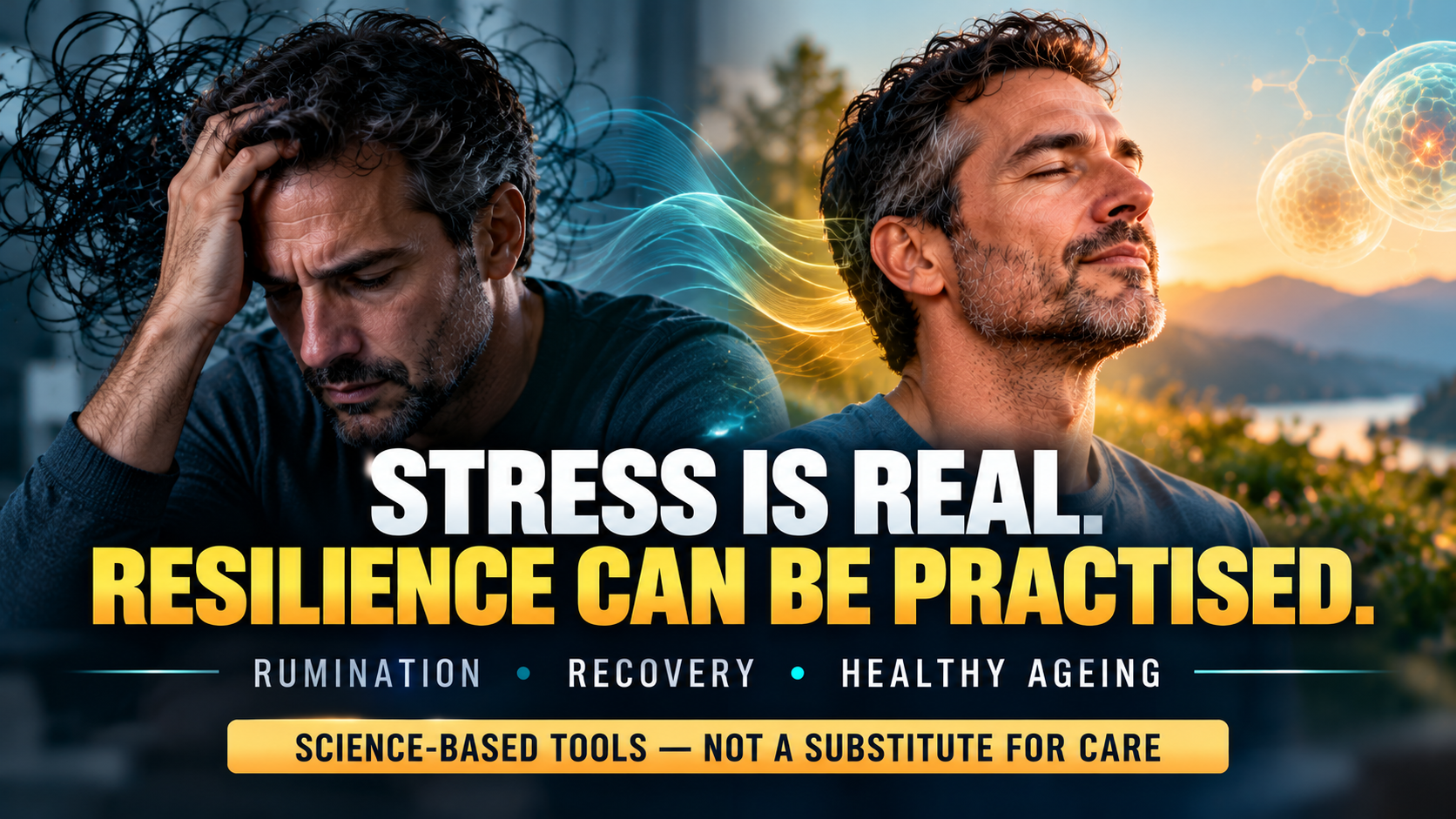
Stress is part of life. But the way we respond to it—and how well we recover—may influence our long-term wellbeing. Dr. Elissa Epel explains how rumination, stress responses and practical recovery strategies fit into the science of healthy ageing.
KEY BENEFITS
• Understand why replaying stressful events can keep your mind under pressure.
• Learn practical ways to respond to stress without trying to eliminate it completely.
• Explore how breathing, body awareness and movement can support recovery.
• Understand what research says—and does not yet prove—about chronic stress and cellular ageing.
𝗬𝗢𝗨𝗥 𝗦𝗧𝗥𝗘𝗦𝗦 𝗠𝗔𝗬 𝗘𝗡𝗗. 𝗬𝗢𝗨𝗥 𝗠𝗜𝗡𝗗 𝗠𝗔𝗬 𝗞𝗘𝗘𝗣 𝗜𝗧 𝗔𝗟𝗜𝗩𝗘.
A difficult meeting ends. An argument is over. The deadline has passed.
Yet hours later, you are still replaying the conversation, imagining what you should have said or worrying about what might happen next.
That mental replay is rumination—and it can make it harder to switch off after a stressful event.
In a Huberman Lab conversation, stress researcher Dr. Elissa Epel explores the relationship between stress, resilience and healthy ageing. The central message is practical: you cannot control every challenge, but you can develop healthier ways to respond and recover.
𝗦𝗧𝗥𝗘𝗦𝗦 𝗜𝗦𝗡’𝗧 𝗔𝗟𝗪𝗔𝗬𝗦 𝗧𝗛𝗘 𝗘𝗡𝗘𝗠𝗬
Stress is a normal biological response that helps prepare you to deal with demands. The problem is not simply experiencing stress; it is how often stress is triggered, how intense it becomes and whether recovery follows.
A challenging situation can sometimes be approached as a problem to solve rather than a threat to fear. This does not mean pretending that a serious problem is harmless. It means asking what you can influence, what action is possible and what lies outside your control.
Over time, this approach may help make stressful situations feel more manageable.
𝗕𝗥𝗘𝗔𝗞 𝗧𝗛𝗘 𝗥𝗨𝗠𝗜𝗡𝗔𝗧𝗜𝗢𝗡 𝗟𝗢𝗢𝗣
Rumination often feels like problem-solving, but repeatedly revisiting the same thoughts may not produce a useful answer.
Try interrupting the loop with a simple sequence:
• Name what is happening: “I’m replaying this situation.”
• Identify one useful action, if there is one.
• If no action is possible now, deliberately return your attention to the present.
• Avoid treating every uncomfortable thought as a problem that must be solved immediately.
These steps are not a cure for anxiety or depression. They are practical ways to notice unproductive mental repetition and choose where to direct your attention.
𝗨𝗦𝗘 𝗬𝗢𝗨𝗥 𝗕𝗢𝗗𝗬 𝗧𝗢 𝗛𝗘𝗟𝗣 𝗬𝗢𝗨𝗥 𝗠𝗜𝗡𝗗
Stress is not only a thought process. It can also show up as a clenched jaw, tense shoulders, shallow breathing or restlessness.
Simple recovery habits may help you shift out of a heightened state:
• Take a gentle walk after a demanding day.
• Try comfortable, slow breathing without forcing deep breaths.
• Notice physical tension and consciously relax areas such as the shoulders and jaw.
• Protect regular sleep and make time for physical activity.
No single technique works for everyone. The aim is to build a set of reliable options you can use when pressure rises.
𝗪𝗛𝗔𝗧 𝗔𝗕𝗢𝗨𝗧 𝗦𝗧𝗥𝗘𝗦𝗦 𝗔𝗡𝗗 𝗔𝗚𝗘𝗜𝗡𝗚?
Research has linked chronic stress with changes in several biological systems, including processes associated with inflammation, metabolism and cellular ageing.
But the science needs careful interpretation. A relationship between stress and a biological marker does not prove that a particular breathing exercise, mindset change or supplement will slow ageing or extend lifespan.
Improving stress management can be worthwhile for daily functioning and wellbeing without promising to reverse biological ageing.
𝗧𝗛𝗘 𝗠𝗘𝗡𝟯𝟱 𝗧𝗔𝗞𝗘𝗔𝗪𝗔𝗬
After 35, work, family responsibilities, finances and health concerns can make stress difficult to avoid. The goal is not to become permanently calm or to blame yourself for feeling overwhelmed.
Instead, practise recognising rumination, taking useful action when possible and allowing recovery after pressure.
If stress is persistent, disrupts sleep or affects your relationships and daily life, consider speaking with a qualified healthcare professional. Psychological treatment can be an important part of building resilience.
𝗕𝗢𝗧𝗧𝗢𝗠 𝗟𝗜𝗡𝗘
You cannot remove every source of stress from life. You can, however, practise responding to challenges more deliberately and recovering more effectively.
For informational purposes only. This is not medical advice — consult a doctor before changing medication, supplements or training.