Health · Video
The Fastest Way to Burn Body Fat After 35: Cardio, HIIT or Weights?
The Diary Of A CEO Clips · 27/10/2026 · added by men35 desk
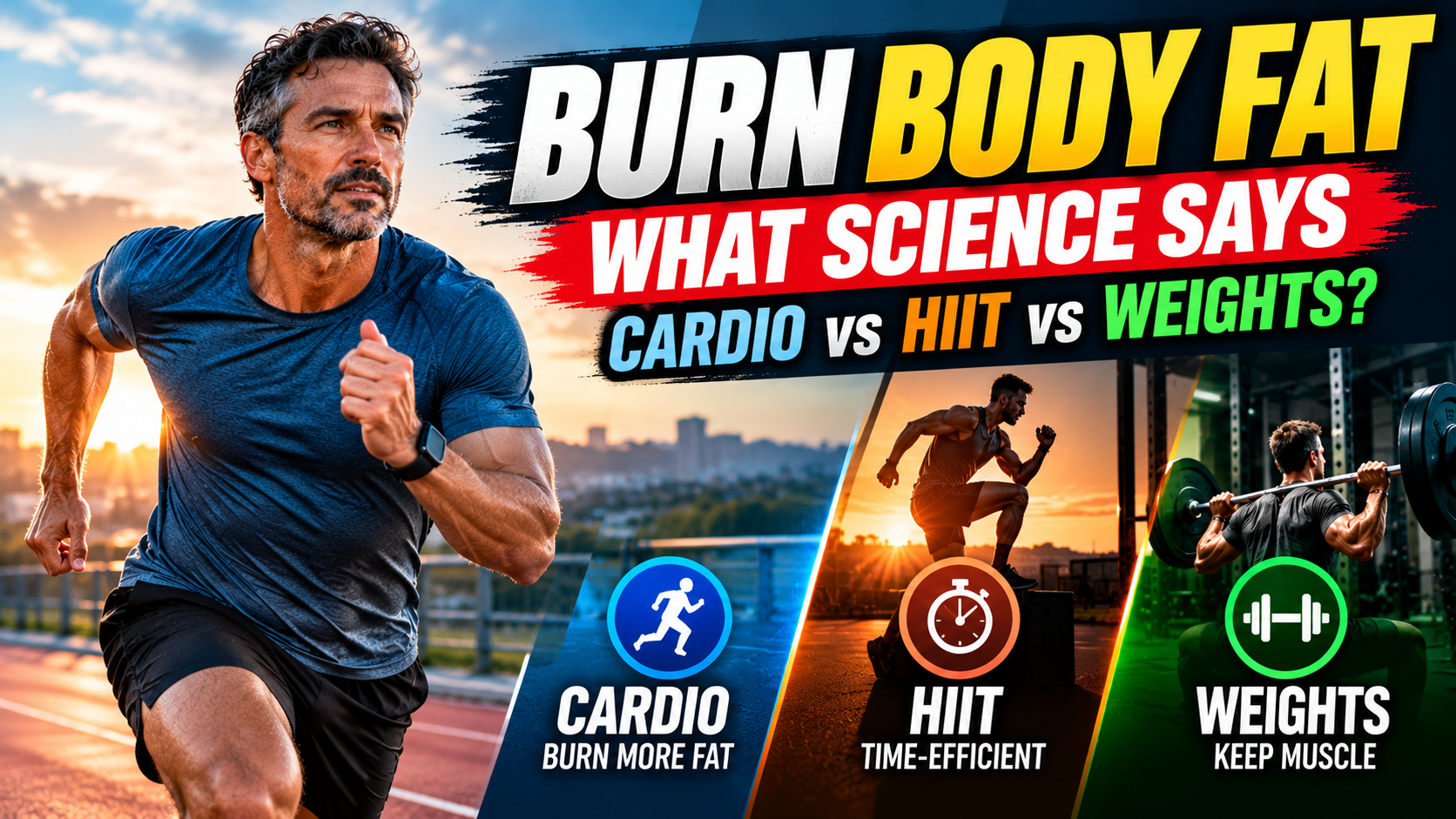
High-intensity workouts promise quick results, but which exercise method actually helps reduce body fat? Research supports aerobic exercise for reducing fat, resistance training for maintaining muscle and HIIT as a time-efficient option for suitable individuals. Here is how to combine them sensibly after 35.
Key Benefits
• Understand what research says about aerobic exercise and body fat. • Learn the potential advantages and limitations of HIIT. • Discover why resistance training matters during weight loss. • Understand why crunches cannot selectively burn belly fat. • Follow a practical weekly exercise template.
𝗜𝗦 𝗧𝗛𝗘𝗥𝗘 𝗢𝗡𝗘 𝗙𝗔𝗦𝗧𝗘𝗦𝗧 𝗙𝗔𝗧-𝗕𝗨𝗥𝗡𝗜𝗡𝗚 𝗪𝗢𝗥𝗞𝗢𝗨𝗧?
The promise is attractive: find the right workout, burn fat faster and transform your body in less time.
But no single exercise is the best option for every person.
Your results depend on your overall energy balance, training programme, current fitness, recovery and consistency. A workout that burns substantial energy but leaves you too exhausted to repeat it may be less useful than a moderate session you can maintain throughout the week.
For men over 35, the objective is to reduce excess fat while maintaining muscle, strength and cardiovascular health.
The best programme is usually not an either-or choice between cardio and weights. Each serves a different purpose.
𝗪𝗛𝗔𝗧 𝗧𝗛𝗘 𝗥𝗘𝗦𝗘𝗔𝗥𝗖𝗛 𝗦𝗔𝗬𝗦 𝗔𝗕𝗢𝗨𝗧 𝗖𝗔𝗥𝗗𝗜𝗢
Walking briskly, cycling, swimming and jogging are examples of aerobic exercise. They increase energy expenditure and can improve cardiovascular fitness.
A 2024 systematic review and dose-response meta-analysis published in JAMA Network Open examined 116 randomized clinical trials involving 6,880 adults with overweight or obesity.
The researchers found that increasing weekly amounts of moderate-to-vigorous aerobic exercise were associated with reductions in body weight, waist circumference and body fat. Exercise durations of at least 150 minutes per week were associated with clinically important reductions in waist circumference and body-fat measures.
This does not mean everyone must begin with 150 minutes immediately. The research included structured programmes, and individual results vary.
If you are inactive, begin with shorter, comfortable sessions and build up gradually.
For example:
• Start with a 10–15-minute brisk walk on most days. • Gradually extend sessions as your fitness improves. • Aim toward 150 minutes of moderate aerobic activity per week if appropriate for your health and ability. • Increase duration or intensity gradually rather than trying to do everything at once.
You can divide activity into shorter sessions. Regular movement is more useful than waiting for the perfect workout.
𝗪𝗛𝗘𝗥𝗘 𝗛𝗜𝗜𝗧 𝗙𝗜𝗧𝗦 𝗜𝗡
High-intensity interval training, or HIIT, alternates periods of hard effort with recovery periods.
Depending on the exercise and your fitness level, intervals might involve cycling, running or uphill walking. The hard periods should be challenging but appropriate for your ability.
HIIT can improve cardiorespiratory fitness and make efficient use of limited training time. However, it is not a magic fat-burning switch.
You can lose body fat without doing HIIT. Moderate-intensity exercise may be easier to sustain, especially for beginners or people returning after a long break.
If you have cardiovascular disease, significant joint problems or other health concerns, seek appropriate medical guidance before beginning vigorous intervals. Start with a level of activity you can perform safely and recover from.
𝗪𝗛𝗬 𝗪𝗘𝗜𝗚𝗛𝗧𝗦 𝗠𝗔𝗧𝗧𝗘𝗥 𝗪𝗛𝗘𝗡 𝗬𝗢𝗨 𝗟𝗢𝗦𝗘 𝗙𝗔𝗧
Weight loss and fat loss are not exactly the same thing.
When body weight decreases, some of that loss can come from lean tissue as well as fat. Resistance training helps provide the stimulus needed to maintain or build muscle.
That matters because muscle supports strength, physical function and everyday activity.
A practical strength programme can include:
• Squats or suitable leg-press variations. • Rows and other pulling movements. • Push-ups, chest presses or other pushing exercises. • Hip-hinge movements appropriate to your ability. • Core exercises for stability and strength.
Choose exercises you can perform with good technique. Start with manageable resistance and progress gradually.
Training the major muscle groups at least twice a week is a useful general target for many adults, although your starting point should reflect your experience, health and recovery.
Protein-rich meals can complement resistance training by providing the amino acids required for muscle maintenance.
𝗪𝗛𝗬 𝗔𝗕 𝗪𝗢𝗥𝗞𝗢𝗨𝗧𝗦 𝗗𝗢𝗡’𝗧 𝗦𝗣𝗢𝗧-𝗥𝗘𝗗𝗨𝗖𝗘 𝗙𝗔𝗧
Crunches and sit-ups strengthen abdominal muscles, but they do not reliably force the body to burn fat specifically from the stomach.
Your body determines where fat is mobilised and lost. Genetics and individual biology influence the pattern.
If reducing waist size is your goal, combine overall fat-loss habits with aerobic activity and resistance training. Keep abdominal exercises for their genuine benefits rather than treating them as a shortcut to a flat stomach.
𝗔 𝗣𝗥𝗔𝗖𝗧𝗜𝗖𝗔𝗟 𝗪𝗘𝗘𝗞𝗟𝗬 𝗣𝗟𝗔𝗡
Here is an example for a generally healthy adult who can tolerate this level of activity:
• Monday: Full-body resistance training. • Tuesday: 25–30 minutes of brisk walking or cycling. • Wednesday: Full-body resistance training. • Thursday: 25–30 minutes of moderate aerobic activity. • Friday: Full-body resistance training or a comfortable recovery walk. • Saturday: Walking, cycling, swimming or another enjoyable activity. • Sunday: Rest or gentle movement.
This is a starting template, not a medical prescription. Beginners may need fewer sessions or shorter workouts. Experienced exercisers can adapt the schedule to their programme and recovery.
Pair exercise with a sustainable eating pattern that supports a calorie deficit. Avoid trying to compensate for an entire week of overeating with one exhausting workout.
𝗧𝗛𝗘 𝗠𝗘𝗡𝟯𝟱 𝗧𝗔𝗞𝗘𝗔𝗪𝗔𝗬
Do not search endlessly for a single perfect fat-burning exercise.
Use aerobic activity to increase energy expenditure and improve cardiovascular fitness. Use resistance training to support muscle and strength. Consider HIIT if it suits your fitness level, schedule and recovery.
Then repeat the routine consistently while following a nutrition plan that supports gradual fat loss.
𝗕𝗢𝗧𝗧𝗢𝗠 𝗟𝗜𝗡𝗘
There is no universally fastest workout for burning body fat. Aerobic exercise has strong evidence for reducing waist circumference and body fat, resistance training helps preserve muscle, and HIIT can be useful for suitable individuals.
The winning strategy is the one that fits your life, protects your health and allows you to keep progressing.
For informational purposes only. This is not medical advice — consult a doctor before changing medication, supplements or training.