Health · Video
The Fat-Loss Blueprint After 35: Lose Fat Without Sacrificing Muscle
The Diary Of A CEO Clips · 27/10/2026 · added by men35 desk
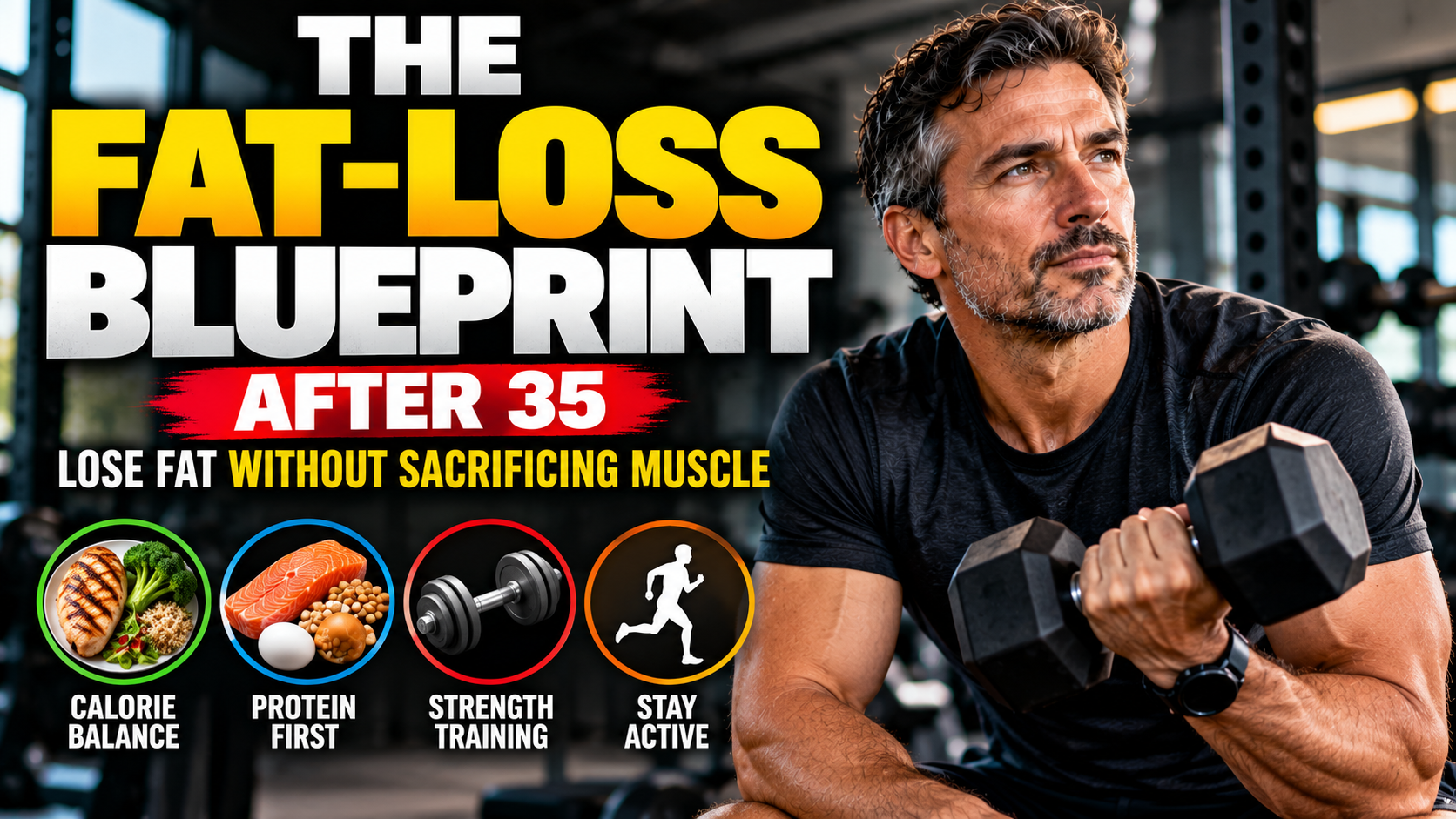
Losing body fat does not require an extreme diet, endless cardio or expensive supplements. For men over 35, a sustainable calorie deficit, adequate protein, sensible portions and regular exercise provide a practical foundation for improving body composition.
Key Benefits
• Understand the role of calorie balance in fat loss. • Learn how protein supports muscle maintenance. • Identify everyday habits that may increase calorie intake. • Discover why abdominal exercises cannot selectively remove belly fat. • Build a sustainable plan for reducing excess body fat.
𝗧𝗛𝗘 𝗙𝗔𝗧-𝗟𝗢𝗦𝗦 𝗣𝗥𝗢𝗕𝗟𝗘𝗠 𝗜𝗦 𝗡𝗢𝗧 𝗔𝗟𝗪𝗔𝗬𝗦 𝗪𝗛𝗔𝗧 𝗬𝗢𝗨 𝗘𝗔𝗧
You can choose foods that appear healthy, exercise several times a week and still struggle to lose fat.
Why? Because healthy food choices and calorie balance are related, but they are not the same thing.
Nuts, olive oil, granola and smoothies can all fit into a healthy diet. Yet large portions can contribute substantial calories. On the other hand, eating less without considering protein, nutrients and exercise can make it harder to maintain muscle.
For men over 35, the goal should not simply be to weigh less. It should be to reduce excess fat while preserving strength, muscle and the ability to stay active.
𝗧𝗛𝗘 𝗙𝗢𝗨𝗡𝗗𝗔𝗧𝗜𝗢𝗡: 𝗔 𝗦𝗨𝗦𝗧𝗔𝗜𝗡𝗔𝗕𝗟𝗘 𝗖𝗔𝗟𝗢𝗥𝗜𝗘 𝗗𝗘𝗙𝗜𝗖𝗜𝗧
Over time, body fat generally decreases when energy intake remains below the energy the body uses. This is known as a calorie deficit.
You do not necessarily need to count every calorie. Start by examining the habits that contribute most to your daily intake.
• Reduce oversized portions of calorie-dense foods. • Limit sugary drinks if you consume them regularly. • Pay attention to oils, dressings, sauces and frequent snacks. • Include vegetables, fruit and high-fibre foods. • Eat meals that provide enough protein to support your training and recovery.
Avoid crash diets. A plan that leaves you constantly hungry, exhausted or unable to train may be difficult to maintain.
The best approach is one that produces steady progress while allowing you to live normally.
𝗣𝗥𝗢𝗧𝗘𝗜𝗡: 𝗬𝗢𝗨𝗥 𝗠𝗨𝗦𝗖𝗟𝗘-𝗣𝗥𝗢𝗧𝗘𝗖𝗧𝗜𝗢𝗡 𝗣𝗔𝗥𝗧𝗡𝗘𝗥
When you lose weight, not every kilogram lost necessarily comes from fat. Some lean tissue can also be lost, particularly when weight reduction is aggressive or resistance training and protein intake are inadequate.
Protein provides the amino acids needed to build and maintain muscle. It can also help make meals more satisfying.
Useful sources include:
• Eggs, fish, chicken and lean meat. • Milk, cottage cheese and plain yogurt. • Lentils, beans, chickpeas and tofu.
Include a protein source in your main meals and combine it with resistance training.
Protein powders may be convenient, but they are not essential. Ordinary foods can provide the protein you need. If you have kidney disease or have been advised to restrict protein, discuss your intake with a qualified healthcare professional.
𝗗𝗢𝗡’𝗧 𝗜𝗚𝗡𝗢𝗥𝗘 𝗧𝗛𝗘 𝗘𝗫𝗧𝗥𝗔𝗦
Small habits can add up.
A sweetened coffee, a handful of nuts, a generous pour of cooking oil and a few spoonfuls of sauce may each seem insignificant. Repeated regularly, however, they can make it harder to maintain the energy deficit needed for fat loss.
You do not need to eliminate these foods. Instead, pay attention to portions and choose where you want to spend your calories.
A useful starting point is to review your usual meals and identify one or two changes you can sustain.
𝗪𝗛𝗬 𝗖𝗥𝗨𝗡𝗖𝗛𝗘𝗦 𝗪𝗢𝗡’𝗧 𝗠𝗘𝗟𝗧 𝗕𝗘𝗟𝗟𝗬 𝗙𝗔𝗧
Abdominal exercises strengthen the muscles around your midsection, but they do not reliably make your body burn fat specifically from your stomach.
Where fat is lost first varies between individuals. Genetics and other biological factors influence fat distribution.
To reduce waist size, focus on overall fat loss through nutrition, aerobic activity and resistance training. Keep crunches and planks in your programme if you want stronger core muscles, but do not rely on them as a targeted fat-loss method.
𝗔 𝗦𝗜𝗠𝗣𝗟𝗘 𝗣𝗟𝗔𝗡 𝗧𝗢 𝗦𝗧𝗔𝗥𝗧 𝗧𝗛𝗜𝗦 𝗪𝗘𝗘𝗞
Try these four steps:
• Build your main meals around a protein source. • Check portions of calorie-dense foods and drinks. • Walk regularly and gradually increase your activity. • Perform resistance training appropriate to your fitness level.
Monitor your weight trend and waist measurement over several weeks. Daily weight can fluctuate because of water retention, salt intake, digestion and other factors.
If progress stalls, review your overall routine before assuming that you need a supplement or a more extreme diet.
𝗧𝗛𝗘 𝗠𝗘𝗡𝟯𝟱 𝗧𝗔𝗞𝗘𝗔𝗪𝗔𝗬
The fundamentals are straightforward: eat an appropriate amount, prioritise protein, move regularly and train your muscles.
You do not need to fear carbohydrates, avoid every sweet food or follow an extreme fasting schedule. Consistency with a realistic plan is more valuable than repeatedly starting and abandoning restrictive diets.
𝗕𝗢𝗧𝗧𝗢𝗠 𝗟𝗜𝗡𝗘
The most effective fat-loss plan is one that helps you maintain a sustainable calorie deficit while protecting muscle and supporting your health. For men over 35, the focus should be better body composition, strength and long-term consistency—not the fastest possible drop on the scale.
For informational purposes only. This is not medical advice — consult a doctor before changing medication, supplements or training.