Health · Podcast
Hidden Sugar Traps: Healthy Foods That Could Be Slowing Your Fat Loss After 35
The Diary Of A CEO Clips · 27/10/2026 · added by men35 desk
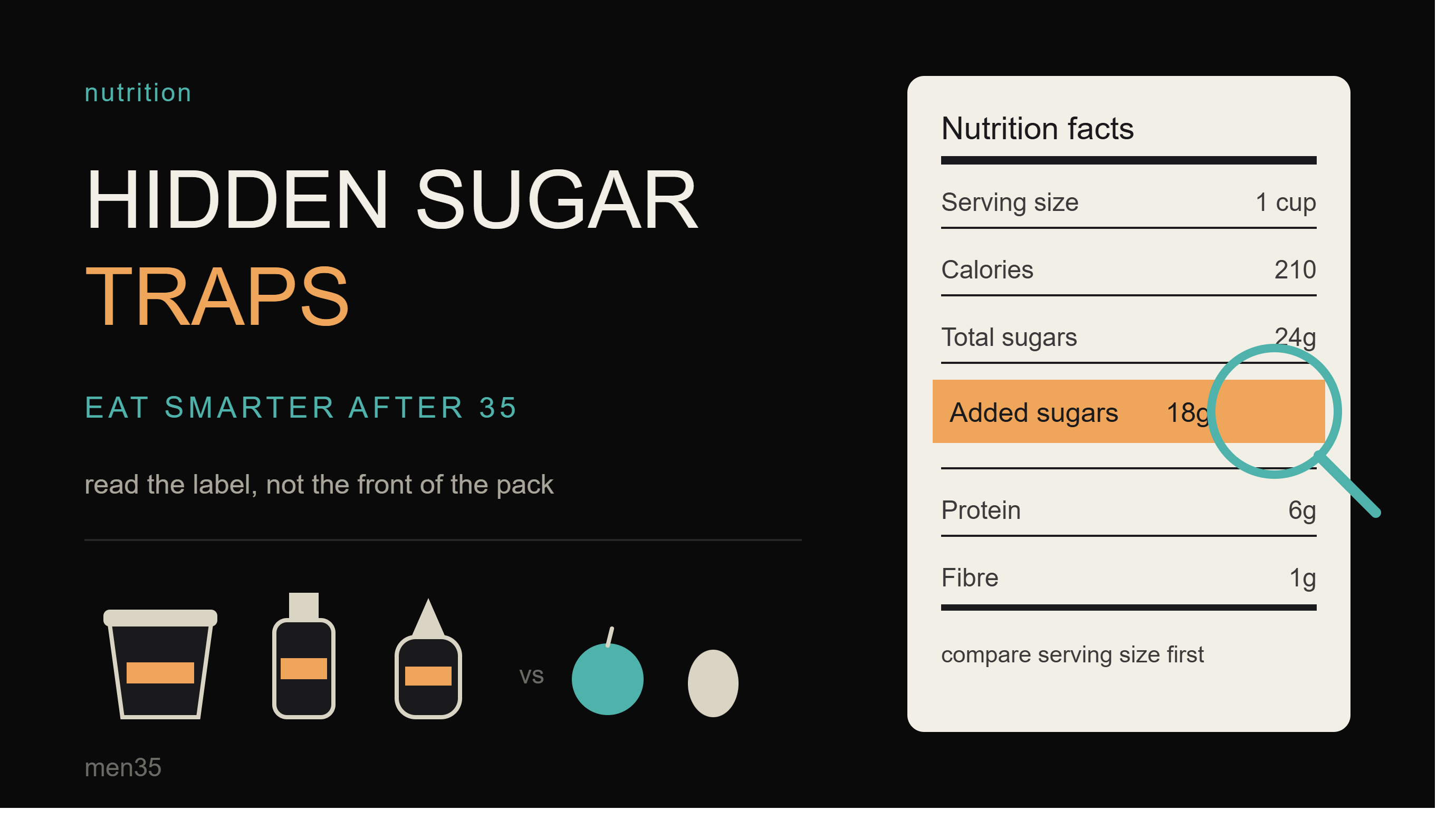
Flavoured yogurt, granola, bottled coffee and sauces can contain more added sugar than you expect. For men over 35 trying to lose excess body fat, understanding nutrition labels and portion sizes can help improve food choices without banning carbohydrates or giving up favourite foods.
Key Benefits
• Identify five common sources of added sugar. • Learn how to read packaged-food labels. • Understand the relationship between sugar, calories and fat loss. • Discover practical alternatives for everyday meals. • Build healthier eating habits without unnecessary restrictions.
𝗧𝗛𝗘 𝗛𝗘𝗔𝗟𝗧𝗛𝗬 𝗙𝗢𝗢𝗗 𝗧𝗥𝗔𝗣
You choose flavoured yogurt instead of dessert. You pour a bowl of granola because it looks nutritious. You grab a bottled coffee drink on the way to work.
These choices may seem healthy, but some products contain substantial added sugar or more calories than you expect.
That does not mean yogurt, oats or granola are automatically unhealthy. The ingredients, portion size and overall diet matter.
For men over 35, the goal is not to fear sugar. It is to recognise where added sugar and excess calories may be accumulating, then make changes that support a sustainable approach to fat loss.
𝗙𝗜𝗩𝗘 𝗙𝗢𝗢𝗗𝗦 𝗪𝗢𝗥𝗧𝗛 𝗖𝗛𝗘𝗖𝗞𝗜𝗡𝗚
• 1. FLAVOURED YOGURT
Yogurt can provide protein and calcium, but some flavoured varieties contain considerable added sugar.
Compare the nutrition labels of similar products. Plain yogurt with fresh fruit is one alternative if you want more control over sweetness.
Do not assume that every flavoured yogurt is unhealthy. Check its overall nutritional profile and choose a portion that fits your needs.
• 2. GRANOLA AND BREAKFAST CEREALS
Oats and whole grains can be nutritious. However, some granolas and breakfast cereals include added sugar, oils and calorie-dense ingredients.
Portions matter, too. A bowl filled by eye may contain substantially more than the serving size printed on the package.
Try measuring your usual portion once. This gives you a more realistic idea of how much you are eating.
• 3. BOTTLED COFFEE AND SWEETENED DRINKS
Sweetened coffees, soft drinks, energy drinks and other sugary beverages can add calories without providing the same fullness as a substantial meal.
If these drinks are a regular habit, consider replacing some of them with water, sparkling water, unsweetened tea or coffee.
You do not need to change everything overnight. Reducing a frequently consumed sugary drink can be a manageable first step.
• 4. SMOOTHIES AND FRUIT DRINKS
Whole fruit provides fibre, vitamins and other useful nutrients.
But a large smoothie containing fruit juice, sweetened yogurt, syrups and multiple portions of fruit can deliver a substantial amount of energy. Smoothies are not inherently bad; their ingredients and serving size determine how they fit into your diet.
When possible, use whole fruit and check how much sweetened liquid or other calorie-dense ingredients you add.
• 5. SAUCES AND SALAD DRESSINGS
Barbecue sauce, ketchup, sweet chilli sauce and some dressings can contain added sugar.
The amount depends on the product and the serving. You do not need to eliminate sauces, but checking the label and using sensible portions can help you make more informed choices.
𝗧𝗛𝗘 𝟯𝟬-𝗦𝗘𝗖𝗢𝗡𝗗 𝗙𝗢𝗢𝗗 𝗟𝗔𝗕𝗘𝗟 𝗖𝗛𝗘𝗖𝗞
Before buying a packaged food, look at four things:
• Serving size: Is the label describing a smaller portion than you usually eat? • Added sugars: How much added sugar is listed per serving? • Calories: How much energy will your actual portion provide? • Protein and fibre: Will the food contribute to a filling, balanced meal?
Compare similar products rather than judging a food by one number alone.
A product with less sugar is not automatically lower in calories. Likewise, total sugar is not the same as added sugar: plain milk and whole fruit naturally contain sugars.
The U.S. Food and Drug Administration explains how added sugars appear on the Nutrition Facts label. This information can help you compare packaged foods more accurately.
𝗪𝗛𝗬 𝗦𝗨𝗚𝗔𝗥 𝗜𝗦𝗡’𝗧 𝗧𝗛𝗘 𝗪𝗛𝗢𝗟𝗘 𝗦𝗧𝗢𝗥𝗬
Sugar is often blamed for every difficulty with weight management. The science is more nuanced.
Body weight is influenced by energy intake and expenditure over time, alongside biological, behavioural and environmental factors. Consistently consuming more energy than your body uses can make fat loss difficult, regardless of whether the calories come from sugary foods or other sources.
Foods and drinks high in added sugar can contribute to excess calorie intake, particularly when portions are large or the products are not very filling. But sugar itself does not automatically cause fat gain independently of the overall diet.
You do not need to eliminate rice, bread, potatoes, oats or fruit to lose body fat. The more useful approach is to consider overall food quality, portions, activity and consistency.
𝗘𝗔𝗧 𝗙𝗢𝗥 𝗙𝗔𝗧 𝗟𝗢𝗦𝗦—𝗔𝗡𝗗 𝗣𝗥𝗢𝗧𝗘𝗖𝗧 𝗬𝗢𝗨𝗥 𝗠𝗨𝗦𝗖𝗟𝗘
A balanced eating pattern can include:
• Protein: eggs, fish, chicken, lean meat, plain yogurt, tofu, lentils and beans. • Vegetables: a variety of colours and types. • Fruit: whole fruit as part of your daily diet. • High-fibre carbohydrates: oats, beans, whole grains, rice or potatoes in suitable portions. • Unsaturated fats: nuts, seeds and oils such as olive oil, in appropriate amounts.
Protein helps support muscle maintenance, especially when combined with resistance training. During weight loss, this matters because the aim is to reduce excess fat without unnecessarily sacrificing lean tissue.
You do not need expensive supplements or special fat-burning products to begin. Start by improving the everyday choices that make up most of your diet.
𝗔 𝗦𝗜𝗠𝗣𝗟𝗘 𝗦𝗘𝗩𝗘𝗡-𝗗𝗔𝗬 𝗖𝗛𝗔𝗟𝗟𝗘𝗡𝗚𝗘
For the next seven days, try these practical changes:
• Replace a regularly consumed sugary drink with an unsweetened alternative. • Compare the added-sugar content of two breakfast products. • Measure your usual portion of granola, dressing or sauce. • Include a protein source in each main meal. • Choose whole fruit more often than sweetened fruit drinks.
You do not need to make every change at once. Pick the habits most relevant to your current diet and repeat them consistently.
Measure progress over several weeks rather than expecting a dramatic overnight change.
𝗧𝗛𝗘 𝗠𝗘𝗡𝟯𝟱 𝗧𝗔𝗞𝗘𝗔𝗪𝗔𝗬
Healthy-looking packaging does not tell the whole nutritional story.
Flavoured yogurt, granola, bottled drinks and sauces can contain added sugar or more calories than you realise. Reading labels helps you make informed decisions, but it does not mean you must avoid every product that contains sugar.
For men over 35, a sustainable approach combines balanced meals, appropriate portions, adequate protein and regular physical activity.
𝗕𝗢𝗧𝗧𝗢𝗠 𝗟𝗜𝗡𝗘
The goal is not to fear sugar. It is to understand your food choices.
Check serving sizes, compare added sugars, choose nutritious foods regularly, and pay attention to your overall energy intake. These practical habits can help support fat loss without unnecessary restrictions or unrealistic promises.
For informational purposes only. This is not medical advice — consult a doctor before changing medication, supplements or training.