Health · News
Testosterone Testing Is Back in the News: What Men 35+ Should Know
Pentagon revives testosterone testing after pause, excludes women” September 17, 2026 · 24/09/2026 · added by men35 desk
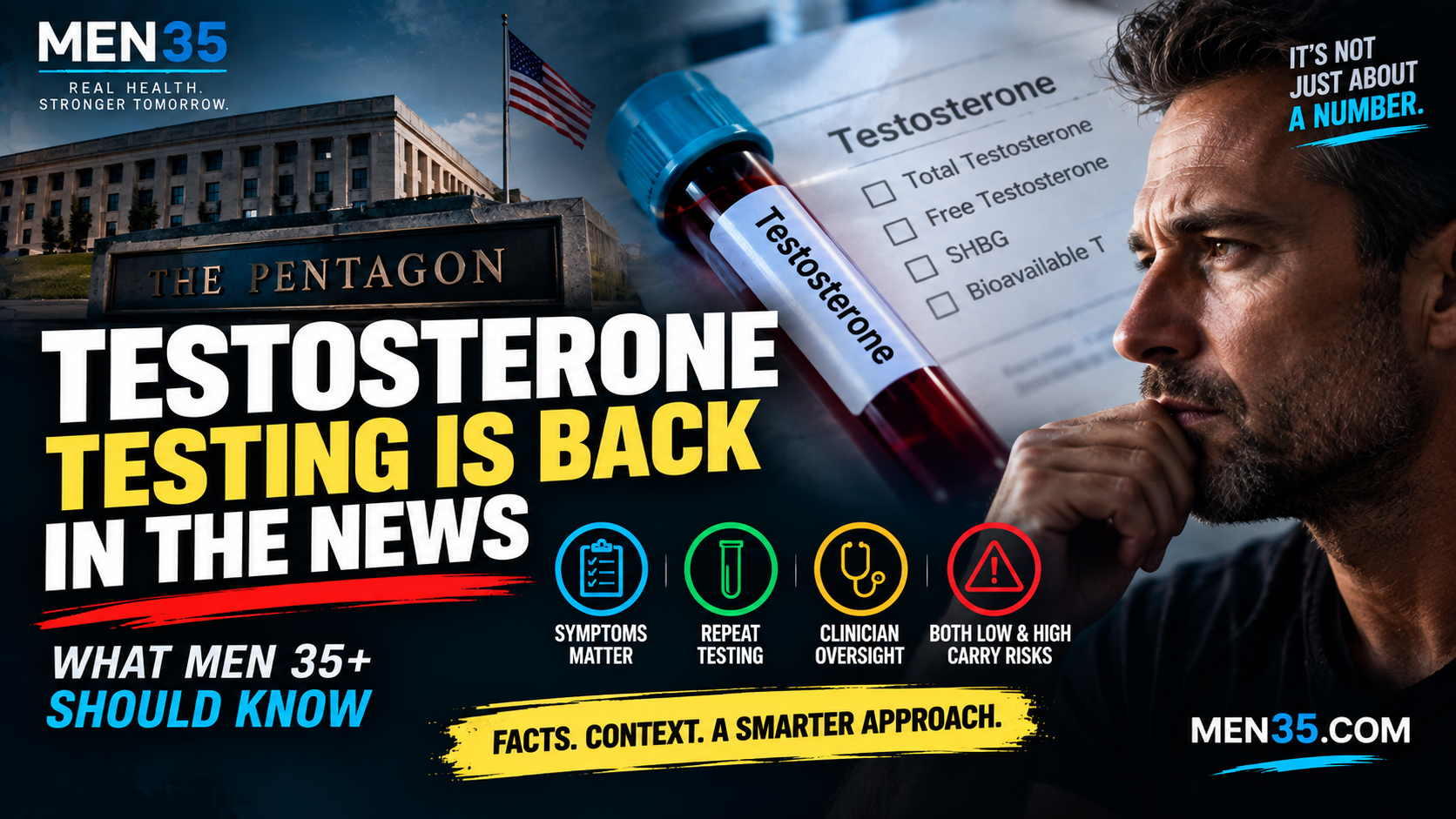
Testosterone screening is back in the news after the Pentagon reinstated testosterone-deficiency testing for male U.S. service members aged 30 and older. For men 35+, the useful takeaway isn't to chase a “perfect” testosterone number. Diagnosis depends on symptoms, accurate testing, repeat measurements and clinical evaluation. 𝗞𝗘𝗬 𝗕𝗘𝗡𝗘𝗙𝗜𝗧𝗦 • Explains what the Pentagon testosterone-testing story actually means • Shows why one testosterone result isn't enough for diagnosis • Explains the importance of symptoms and repeat morning testing • Separates testosterone deficiency from normal age-related changes • Puts testosterone treatment into the proper medical context 𝗪𝗛𝗔𝗧 𝗛𝗔𝗣𝗣𝗘𝗡𝗘𝗗 Reuters reported on September 17, 2026 that the Pentagon reinstated mandatory testosterone-deficiency testing for male U.S. service members aged 30 and older as part of periodic health assessments and annual physicals. The revised guidance followed a temporary pause to update the clinical guidance. Reuters also reported that medical professionals have raised concerns about broad testing and the possibility of unnecessary testosterone treatment. That makes this a useful MEN35 question: What should an ordinary man over 35 actually take from the story? 𝗗𝗢𝗡'𝗧 𝗖𝗛𝗔𝗦𝗘 𝗔 𝗡𝗨𝗠𝗕𝗘𝗥 Testosterone naturally varies during the day and from one test to another. The Endocrine Society recommends diagnosing testosterone deficiency only when a man has compatible symptoms and consistently low testosterone concentrations. It recommends confirming a low result with a repeat morning fasting measurement. The American Urological Association similarly recommends two separate early-morning testosterone measurements before making the diagnosis. It also states that a testosterone level below 300 ng/dL alone does not establish testosterone deficiency. That's important. A lab result is a piece of evidence—not automatically a diagnosis. 𝗦𝗬𝗠𝗣𝗧𝗢𝗠𝗦 𝗠𝗔𝗧𝗧𝗘𝗥 Possible symptoms associated with testosterone deficiency include reduced libido, erectile problems, reduced energy, loss of muscle mass, infertility and other changes. But many of these symptoms are nonspecific. Fatigue, poor concentration, reduced strength and changes in mood can have numerous causes, including inadequate sleep, chronic stress, illness, medication effects and other health conditions. The AUA specifically cautions that these symptoms can occur for reasons other than testosterone deficiency. That's why testing shouldn't be interpreted in isolation. 𝗟𝗢𝗪 𝗜𝗦𝗡'𝗧 𝗔𝗟𝗪𝗔𝗬𝗦 𝗧𝗛𝗘 𝗪𝗛𝗢𝗟𝗘 𝗦𝗧𝗢𝗥𝗬 Testosterone deficiency is medically relevant when it represents a genuine hormonal disorder. But deliberately trying to push testosterone higher is a different question. The Endocrine Society's 2026 statement emphasizes accurate diagnosis and says there is insufficient evidence for population-level screening of asymptomatic men. It also notes that long-term safety questions remain important. At the same time, testosterone treatment can have legitimate medical uses for appropriately diagnosed hypogonadism. The point is not “testosterone is bad.” The point is: 𝗗𝗜𝗔𝗚𝗡𝗢𝗦𝗜𝗦 𝗕𝗘𝗙𝗢𝗥𝗘 𝗧𝗥𝗘𝗔𝗧𝗠𝗘𝗡𝗧 Testosterone therapy is a medical treatment—not simply a performance or anti-aging supplement. The Endocrine Society recommends evaluating the cause of testosterone deficiency and considering contraindications and monitoring before treatment. This matters particularly for men considering testosterone because of symptoms such as low energy, declining gym performance or reduced libido. Those symptoms deserve investigation rather than an automatic assumption that testosterone is the cause. 𝗪𝗛𝗔𝗧 𝗠𝗘𝗡 𝟯𝟱+ 𝗦𝗛𝗢𝗨𝗟𝗗 𝗧𝗔𝗞𝗘 𝗙𝗥𝗢𝗠 𝗧𝗛𝗜𝗦 If you have symptoms that concern you, discuss them with a qualified clinician. If testosterone testing is appropriate, testing conditions matter. If a result is low, confirmation may be necessary. And if deficiency is confirmed, the underlying cause should be investigated before treatment decisions are made. Don't use a single test result—or an online “optimal testosterone” chart—to diagnose yourself. 𝗠𝗘𝗡𝟯𝟱 𝗧𝗔𝗞𝗘𝗔𝗪𝗔𝗬 The testosterone story isn't really about finding the highest possible number. It's about finding out whether a man actually has testosterone deficiency. Symptoms + accurate testing + repeat confirmation + clinical evaluation provide a much more useful picture than a single lab result. 𝗧𝗛𝗘 𝗕𝗢𝗧𝗧𝗢𝗠 𝗟𝗜𝗡𝗘 Testosterone deserves attention—but not obsession. For men 35+, the smart approach is to investigate persistent symptoms, test appropriately when indicated, confirm abnormal results and make treatment decisions with a clinician. This is a news explainer, not a recommendation to start or stop testosterone therapy.
For informational purposes only. This is not medical advice — consult a doctor before changing medication, supplements or training.