Longevity · Expert
Turn Don’t Die’s Measurement Frame Into a Seven-Day Healthspan Experiment
Don’t Die — Bryan Johnson · 04/10/2026 · added by men35 desk
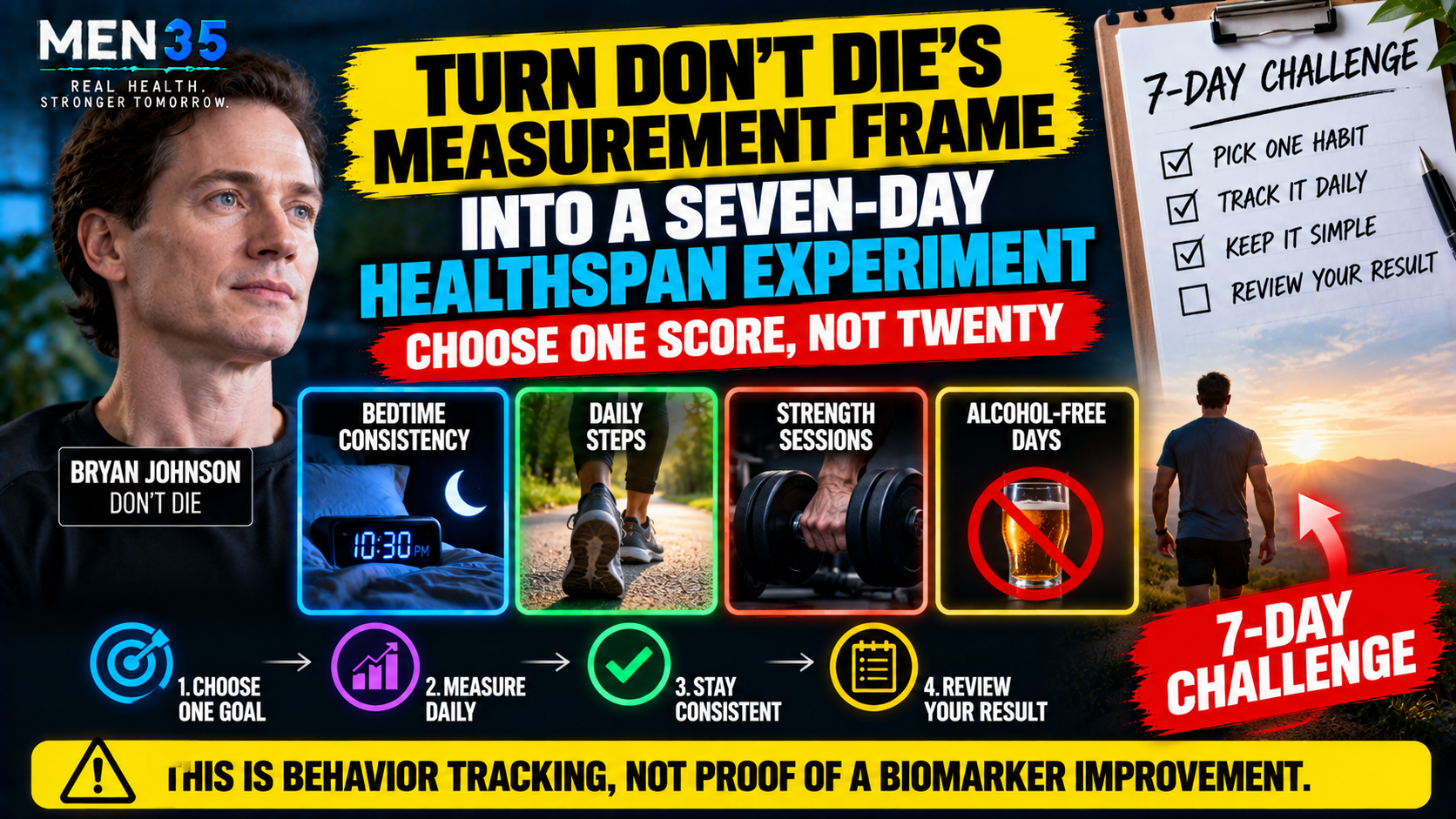
Bryan Johnson’s Don’t Die framework is built around a simple loop: identify a goal, create a plan, measure progress, and adjust. MEN35 can turn that idea into something much simpler—a seven-day experiment focused on one everyday health behavior at a time.
𝗞𝗘𝗬 𝗕𝗘𝗡𝗘𝗙𝗜𝗧𝗦
• Turns a broad health goal into one measurable behavior • Encourages consistency instead of chasing dozens of metrics • Creates a simple baseline for comparison • Makes healthy habits easier to evaluate • Avoids confusing behavior tracking with proof of biological improvement
𝗧𝗛𝗘 𝗗𝗢𝗡’𝗧 𝗗𝗜𝗘 𝗜𝗗𝗘𝗔
Johnson's framework emphasizes identifying a goal, creating a plan and measuring and keeping score. His own approach involves extensive biomarker measurement, but that level of testing is not necessary to apply the basic idea to everyday habits.
The MEN35 version is deliberately simpler:
Pick one behavior. Measure it. Stay consistent. Review the result.
𝗧𝗛𝗘 𝟳-𝗗𝗔𝗬 𝗖𝗛𝗔𝗟𝗟𝗘𝗡𝗚𝗘
Choose one of these:
• Bedtime consistency: Record your bedtime each night. • Daily steps: Record your daily step count. • Strength training: Record completed resistance-training sessions. • Alcohol-free days: Count alcohol-free days during the week. • Screen cutoff: Record whether you stopped recreational screen use at your chosen bedtime target.
Don't change everything at once. The point is to see whether you can consistently execute one behavior.
𝗠𝗘𝗔𝗦𝗨𝗥𝗘 𝗧𝗛𝗘 𝗕𝗔𝗦𝗘𝗟𝗜𝗡𝗘
Before starting, write down your current average or usual pattern.
For example:
Goal: Consistent bedtime Target: 10:30 PM Duration: 7 days Score: Nights reaching the target
At the end of the week, review the number.
You now have a simple measurement—not a medical diagnosis.
𝗪𝗛𝗔𝗧 𝗧𝗛𝗜𝗦 𝗗𝗢𝗘𝗦 𝗡𝗢𝗧 𝗣𝗥𝗢𝗩𝗘
A seven-day improvement in a behavior does not prove that your biological age decreased, that you extended your lifespan, or that a particular biomarker improved.
Even Johnson's own framework involves repeated measurement and emphasizes that the goal is to determine whether an intervention actually produces the intended effect.
For MEN35, the useful lesson is the process—not the promise of instant longevity.
𝗠𝗘𝗡𝟯𝟱 𝗧𝗔𝗞𝗘𝗔𝗪𝗔𝗬
Don't optimize twenty things at once.
Pick one score.
Track it for seven days. See whether you can make the behavior consistent. Then decide what deserves another week.
That's a much more useful starting point than collecting endless health metrics without changing what you actually do.
𝗧𝗛𝗘 𝗕𝗢𝗧𝗧𝗢𝗠 𝗟𝗜𝗡𝗘
Measurement can make health habits more concrete, but a better score is not automatically proof of better health.
Use the seven-day challenge as a behavior experiment—not as a test of whether you've slowed aging.
Bryan Johnson
Entrepreneur; founder of Don’t Die and Blueprint · Technology, healthspan experimentation and longevity-focused health optimization
For informational purposes only. This is not medical advice — consult a doctor before changing medication, supplements or training.