Mind · Study
Caffeine can reduce deep-sleep signals even when total sleep time looks fine
ScienceDaily Psychology · 08/10/2026 · added by men35 desk
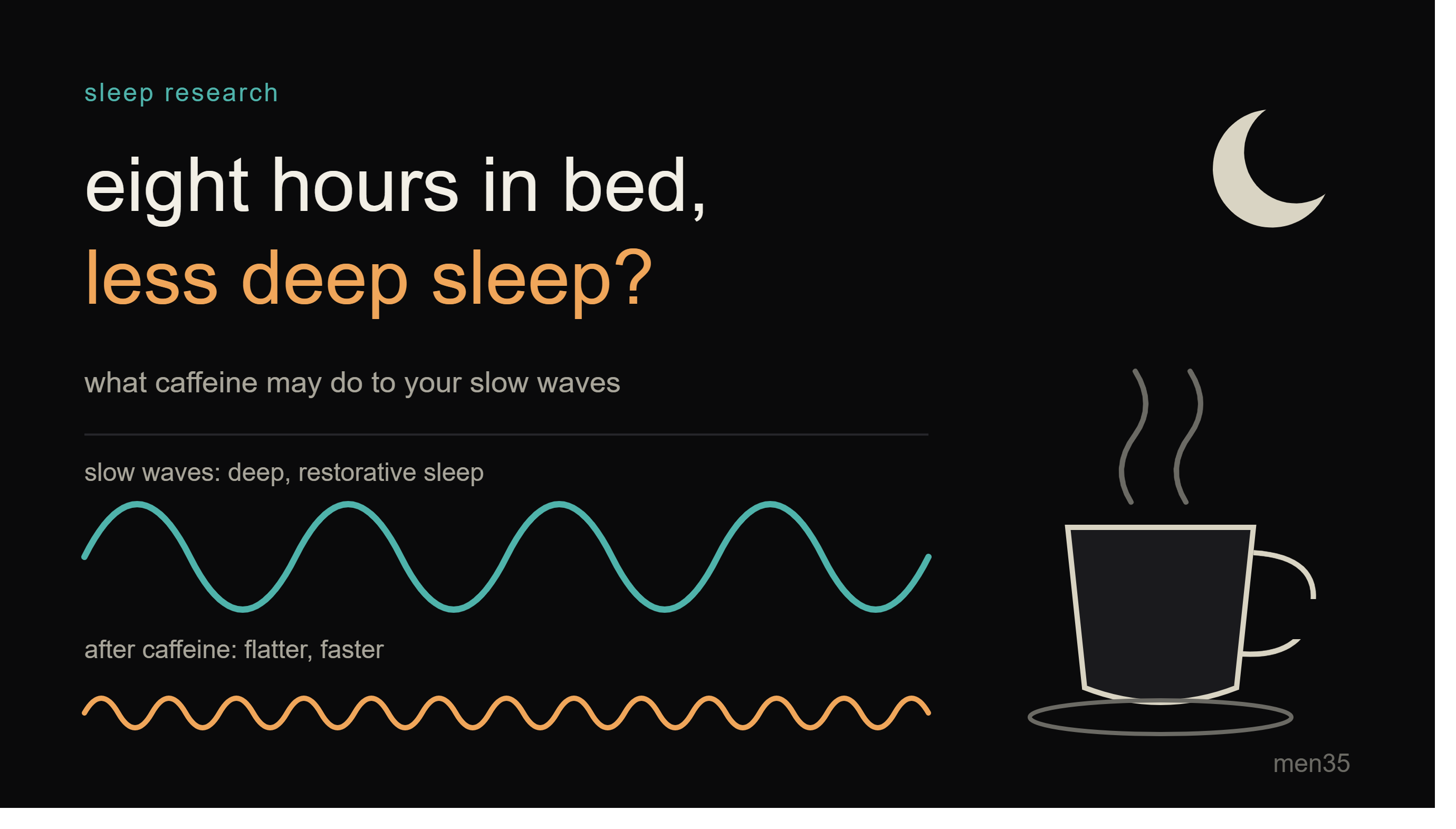
You can fall asleep easily, stay in bed for eight hours and wake with no memory of tossing and turning, and caffeine may still have thinned out your deep sleep. EEG-based research suggests that sleep duration alone can hide the change, and that people differ widely in how sensitive they are. The practical answer is a personal experiment, not a blanket ban. Most of us judge a night's sleep by two things: how long it took to drop off and how many hours we got. A recent ScienceDaily report, based on commentary from Wroclaw Medical University, argues that this misses part of the picture. Caffeine may reduce slow-wave activity during sleep and push the EEG pattern toward a more "wakeful" brain, even when sleep duration looks normal. sciencedaily
Slow waves matter because they are a defining feature of deep sleep. That stage is associated with physical recovery, replenishing energy reserves and maintaining healthy brain function. The researcher quoted in the report, Prof. Donata Kurpas, makes the practical point that a person can fall asleep without major difficulty and not remember any awakenings, while the brain still shows fewer features of deep sleep. Eight hours in bed and eight hours of equally restorative sleep are not the same thing. sciencedaily sciencedaily
Why this is easy to miss. The signal comes from quantitative EEG, which records the brain's electrical activity. Classic sleep assessment looks at duration and stages, while quantitative EEG can pick up subtler changes such as reduced slow-wave activity, a marker of sleep depth. You can't feel a change in slow-wave amplitude the way you feel a bad night. A sleep tracker can't reliably show it either, because consumer devices estimate sleep stages from movement and heart rate rather than reading brain waves. scitechdaily
Why people respond so differently. The report stresses that caffeine's effects depend on dose, time of day, age, lifestyle, sleep quality, stress burden and individual sensitivity. Coverage of the same research adds genetics and metabolic speed to that list. For slower metabolizers, a morning cup may still be in the system at bedtime. This is why one man sleeps fine after an espresso at 4 p.m. while another is affected by a mid-morning coffee. The ScienceDaily summary notes that for some people, even caffeine consumed earlier in the day could affect nighttime recovery. sciencedaily Google News
A cycle worth knowing about. If caffeine does worsen overnight recovery, a loop can develop: you feel more tired the next day, drink more caffeine, and sleep quality declines again. For men past 35, with work, family and training all competing for recovery time, this is the pattern most worth breaking. ua
What this research is, and isn't. The commentary draws on a systematic and mechanistic review of caffeine and sleep EEG. It is not a new trial, and it does not show that coffee harms every drinker or that you should quit. The first press coverage appeared in May, so the September ScienceDaily piece is a republication, not fresh data. The researcher's own framing is balanced: caffeine is neither good nor bad. The honest takeaway is that duration is not the whole story. medicalxpress
A personal cutoff experiment (not a caffeine ban). Instead of guessing, test your own sensitivity. This is a self-experiment, not a medical protocol:
Baseline, 7 days. Change nothing. Each day, log caffeine (what, how much, what time), bedtime, wake time, any nighttime awakenings you remember, and a morning rating from 1 to 5 for how rested you feel. Add a note for alcohol, late meals and hard training days, since these also affect sleep. Move the cutoff, 10 to 14 days. Pick one rule, such as no caffeine after noon, or none in the 8 to 10 hours before bed. Change only that. Taper if you drink a lot, to avoid withdrawal headaches. Compare. Look at your morning ratings, daytime energy and the afternoon crash, not just hours slept. A clear improvement suggests you're sensitive. No change suggests the cutoff isn't your bottleneck, and you can move on to other levers. Keep what works. The right cutoff may be 2 p.m. for you, or noon, or none. The point is that it's yours.
Limits of the diary. It captures how you feel, not your brain waves, so it can miss a real effect you don't notice. Treat it as a practical filter, not a measurement.
When to see a clinician instead. If you sleep seven to nine hours and still feel exhausted, snore loudly, wake gasping, or have persistent insomnia, caffeine is probably not the main issue, and obstructive sleep apnea and other conditions are worth ruling out.
Informational only, not medical advice.
Key takeaways:
Duration isn't depth. Eight hours in bed can still contain less deep, slow-wave sleep after caffeine. EEG sees what you can't. The change shows up in brain-wave recordings, not necessarily in how fast you fall asleep or what you remember. Sensitivity varies widely. Dose, timing, age, stress, genetics and metabolism all shape the effect. A tired-and-caffeinated loop is possible. Poor recovery can drive more caffeine, which can worsen recovery. Run your own test. Log a baseline week, move your cutoff, and compare morning energy. Know the evidence level. This comes from a review and expert commentary, not a new trial, and it doesn't call for quitting coffee.
For informational purposes only. This is not medical advice — consult a doctor before changing medication, supplements or training.