Longevity · Study
THE “75% YOUNGER” CLAIM
The Diary of a CEO with Steven Bartlett · 17/09/2026 · added by men35 desk
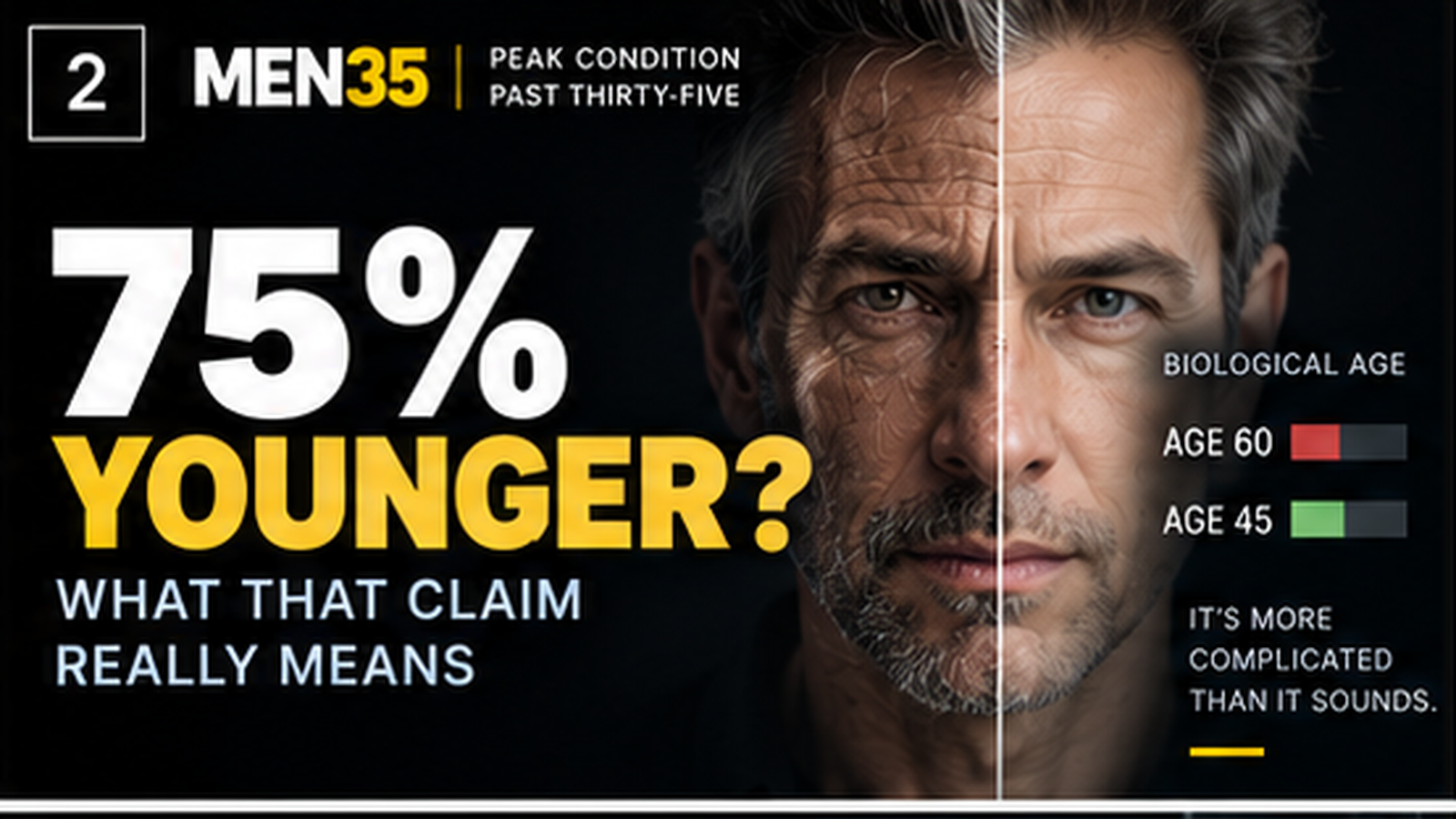
“75% younger” sounds like science fiction. The important question is what was actually measured—and whether cellular age is the same thing as human age. 𝗞𝗘𝗬 𝗕𝗘𝗡𝗘𝗙𝗜𝗧𝗦 Puts the 75% figure into context Explains biological-age measurements Distinguishes biomarkers from health outcomes Separates podcast claims from published evidence 𝗪𝗛𝗔𝗧 𝗗𝗢𝗘𝗦 “𝗬𝗢𝗨𝗡𝗚𝗘𝗥” 𝗠𝗘𝗔𝗡? In the interview, Sinclair discusses experiments in which cellular age appeared to be substantially reduced following reprogramming. But “cellular age” is not the same as chronological age. Researchers can estimate biological aging using molecular signatures, including patterns of DNA methylation. Changing such a measurement does not mean a 60-year-old becomes biologically equivalent to a 15-year-old. 𝗧𝗛𝗘 𝗣𝗨𝗕𝗟𝗜𝗦𝗛𝗘𝗗 𝗘𝗩𝗜𝗗𝗘𝗡𝗖𝗘 The major published work behind Sinclair’s reprogramming approach demonstrated that OSK could restore youthful DNA-methylation patterns and gene-expression profiles in mouse retinal tissue. The study also showed improved regeneration and vision in mouse models. But there is an important limitation: The study was not a demonstration that humans became 75% younger. 𝗕𝗜𝗢𝗟𝗢𝗚𝗜𝗖𝗔𝗟 𝗔𝗚𝗘 𝗜𝗦 𝗡𝗢𝗧 𝗟𝗜𝗙𝗘𝗦𝗣𝗔𝗡 A biological-age clock can be useful for research. But the real clinical questions are harder: Does a treatment improve physical function? Does it reduce disease? Does the benefit last? Does it ultimately improve healthspan or lifespan? Those outcomes require human clinical trials and long-term follow-up. 𝗠𝗘𝗡𝟯𝟱 𝗧𝗔𝗞𝗘𝗔𝗪𝗔𝗬 The phrase “75% younger” should be understood as a statement about experimental cellular or molecular measurements—not proof that human aging can currently be reversed by 75%. 𝗧𝗛𝗘 𝗕𝗢𝗧𝗧𝗢𝗠 𝗟𝗜𝗡𝗘 Aging biomarkers are useful tools. They are not yet a substitute for showing that people actually live healthier for longer.
For informational purposes only. This is not medical advice — consult a doctor before changing medication, supplements or training.