Strength · Study
PROTEIN AFTER 35: HOW MUCH DO MEN REALLY NEED?
PubMed — Morton et al., Protein Supplementation and Resistance Training · 20/09/2026 · added by men35 desk
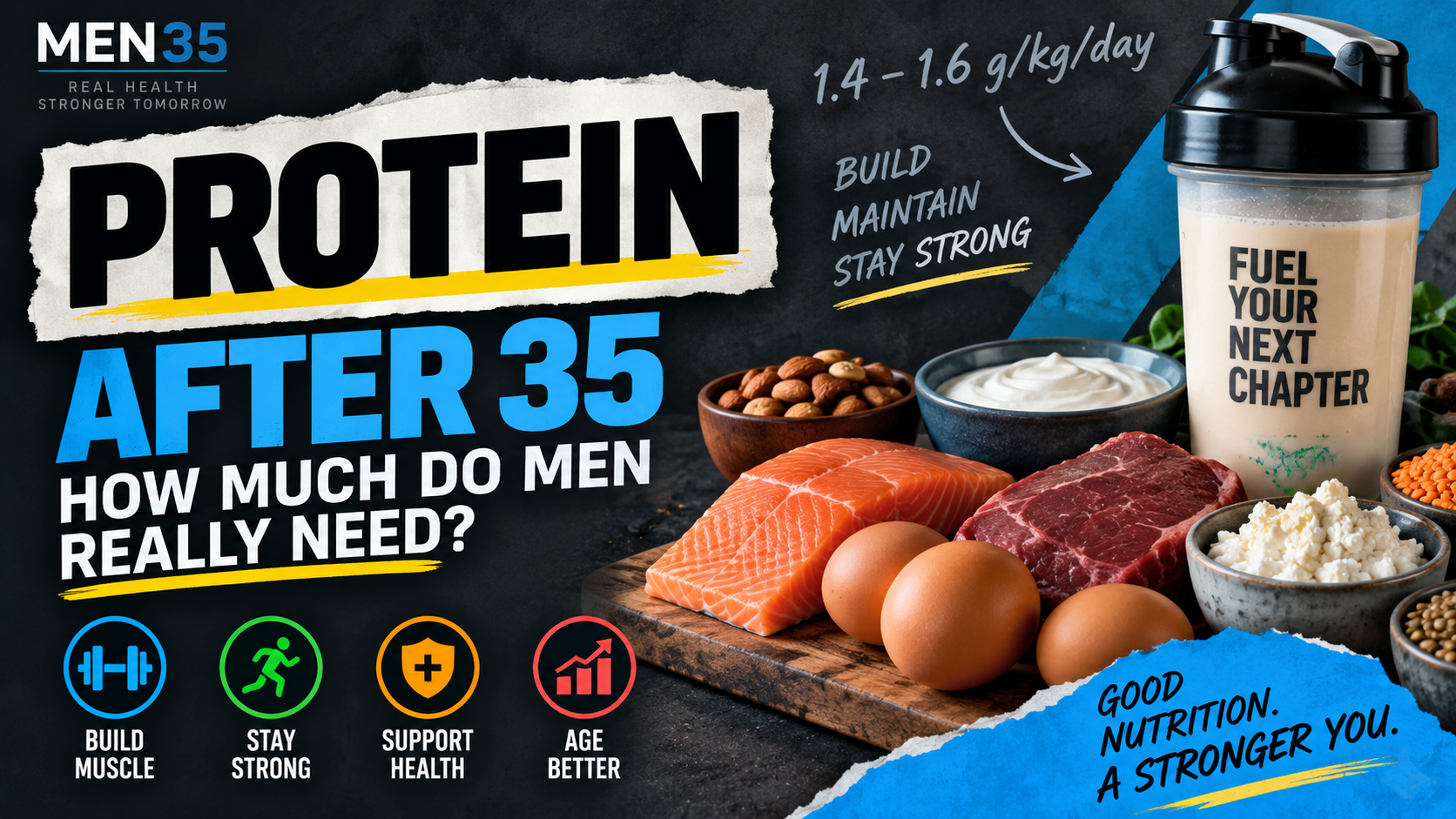
Protein becomes increasingly important as men move through their 30s and 40s because maintaining muscle requires more than simply training hard. The latest evidence suggests that total daily protein, resistance training and consistent distribution across meals all matter — but more is not automatically better. 𝗞𝗘𝗬 𝗕𝗘𝗡𝗘𝗙𝗜𝗧𝗦 • Understand how much protein actually matters for muscle. • See what research says about protein intake during resistance training. • Understand why 1.6 g/kg/day is a useful upper benchmark for many lifters. • Learn why protein quality and total daily intake matter more than supplement hype. 𝗧𝗛𝗘 𝗣𝗥𝗢𝗧𝗘𝗜𝗡 𝗣𝗥𝗢𝗕𝗟𝗘𝗠 𝗔𝗙𝗧𝗘𝗥 𝟯𝟱 Your body does not suddenly stop building muscle at 35. But maintaining and gaining lean mass becomes a more deliberate process. Resistance training provides the stimulus. Protein provides the amino acids required to repair and remodel muscle tissue. A large meta-analysis of 49 randomized trials involving 1,863 participants found that protein supplementation during prolonged resistance training produced additional improvements in strength, fat-free mass and muscle size. The researchers also found that the benefit diminished as total protein intake increased, with no additional fat-free-mass benefit beyond approximately 1.62 g/kg/day. That does not mean every man needs exactly 1.62 g/kg. It means that pushing protein intake higher and higher is unlikely to produce proportionally greater muscle gains. 𝗪𝗛𝗔𝗧 𝗧𝗛𝗘 𝗥𝗘𝗦𝗘𝗔𝗥𝗖𝗛 𝗦𝗛𝗢𝗪𝗦 A 2022 systematic review and meta-analysis covering 74 randomized trials found that increasing protein intake produced small additional gains in lean body mass when combined with resistance exercise. The effect was particularly relevant in people performing resistance training. In adults under 65, benefits were most apparent at intakes around or above 1.6 g/kg/day, while older adults showed benefits at somewhat lower ranges as well. The important point for men in their 30s and 40s is that protein works best as part of a training system — not as a replacement for training. 𝗔 𝗣𝗥𝗔𝗖𝗧𝗜𝗖𝗔𝗟 𝗧𝗔𝗥𝗚𝗘𝗧 For a healthy, active man who regularly performs resistance training, approximately 1.4–1.6 g/kg/day is a practical evidence-based range to consider. For example: 80 kg man → roughly 112–128 g/day 90 kg man → roughly 126–144 g/day 100 kg man → roughly 140–160 g/day These are practical targets, not medical prescriptions. Men who are older, dieting aggressively, highly active, or dealing with illness may have different requirements. 𝗗𝗢𝗡’𝗧 𝗙𝗢𝗥𝗚𝗘𝗧 𝗧𝗛𝗘 𝗙𝗢𝗢𝗗 Protein powder is convenient, but it is not nutritionally superior to a well-designed diet. Eggs, dairy, fish, lean meat, poultry, legumes and other protein-rich foods can provide the building blocks required for muscle maintenance. A protein shake simply makes the target easier to hit when food is inconvenient. 𝗠𝗘𝗔𝗟 𝗦𝗧𝗥𝗔𝗧𝗘𝗚𝗬 Total daily protein is the first priority. After that, distributing protein reasonably across the day can make practical sense. Recent research suggests that adequate protein portions at meals are more important than obsessing over a perfectly timed “anabolic window.” A 2024 systematic review examining dose, frequency and timing of protein supplementation in older adults found that supplementation can support muscle mass, but the ideal dose and timing vary between populations. For MEN35 readers, the simplest approach is: Breakfast: protein-rich meal Lunch: protein-rich meal Dinner: protein-rich meal Optional: protein-rich snack or shake 𝗠𝗘𝗡𝟯𝟱 𝗧𝗔𝗞𝗘𝗔𝗪𝗔𝗬 After 35, muscle maintenance becomes a numbers game you can actually control. Train consistently. Eat enough protein. Make your daily target realistic. Then repeat it for years. You do not need extreme protein intake. You need enough protein, enough training stimulus and enough consistency. 𝗧𝗛𝗘 𝗕𝗢𝗧𝗧𝗢𝗠 𝗟𝗜𝗡𝗘 For many active men 35+, around 1.4–1.6 g/kg/day is a sensible practical target when building or preserving muscle through resistance training. More is not automatically better. Consistency is.
For informational purposes only. This is not medical advice — consult a doctor before changing medication, supplements or training.