Longevity · Expert
Don’t Die’s “Measure, Then Improve” Mindset: A Simpler Health Strategy
Bryan Johnson · 03/10/2026 · added by men35 desk
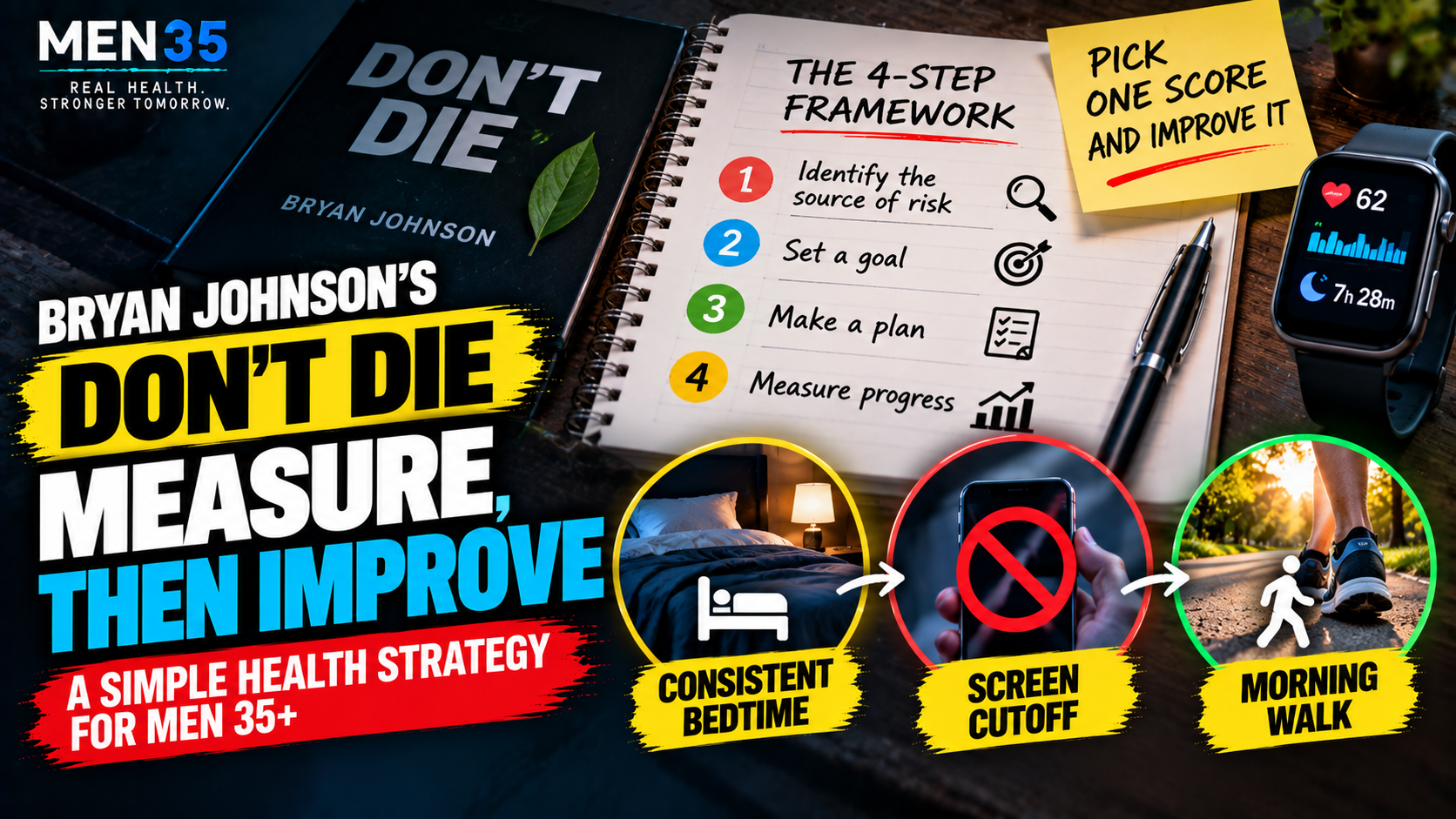
Bryan Johnson’s Don’t Die philosophy takes a simple approach to health: identify a problem, choose a measurable goal, make a plan, and track whether anything improves. For men 35+, the useful lesson may not be copying Johnson’s extensive routine—it may be learning to focus on one measurable habit at a time.
𝗧𝗛𝗘 𝗜𝗗𝗘𝗔 𝗜𝗡 𝗙𝗢𝗨𝗥 𝗦𝗧𝗘𝗣𝗦
Johnson describes his Don’t Die process as:
Identify the source of risk. State the goal. Create a plan. Measure progress and repeat.
His own approach involves extensive biomarker testing and health tracking, but he also presents the broader framework as something individuals can adapt to their own circumstances.
𝗗𝗢𝗡'𝗧 𝗖𝗢𝗣𝗬 𝗧𝗛𝗘 𝗪𝗛𝗢𝗟𝗘 𝗣𝗥𝗢𝗧𝗢𝗖𝗢𝗟
This is where MEN35 readers should separate the framework from the interventions.
Johnson follows an unusually extensive personal health program involving numerous measurements, dietary practices, exercise and other interventions. His personal routine is not automatically appropriate or necessary for every man.
The more transferable idea is simpler:
Measure one thing. Improve one thing. Then measure again.
𝗧𝗛𝗘 𝟮𝟮-𝗠𝗜𝗡𝗨𝗧𝗘 𝗠𝗘𝗡𝟯𝟱 𝗖𝗛𝗔𝗟𝗟𝗘𝗡𝗚𝗘
Instead of trying to overhaul your entire lifestyle, choose one measurable behavior for the next two weeks.
𝗢𝗣𝗧𝗜𝗢𝗡 𝟭 — 𝗕𝗘𝗗𝗧𝗜𝗠𝗘
Choose a consistent bedtime and record how often you follow it.
𝗢𝗣𝗧𝗜𝗢𝗡 𝟮 — 𝗦𝗖𝗥𝗘𝗘𝗡 𝗖𝗨𝗧𝗢𝗙𝗙
Set a fixed time to stop recreational screen use before bed and track your consistency.
𝗢𝗣𝗧𝗜𝗢𝗡 𝟯 — 𝗠𝗢𝗥𝗡𝗜𝗡𝗚 𝗪𝗔𝗟𝗞
Take a 15–20 minute morning walk and record how many days you complete it.
Don't change everything simultaneously.
Pick one behavior that is realistic enough to repeat.
𝗪𝗛𝗬 𝗠𝗘𝗔𝗦𝗨𝗥𝗘𝗠𝗘𝗡𝗧 𝗛𝗘𝗟𝗣𝗦
Memory can be unreliable.
A simple record gives you feedback.
If you intended to walk five days a week but actually walked twice, you have useful information. You can adjust the plan rather than simply assuming you are “doing well” or “doing badly.”
The measurement does not have to be complicated. A calendar, notebook, phone tracker or spreadsheet can be enough.
𝗪𝗛𝗘𝗥𝗘 𝗧𝗛𝗘 𝗙𝗥𝗔𝗠𝗘𝗪𝗢𝗥𝗞 𝗛𝗔𝗦 𝗟𝗜𝗠𝗜𝗧𝗦
Measurement is useful, but more data does not automatically mean better health decisions.
Some biomarkers fluctuate naturally. Some measurements have uncertain links to meaningful health outcomes. And a personal experiment does not replace medical diagnosis or professional advice.
The goal should therefore be useful measurement, not measuring everything.
𝗠𝗘𝗡𝟯𝟱 𝗧𝗔𝗞𝗘𝗔𝗪𝗔𝗬
The most useful part of the Don’t Die philosophy may be its simplicity.
Don't try to optimize your entire life overnight.
Choose one meaningful behavior, define what success looks like, track it and reassess.
That turns health improvement from a vague intention into a feedback loop.
𝗧𝗛𝗘 𝗕𝗢𝗧𝗧𝗢𝗠 𝗟𝗜𝗡𝗘
Bryan Johnson's Don’t Die framework emphasizes identifying risk, setting a goal, creating a plan and measuring progress.
You don't need an extreme longevity protocol to apply the underlying idea.
For men 35+, start with one measurable behavior—sleep timing, screen use or daily walking—and build from what you can consistently improve.
Bryan Johnson
Entrepreneur and founder of the Don’t Die initiative · Personal health optimization, longevity-focused health tracking and biomarker measurement.
For informational purposes only. This is not medical advice — consult a doctor before changing medication, supplements or training.