Health · Study
Sleep Apnoea After 35: When Snoring Becomes a Health Warning
Ministry of Health Malaysia. Clinical Practice Guidelines: Management of Obstructive Sleep Apnoea, May 2024. · 04/11/2026 · added by men35 desk
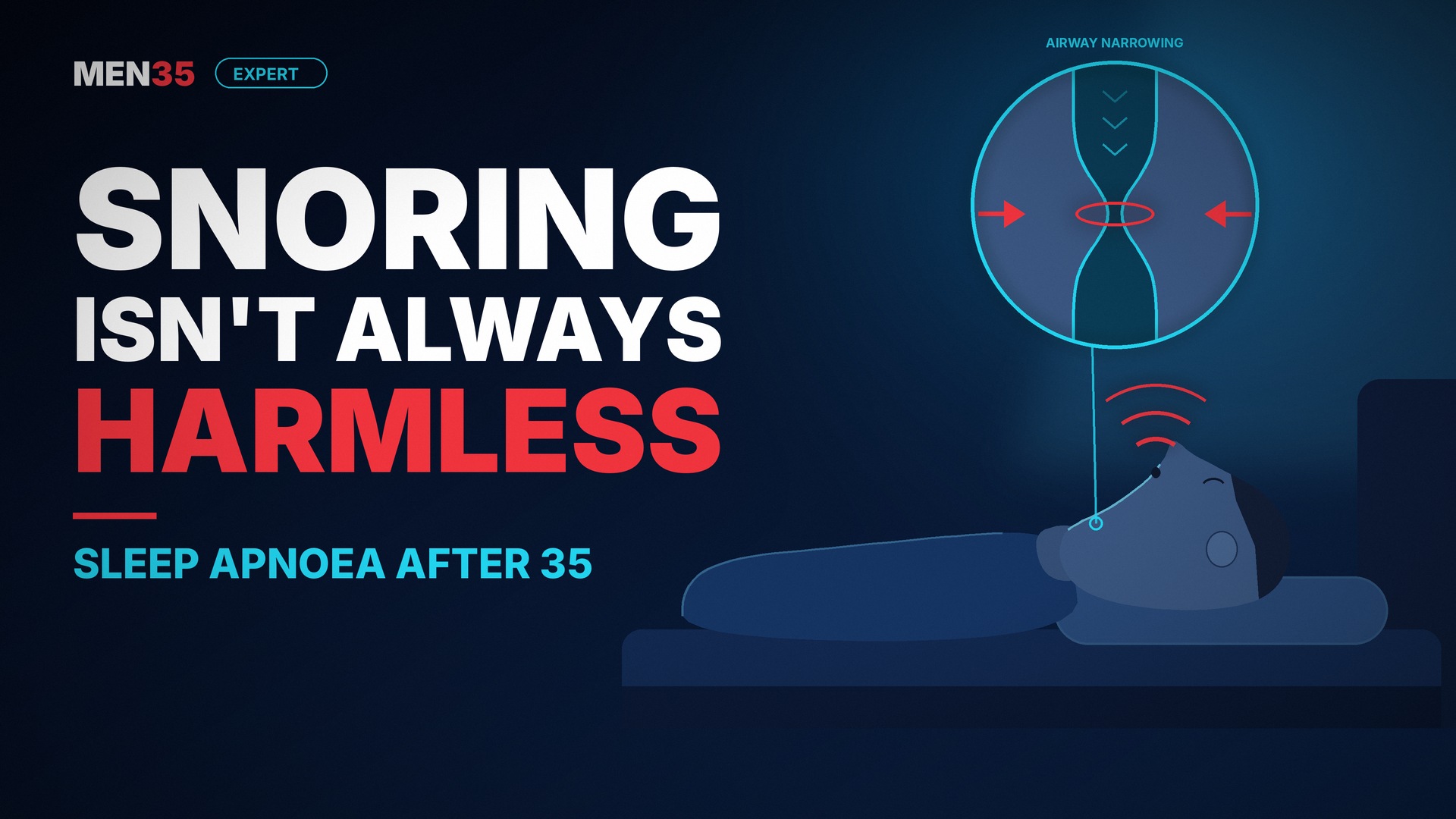
Loud snoring, interrupted breathing and waking up exhausted may be more than signs of poor sleep. They can indicate obstructive sleep apnoea, a condition that repeatedly disrupts breathing during the night and deserves proper medical assessment.
Key Benefits
• Recognise common warning signs of obstructive sleep apnoea. • Understand why snoring and daytime fatigue should not always be dismissed. • Learn how sleep apnoea is diagnosed. • Discover established treatment options that can improve sleep and daily functioning.
𝗜𝗧 𝗠𝗔𝗬 𝗡𝗢𝗧 𝗕𝗘 𝗝𝗨𝗦𝗧 𝗦𝗡𝗢𝗥𝗜𝗡𝗚
Your partner complains that you snore loudly. You wake up with a dry mouth, feel tired despite spending eight hours in bed and struggle to concentrate during the day.
It is tempting to blame stress, age or a busy schedule.
But these symptoms can sometimes point to obstructive sleep apnoea (OSA), a sleep-related breathing disorder in which the upper airway repeatedly narrows or becomes blocked during sleep.
Breathing may become shallow or stop temporarily, causing oxygen levels to fall and sleep to become fragmented.
The result can be poor-quality sleep even when you believe you have spent enough time in bed.
𝗪𝗛𝗬 𝗠𝗘𝗡 𝗦𝗛𝗢𝗨𝗟𝗗 𝗣𝗔𝗬 𝗔𝗧𝗧𝗘𝗡𝗧𝗜𝗢𝗡
OSA is particularly relevant to middle-aged men.
Risk factors include excess body weight, increased neck circumference, certain facial or airway structures, alcohol consumption and family history.
It is also associated with conditions such as high blood pressure, type 2 diabetes and cardiovascular disease.
Association does not mean every man who snores has sleep apnoea. But persistent symptoms deserve assessment rather than dismissal.
𝗙𝗜𝗩𝗘 𝗪𝗔𝗥𝗡𝗜𝗡𝗚 𝗦𝗜𝗚𝗡𝗦
𝗟𝗢𝗨𝗗, 𝗥𝗘𝗚𝗨𝗟𝗔𝗥 𝗦𝗡𝗢𝗥𝗜𝗡𝗚
Loud snoring can occur when airflow passes through a narrowed upper airway. Snoring alone does not diagnose OSA, but persistent loud snoring combined with other symptoms deserves attention.
𝗚𝗔𝗦𝗣𝗜𝗡𝗚 𝗢𝗥 𝗖𝗛𝗢𝗞𝗜𝗡𝗚 𝗗𝗨𝗥𝗜𝗡𝗚 𝗦𝗟𝗘𝗘𝗣
A partner may notice pauses in breathing followed by gasping, snorting or choking sounds. These episodes are an important reason to seek medical evaluation.
𝗗𝗔𝗬𝗧𝗜𝗠𝗘 𝗦𝗟𝗘𝗘𝗣𝗜𝗡𝗘𝗦𝗦
Repeated sleep disruption can leave you tired during the day, even after spending a seemingly adequate amount of time in bed.
𝗠𝗢𝗥𝗡𝗜𝗡𝗚 𝗛𝗘𝗔𝗗𝗔𝗖𝗛𝗘𝗦 𝗢𝗥 𝗗𝗥𝗬 𝗠𝗢𝗨𝗧𝗛
Some people with OSA wake with headaches, a dry mouth or a feeling that they have not slept properly.
𝗣𝗢𝗢𝗥 𝗖𝗢𝗡𝗖𝗘𝗡𝗧𝗥𝗔𝗧𝗜𝗢𝗡
Fragmented sleep can affect attention, memory, mood and everyday performance.
If you regularly feel sleepy while driving, do not ignore it. Avoid driving when drowsy and seek medical assessment.
𝗛𝗢𝗪 𝗜𝗦 𝗦𝗟𝗘𝗘𝗣 𝗔𝗣𝗡𝗢𝗘𝗔 𝗗𝗜𝗔𝗚𝗡𝗢𝗦𝗘𝗗?
A questionnaire or smartwatch cannot confirm sleep apnoea.
A healthcare professional first reviews symptoms, medical history and risk factors. Depending on the situation, diagnosis may involve:
• Home sleep apnoea testing for appropriately selected patients. • Polysomnography, an overnight sleep study that measures breathing and other physiological signals.
Polysomnography is the standard diagnostic test, particularly when a person has complex medical conditions or a home test is unsuitable.
𝗪𝗛𝗔𝗧 𝗧𝗥𝗘𝗔𝗧𝗠𝗘𝗡𝗧 𝗖𝗔𝗡 𝗛𝗘𝗟𝗣?
Treatment depends on severity, anatomy, symptoms and individual circumstances.
Common options include:
𝗖𝗣𝗔𝗣 𝗧𝗛𝗘𝗥𝗔𝗣𝗬
Continuous positive airway pressure (CPAP) uses a mask to deliver pressurised air that helps keep the airway open during sleep. It is a well-established treatment, particularly for moderate-to-severe OSA.
𝗪𝗘𝗜𝗚𝗛𝗧 𝗠𝗔𝗡𝗔𝗚𝗘𝗠𝗘𝗡𝗧
For people carrying excess weight, a structured weight-management programme may improve OSA severity. It does not replace prescribed treatment when treatment is required.
𝗢𝗥𝗔𝗟 𝗔𝗣𝗣𝗟𝗜𝗔𝗡𝗖𝗘𝗦
Custom-made dental devices may help selected people by positioning the jaw or tongue to reduce airway obstruction. A qualified sleep or dental professional should assess suitability.
𝗟𝗜𝗙𝗘𝗦𝗧𝗬𝗟𝗘 𝗔𝗗𝗝𝗨𝗦𝗧𝗠𝗘𝗡𝗧𝗦
Reducing alcohol, avoiding smoking, maintaining a healthy weight and following an appropriate sleep routine may support treatment. These measures are not a substitute for diagnosis.
𝗠𝗘𝗡𝟯𝟱 𝗧𝗔𝗞𝗘𝗔𝗪𝗔𝗬
If your partner regularly notices breathing pauses, or you experience loud snoring combined with daytime tiredness, arrange a medical assessment.
Don't assume that snoring is harmless, and don't rely on a smartwatch to rule out sleep apnoea.
𝗕𝗢𝗧𝗧𝗢𝗠 𝗟𝗜𝗡𝗘
Sleep apnoea is a treatable medical condition, not simply an annoying sleeping habit. Recognising the warning signs and obtaining an appropriate sleep assessment can help protect your sleep quality, daily functioning and overall health.
For informational purposes only. This is not medical advice — consult a doctor before changing medication, supplements or training.