Strength · Study
The Strength Box Is Also a Weight-Regain Box
ScienceDaily Staying Healthy · 07/10/2026 · added by men35 desk
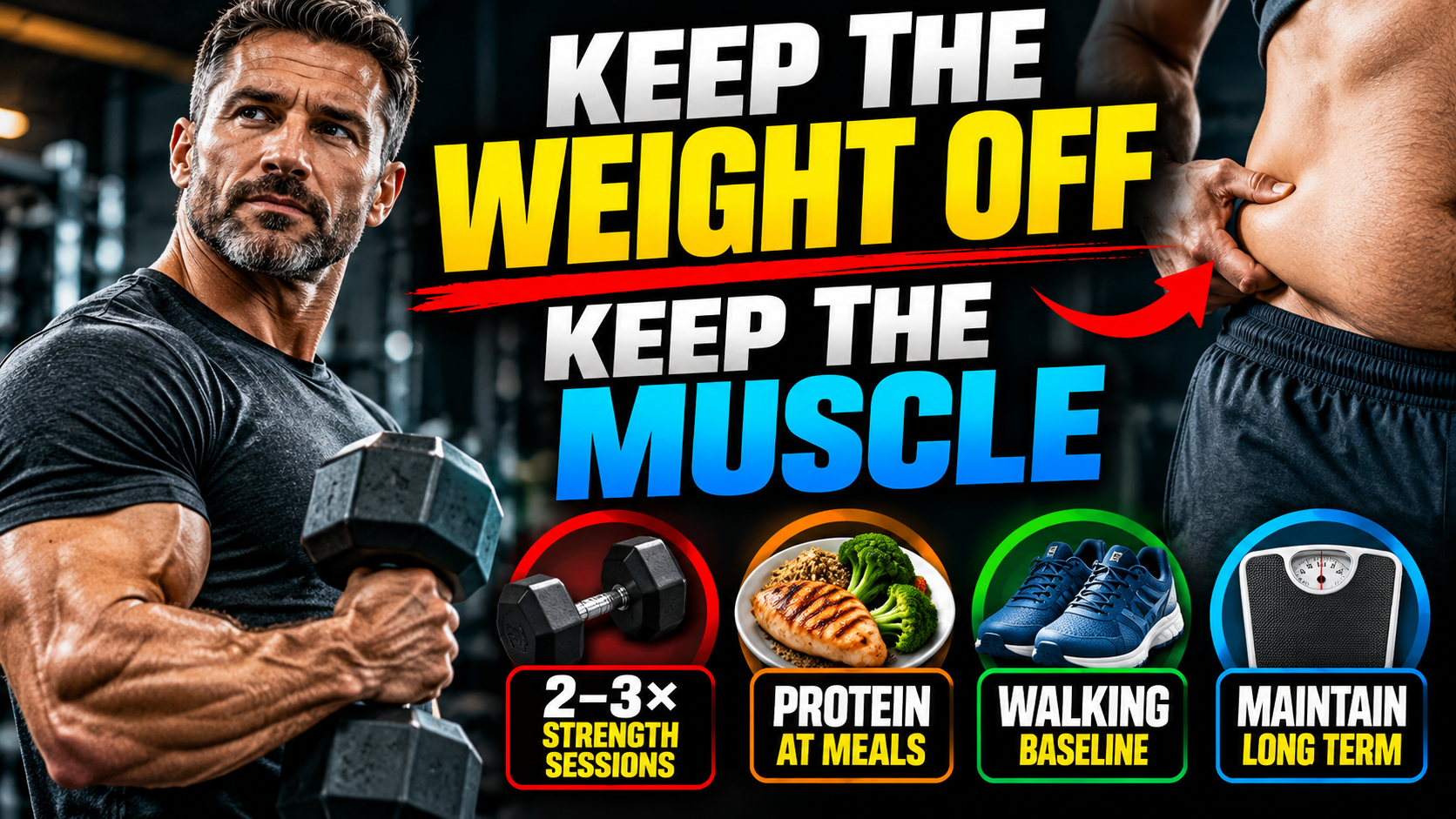
Losing weight is only half the job. For men 35+, preserving muscle through resistance training, eating enough protein and staying physically active may help make weight maintenance easier.
Key Benefits:
Explains why maintaining muscle matters after weight loss.
Shows why resistance training should remain part of a weight-maintenance plan.
Connects protein intake with muscle preservation.
Adds walking and daily activity without promising a specific fat-loss rate.
Reframes exercise as a long-term weight-maintenance tool, not simply a calorie burner.
𝗧𝗛𝗘 𝗪𝗘𝗜𝗚𝗛𝗧-𝗟𝗢𝗦𝗦 𝗣𝗥𝗢𝗕𝗟𝗘𝗠
Getting the weight off and keeping it off are not exactly the same challenge.
After weight loss, the body can adapt through changes in energy expenditure, appetite and other physiological signals that make regain easier. Recent research suggests exercise may have a particularly useful role during the maintenance phase—even when its effect on initial weight loss is relatively modest.
That changes how men 35+ should think about training.
The goal is not simply to burn calories.
It is to build a body that is easier to maintain.
𝗦𝗔𝗩𝗘 𝗧𝗛𝗘 𝗠𝗨𝗦𝗖𝗟𝗘
Weight loss can reduce both fat mass and fat-free mass.
That matters because losing lean tissue can reduce strength and contribute to lower resting energy expenditure.
Resistance training can help limit that muscle loss. A 2025 systematic review of 25 randomized trials found that adding resistance exercise during dietary weight loss protected fat-free mass and improved fat-mass loss compared with diet alone, although it did not significantly change total body weight.
That is an important MEN35 distinction:
The scale does not tell you everything.
Two men can lose the same amount of weight while experiencing very different changes in muscle and fat.
𝗧𝗛𝗘 𝗦𝗧𝗥𝗘𝗡𝗚𝗧𝗛 𝗕𝗢𝗫
For most men 35+ trying to maintain weight, a practical starting framework is:
☐ Resistance training 2–3 times per week ☐ Train the major muscle groups consistently ☐ Keep protein-rich foods in regular meals ☐ Maintain a daily walking or general-activity baseline ☐ Keep some aerobic activity in the week ☐ Monitor your weight trend rather than reacting to individual scale readings
WHO guidelines recommend muscle-strengthening activity on at least two days per week, alongside regular aerobic activity.
You do not need a bodybuilding program.
You need enough training to give your muscles a reason to stay.
𝗣𝗥𝗢𝗧𝗘𝗜𝗡 𝗛𝗘𝗟𝗣𝗦 𝗧𝗛𝗘 𝗧𝗥𝗔𝗜𝗡𝗜𝗡𝗚
Protein is the other half of the muscle-preservation equation.
A large meta-analysis of resistance-training studies found that increasing protein intake can enhance gains in lean mass and strength, with benefits generally leveling off around approximately 1.6 g/kg/day in healthy adults performing resistance training.
That does not mean every man needs exactly 1.6 g/kg.
Age, body size, training status, total diet and health circumstances all matter.
The practical point is simpler:
Don't let a calorie-restricted diet become a low-protein diet.
Including a meaningful protein source in meals can make it easier to support muscle while managing overall energy intake.
𝗪𝗔𝗟𝗞 𝗠𝗢𝗥𝗘 𝗧𝗛𝗔𝗡 𝗬𝗢𝗨 𝗧𝗥𝗔𝗜𝗡
The gym should not be your only source of movement.
Walking is a simple way to increase daily activity without turning every calorie burned into another hard workout.
Recent evidence on post-weight-loss maintenance found that exercise interventions reduced subsequent weight regain compared with controls, although effects on fat mass were less certain. The evidence also suggests aerobic activity and resistance training may contribute differently: aerobic activity can support overall energy expenditure, while resistance training is particularly useful for preserving body composition.
So think beyond the workout.
Train hard enough to preserve strength.
Walk enough to keep daily movement high.
Then recover.
𝗗𝗢𝗡’𝗧 𝗖𝗛𝗔𝗦𝗘 𝗧𝗛𝗘 𝗦𝗖𝗔𝗟𝗘
A common mistake is judging every workout by whether the scale drops.
That can encourage increasingly aggressive exercise or dietary restriction.
But if your weight is relatively stable while your waist is controlled, strength is maintained and your fitness is improving, the plan may be working.
Weight maintenance is not failure to lose more weight.
Sometimes maintaining the result is the achievement.
𝗠𝗘𝗡𝟯𝟱 𝗧𝗔𝗞𝗘𝗔𝗪𝗔𝗬
If you've lost weight, don't stop training once the target number appears.
Keep the muscle.
Keep moving.
Keep protein adequate.
And keep resistance training in the weekly routine.
The recent evidence suggests exercise may be particularly valuable after weight loss because it helps make regain less likely—not because it guarantees continued fat loss.
𝗧𝗛𝗘 𝗕𝗢𝗧𝗧𝗢𝗠 𝗟𝗜𝗡𝗘
For men 35+, the strength box is also a weight-maintenance box.
Resistance training helps protect lean mass. Protein supports that training. Walking keeps everyday activity moving.
You don't need to chase a specific rate of fat loss.
Build a routine you can still follow when the diet is over.
For informational purposes only. This is not medical advice — consult a doctor before changing medication, supplements or training.