Mind · Video
Stress Is Not Always the Enemy: How to Reframe Pressure After 35
Huberman Lab · 22/10/2026 · added by men35 desk
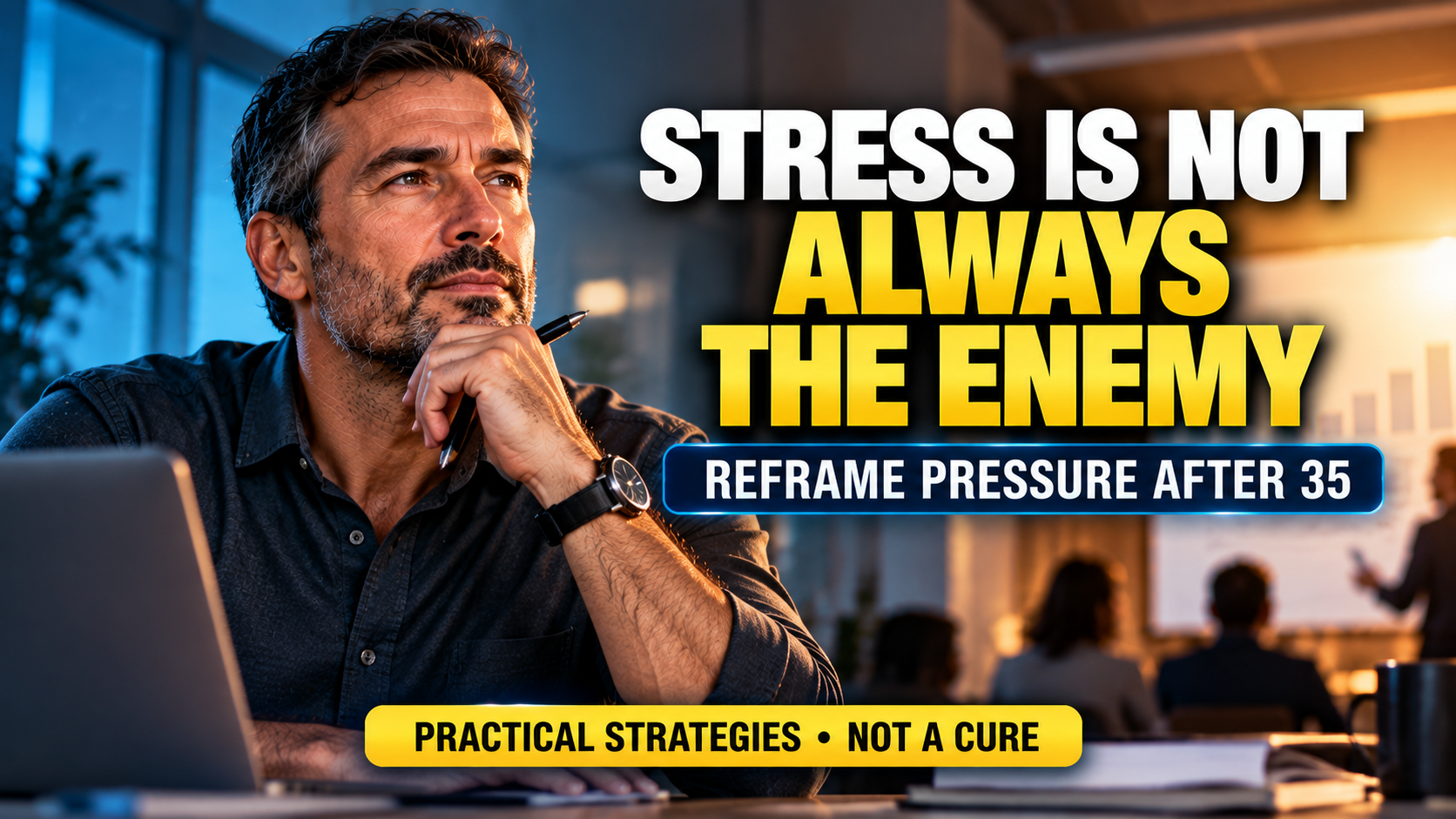
Stress can make your heart race, your muscles tighten and your thoughts spiral. But according to stress researcher Dr. Elissa Epel, the way you interpret a challenge may influence how you respond to it. Here is what men over 35 can learn from stress-reappraisal research.
KEY BENEFITS
• Understand the difference between viewing stress as a threat and viewing it as a challenge.
• Learn a practical way to prepare for difficult situations.
• Recognise why manageable challenges can help develop coping skills.
• Avoid confusing a positive mindset with ignoring genuine risks.
𝗪𝗛𝗔𝗧 𝗜𝗙 𝗦𝗧𝗥𝗘𝗦𝗦 𝗜𝗦𝗡’𝗧 𝗔𝗟𝗪𝗔𝗬𝗦 𝗧𝗛𝗘 𝗣𝗥𝗢𝗕𝗟𝗘𝗠?
You have an important meeting tomorrow. Your heart starts racing, your shoulders tighten and your mind jumps straight to everything that could go wrong.
One interpretation is: “My body is failing under pressure.”
Another is: “My body is preparing me to handle something demanding.”
The situation has not changed. But your interpretation has.
In a Huberman Lab conversation, Dr. Elissa Epel explains how viewing stress as a challenge rather than a threat may influence the body's response. This idea is called stress reappraisal.
𝗧𝗛𝗥𝗘𝗔𝗧 𝗩𝗘𝗥𝗦𝗨𝗦 𝗖𝗛𝗔𝗟𝗟𝗘𝗡𝗚𝗘
When people feel threatened, they may focus on what they could lose, whether they can cope and how others might judge them.
A challenge-oriented response focuses more on the task, available resources and the possibility of taking effective action.
Research by Wendy Mendes and colleagues has investigated how changing the interpretation of stress can influence physiological responses and performance during stressful tasks. Some experiments suggest that stress reappraisal can improve aspects of performance and emotional response.
That does not mean every stressful situation becomes beneficial simply because you think positively. The outcome depends on the circumstances, and reappraisal is not a substitute for solving real problems.
𝗧𝗥𝗬 𝗔 𝗦𝗧𝗥𝗘𝗦𝗦 𝗦𝗛𝗜𝗘𝗟𝗗
Before a demanding task, try these three steps:
• Recognise the response: Notice your racing thoughts, tension or faster heartbeat without immediately assuming something is wrong.
• Choose a believable statement: Try “I can prepare for this” or “I can take this one step at a time.”
• Focus on the next action: Prepare your notes, make the call, start the workout or address the problem directly.
The statement should feel credible. You do not need to convince yourself that every challenge is easy.
𝗪𝗛𝗬 𝗧𝗛𝗜𝗦 𝗠𝗔𝗧𝗧𝗘𝗥𝗦 𝗔𝗙𝗧𝗘𝗥 𝟯𝟱
Work responsibilities, financial pressure, parenting and caring for family members can create recurring demands. Avoiding every challenge is rarely realistic.
Learning to respond more constructively may help you approach difficult situations with greater confidence. But resilience also requires recovery: adequate sleep, physical activity, social support and professional help when needed.
Chronic or overwhelming stress should not be dismissed as a mindset problem.
𝗧𝗛𝗘 𝗠𝗘𝗡𝟯𝟱 𝗧𝗔𝗞𝗘𝗔𝗪𝗔𝗬
Before your next difficult conversation or important task, ask yourself: “What resources do I have, and what is the next useful step?”
That question may be more helpful than repeatedly asking, “What if everything goes wrong?”
BOTTOM LINE
Stress reappraisal is a practical skill worth exploring. It will not eliminate pressure, but it may help you respond to some challenges more effectively.
For informational purposes only. This is not medical advice — consult a doctor before changing medication, supplements or training.