Mind · Study
One Depression Diagnosis, Five Brain-Connectivity Patterns: What Scientists Found
ScienceDaily, October 9 · 20/10/2026 · added by men35 desk
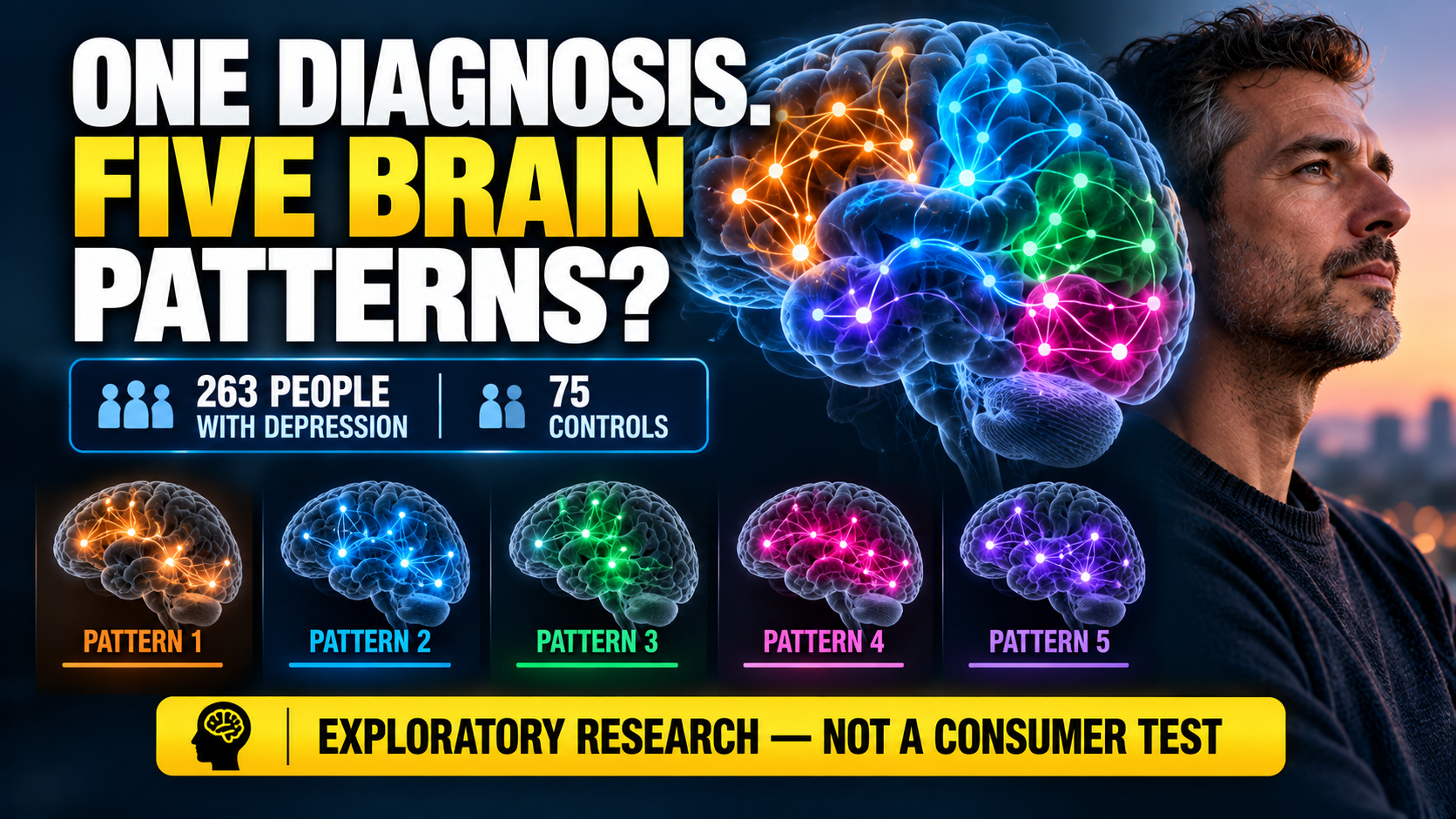
A diagnosis of major depressive disorder does not necessarily reflect one underlying pattern of brain activity. Researchers studying 263 people with depression and 75 healthy controls identified five distinct functional-connectivity profiles. The findings could help scientists understand why depression varies so widely—but they are exploratory, not a clinical test or a guide to changing treatment.
KEY BENEFITS
A broader view of depression: The same diagnosis may encompass different patterns of brain-network activity.
A possible explanation for conflicting research: Different patient groups may show different, sometimes opposing, connectivity patterns.
Better understanding of symptom differences: Brain profiles were associated with variations in symptom severity, trauma-related symptoms and substance-use problems.
A potential path toward personalised care: Researchers may eventually investigate whether brain profiles can help guide treatment.
A clear reminder about the evidence: These profiles are not yet validated for routine diagnosis or treatment selection.
𝗢𝗡𝗘 𝗟𝗔𝗕𝗘𝗟, 𝗗𝗜𝗙𝗙𝗘𝗥𝗘𝗡𝗧 𝗕𝗥𝗔𝗜𝗡𝗦
Two people can both be diagnosed with depression yet experience very different struggles.
One may be overwhelmed by anxiety and repetitive negative thoughts. Another may experience prominent trauma-related symptoms or problems with substance use. Their symptoms, circumstances and treatment needs may differ—even when the diagnosis is the same.
Could differences in brain activity help explain some of that variation?
A study reported by ScienceDaily on October 9, 2026, suggests that major depressive disorder may encompass several distinct patterns of communication between brain regions. Researchers identified five functional-connectivity profiles among 263 people diagnosed with depression, compared with 75 healthy controls. <Cite refs={["turn244903search0"]}/>
The key point is not that scientists have discovered five types of depression ready for diagnosis. It is that one diagnostic label may include a wider range of underlying brain patterns than researchers previously captured with simpler models.
𝗪𝗛𝗔𝗧 𝗧𝗛𝗘 𝗥𝗘𝗦𝗘𝗔𝗥𝗖𝗛𝗘𝗥𝗦 𝗙𝗢𝗨𝗡𝗗
The team used magnetoencephalography, or MEG, to measure brain activity and examine functional connectivity—how closely activity in different brain regions is coordinated over time.
The analysis identified five profiles with different combinations of stronger and weaker connections. These profiles were also associated with differences in clinical symptoms and wellbeing. <Cite refs={["turn244903search0"]}/>
The researchers reported several broad patterns:
One profile showed relatively strong connectivity alongside more severe symptoms, including depression, anxiety and rumination.
Another showed weaker connectivity and generally milder symptoms.
A third showed widespread weaker connectivity and more prominent post-traumatic stress symptoms.
A fourth combined stronger connections in some areas with weaker connections elsewhere and was associated with multiple clinical challenges.
A fifth showed particularly strong connectivity and more prominent substance-use problems.
These descriptions summarise group-level findings. They cannot tell you which profile, if any, applies to a particular person.
𝗪𝗛𝗬 𝗕𝗥𝗔𝗜𝗡 𝗖𝗢𝗡𝗡𝗘𝗖𝗧𝗜𝗩𝗜𝗧𝗬 𝗠𝗔𝗧𝗧𝗘𝗥𝗦
The brain works through networks of connected regions rather than isolated areas operating independently.
Functional connectivity describes patterns of coordinated activity between those regions. Stronger connectivity does not automatically mean better functioning, just as weaker connectivity does not by itself establish damage or dysfunction.
The study found that connectivity differences could point in different directions among people carrying the same diagnosis. This may help explain why studies of depression sometimes produce inconsistent findings: the results can depend partly on which people are included and which brain networks are examined. <Cite refs={["turn244903search0"]}/>
That is an important research insight. But an association between a brain pattern and a symptom does not establish that the pattern caused the symptom.
𝗖𝗢𝗨𝗟𝗗 𝗧𝗛𝗜𝗦 𝗖𝗛𝗔𝗡𝗚𝗘 𝗗𝗘𝗣𝗥𝗘𝗦𝗦𝗜𝗢𝗡 𝗧𝗥𝗘𝗔𝗧𝗠𝗘𝗡𝗧?
Potentially, in the future.
If researchers can independently reproduce these profiles and establish that they reliably predict treatment response, brain measurements might eventually help clinicians personalise care.
However, identifying groups in a research dataset is only an early step. Scientists still need to determine whether the profiles are reproducible across populations, stable over time and useful for predicting which treatment will help a particular patient.
The study does not establish a consumer brain test, prove that one treatment works best for each profile, or justify changing medication or therapy based on a connectivity pattern.
For anyone living with depression, treatment decisions should continue to be made with a qualified healthcare professional, using clinical history, symptoms, preferences and established evidence.
𝗪𝗛𝗔𝗧 𝗠𝗘𝗡𝟯𝟱 𝗥𝗘𝗔𝗗𝗘𝗥𝗦 𝗦𝗛𝗢𝗨𝗟𝗗 𝗧𝗔𝗞𝗘 𝗙𝗥𝗢𝗠 𝗧𝗛𝗜𝗦
The most useful message is about individual differences—not brain scanning.
A diagnosis provides important clinical information, but it does not mean every person has the same experience, contributing factors or treatment journey. Depression deserves individual assessment rather than assumptions based on a label.
This research offers a possible biological explanation for some of that variation. It does not yet provide a practical test for identifying an individual's brain profile.
𝗠𝗘𝗡𝟯𝟱 𝗧𝗔𝗞𝗘𝗔𝗪𝗔𝗬
One label does not mean one lived experience. Researchers found five brain-connectivity profiles in a group of people with major depressive disorder, reinforcing the complexity of depression. The profiles are research findings—not categories to use on yourself or others.
𝗕𝗢𝗧𝗧𝗢𝗠 𝗟𝗜𝗡𝗘
Depression may involve several distinct patterns of brain-network activity rather than one consistent biological signature. The findings could inform future personalised-treatment research, but independent validation and evidence of clinical usefulness are still needed. Do not use this study to diagnose yourself or change treatment.
For informational purposes only. This is not medical advice — consult a doctor before changing medication, supplements or training.