Mind · Study
Stress and Sleep: Make the Pre-Bed Mind Visible
PsyPost sleep archive · 08/10/2026 · added by men35 desk
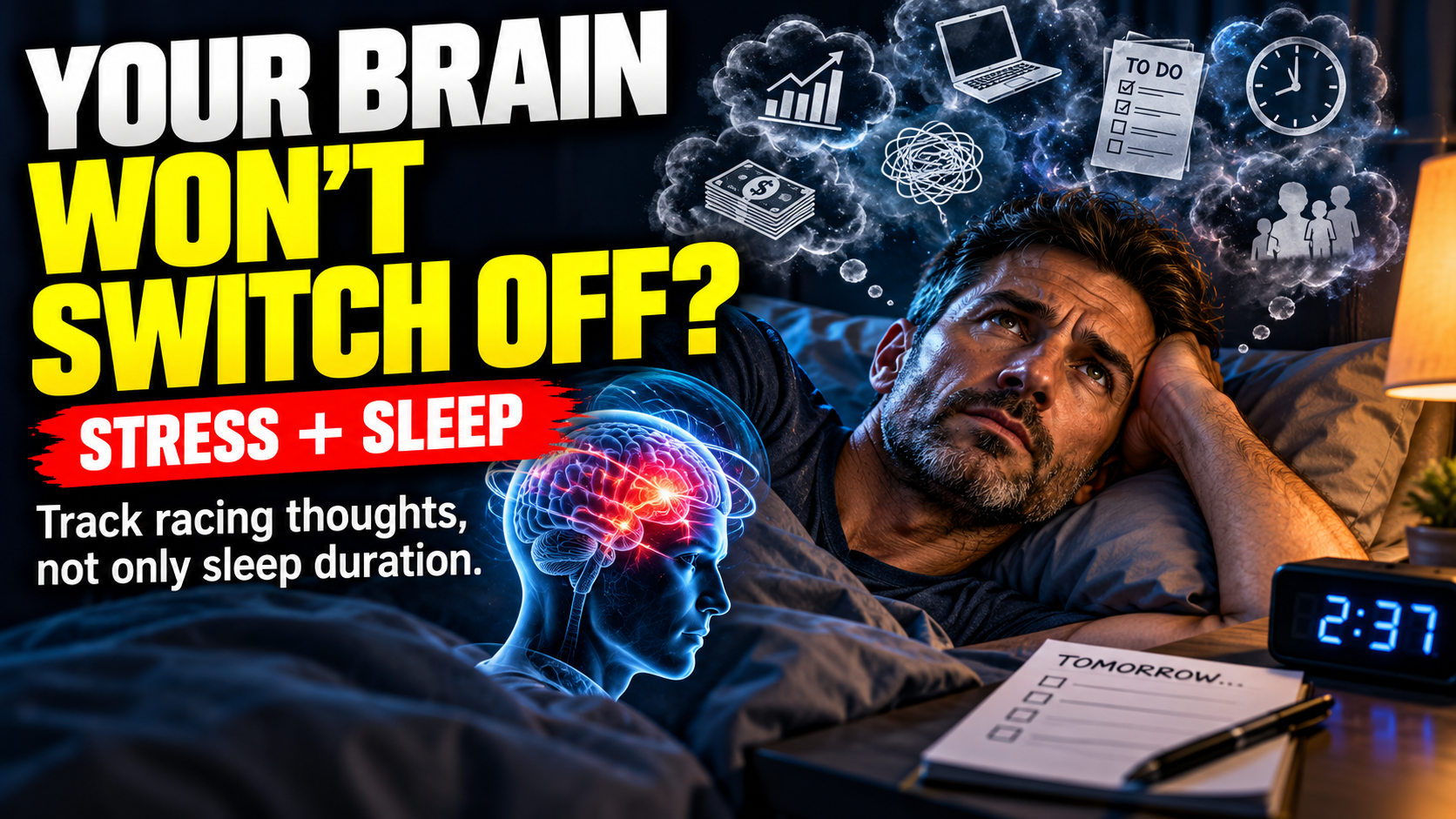
You may track how long you sleep, but what happens in the 30 minutes before bed can matter too. New research highlights racing thoughts and pre-sleep cognitive arousal as an important link between daily stress and disrupted sleep.
Key Benefits:
Explains why bedtime mental activity deserves attention.
Shows how daily stress can trigger racing thoughts before sleep.
Introduces “sleep reactivity” and why some people are more vulnerable.
Provides a simple seven-night self-tracking experiment.
Separates an interesting behavioral strategy from clinical insomnia treatment.
𝗧𝗛𝗘 𝗠𝗜𝗡𝗗 𝗕𝗘𝗙𝗢𝗥𝗘 𝗕𝗘𝗗
Most people tracking sleep focus on the numbers: total sleep time, bedtime, wake time and perhaps sleep stages.
But there is another variable worth noticing:
What is your mind doing when the lights go out?
A new 2026 study found that days with higher-than-usual stress were associated with greater pre-sleep cognitive arousal—racing thoughts, worry and mental activation—which was then associated with disrupted sleep. The effect was seen across participants, while people with higher sleep reactivity appeared particularly vulnerable over time.
That doesn't mean every bad night is caused by stress.
It does suggest that the period immediately before sleep deserves more attention.
𝗥𝗔𝗖𝗜𝗡𝗚 𝗧𝗛𝗢𝗨𝗚𝗛𝗧𝗦 𝗠𝗔𝗧𝗧𝗘𝗥
Research has previously linked nighttime cognitive arousal with longer time to fall asleep, lower sleep efficiency and shorter total sleep time.
Another study found that bedtime stress and worry were associated with lower sleep efficiency and more time awake during the night.
The important distinction is that this is not simply about “thinking too much.”
It is about mental activation at the wrong time.
Your body may be lying still while your brain is still working through tomorrow's meeting, an argument, finances, unfinished tasks or an upcoming deadline.
𝗪𝗛𝗔𝗧 𝗜𝗦 𝗦𝗟𝗘𝗘𝗣 𝗥𝗘𝗔𝗖𝗧𝗜𝗩𝗜𝗧𝗬
People differ in how strongly stress affects their sleep.
Researchers call this sleep reactivity—a person's susceptibility to having sleep disrupted when exposed to stress. Higher sleep reactivity has been associated with a greater risk of developing insomnia symptoms over time.
The 2026 study adds an interesting layer: among people with higher sleep reactivity, greater average pre-sleep cognitive arousal was associated with more wakefulness after initially falling asleep.
That means two men can experience the same stressful day and have very different nights.
𝗧𝗥𝗬 𝗧𝗛𝗘 𝟳–𝗡𝗜𝗚𝗛𝗧 𝗘𝗫𝗣𝗘𝗥𝗜𝗠𝗘𝗡𝗧
Instead of tracking only sleep duration, make the pre-bed mind visible for one week.
For seven nights, spend about 10 minutes before your normal wind-down writing down:
☐ What is occupying my mind? ☐ What do I need to deal with tomorrow? ☐ What can wait until tomorrow? ☐ Is there anything I can realistically act on tonight?
Then stop.
The objective isn't to solve your life before bed.
It is to move unfinished thoughts from your head onto paper and create a clear stopping point.
For the same seven nights, record:
Approximate bedtime
Approximate time to fall asleep
Number of noticeable awakenings
Approximate wake time
Morning sleep quality: 1–5
Pre-bed mental activity: 1–5
This is a personal experiment—not a clinically validated insomnia treatment.
𝗟𝗢𝗢𝗞 𝗙𝗢𝗥 𝗣𝗔𝗧𝗧𝗘𝗥𝗡𝗦
After seven nights, don't ask:
“Did this cure my sleep?”
Ask:
“Did my evenings become less mentally activated?”
You may notice that certain situations repeatedly produce the same pattern:
High-pressure workday → racing thoughts → delayed sleep.
Late-night screen time → mental stimulation → later bedtime.
Unfinished tasks → mental rehearsal → repeated awakenings.
Or you may find no meaningful pattern at all.
That's useful information too.
𝗗𝗢𝗡’𝗧 𝗧𝗨𝗥𝗡 𝗜𝗧 𝗜𝗡𝗧𝗢 𝗔𝗡𝗢𝗧𝗛𝗘𝗥 𝗦𝗧𝗥𝗘𝗦𝗦𝗢𝗥
Sleep tracking can become counterproductive if you become obsessed with achieving a perfect score.
The goal is awareness, not another performance metric.
A seven-night experiment should remain simple enough that it doesn't become another task keeping you awake.
And if persistent insomnia, excessive daytime sleepiness, loud snoring, breathing pauses or other significant symptoms are present, self-tracking should not replace professional evaluation.
𝗠𝗘𝗡𝟯𝟱 𝗧𝗔𝗞𝗘𝗔𝗪𝗔𝗬
Don't track only how long you sleep.
Track what your mind is doing before you sleep.
Daily stress can increase cognitive arousal at bedtime, and people differ in how vulnerable their sleep is to that stress.
A simple seven-night log of racing thoughts, worries and sleep quality can help you see whether your evenings have a repeatable pattern.
𝗧𝗛𝗘 𝗕𝗢𝗧𝗧𝗢𝗠 𝗟𝗜𝗡𝗘
Better sleep isn't always about adding another supplement or chasing another sleep metric.
Sometimes the first useful measurement is simply noticing what your brain is doing when the room goes quiet.
Make the pre-bed mind visible.
Then see what the pattern tells you.
For informational purposes only. This is not medical advice — consult a doctor before changing medication, supplements or training.