Mind · Study
A Brain-Health Plate, Without a Dementia-Prevention Promise
ScienceDaily / BMJ Group, October 1 · 09/10/2026 · added by men35 desk
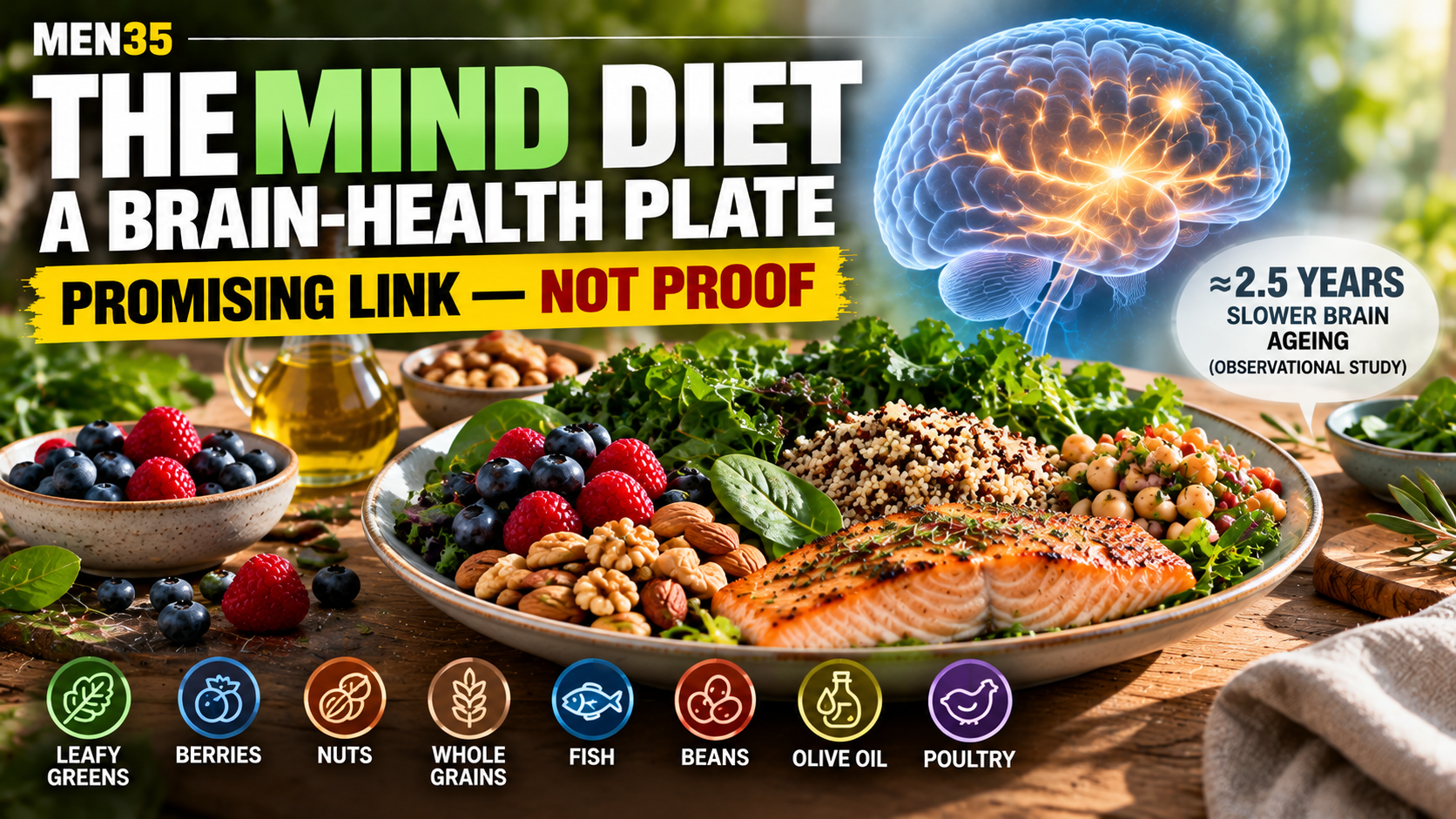
A long-term study found that closer adherence to the MIND diet was associated with slower loss of brain tissue over time. The strongest association was equivalent to approximately 2.5 years of brain ageing. For men over 35, the findings offer a practical reason to examine everyday food choices—but they do not prove that this diet prevents dementia.
KEY BENEFITS
Understand what the MIND diet is and how it relates to brain structure.
Learn what researchers observed over more than a decade.
Discover five practical food swaps to try this week.
Separate promising observational findings from proven prevention.
Build a sustainable eating pattern without expensive supplements or unvalidated brain-age tests.
𝗪𝗛𝗔𝗧 𝗧𝗛𝗘 𝗦𝗧𝗨𝗗𝗬 𝗙𝗢𝗨𝗡𝗗
Can the foods you eat influence how your brain changes as you age? A study published in the Journal of Neurology, Neurosurgery & Psychiatry examined this question by tracking dietary patterns and brain scans over time.
Researchers analysed data from 1,647 middle-aged and older adults in the Framingham Heart Study Offspring cohort. Their average age at the start was approximately 60. Participants underwent repeated dietary assessments and brain MRI scans over a median follow-up of 12.3 years.
The researchers found that people whose diets more closely followed the MIND pattern tended to experience slower declines in total grey matter volume. Grey matter contains many of the brain's neuronal cell bodies and contributes to functions including memory, learning and information processing.
The association was meaningful but needs careful interpretation. For each three-point increase in the MIND diet score, the estimated rate of grey matter loss was slower by 0.279 cubic centimetres per year. The researchers calculated that this represented about 20% less age-related change, equivalent to approximately 2.5 years of brain ageing over the follow-up period.
This is an estimated comparison based on brain-imaging changes—not proof that an individual’s brain became 2.5 years younger.
𝗪𝗛𝗔𝗧 𝗜𝗦 𝗧𝗛𝗘 𝗠𝗜𝗡𝗗 𝗗𝗜𝗘𝗧?
MIND stands for Mediterranean-DASH Intervention for Neurodegenerative Delay. It combines elements of the Mediterranean diet with the DASH eating pattern, which was developed to help manage blood pressure.
The MIND pattern emphasises:
Leafy green vegetables and other vegetables.
Berries.
Nuts and beans.
Whole grains.
Fish and poultry.
Olive oil as a principal added fat.
It also recommends limiting foods such as pastries, sweets, fried fast foods, red meat and butter.
The aim is not to identify a single miracle food. It is to encourage a consistent eating pattern that supplies a variety of nutrients while making heavily processed, less nutritious choices less frequent.
𝗙𝗜𝗩𝗘 𝗘𝗔𝗦𝗬 𝗦𝗪𝗔𝗣𝗦 𝗧𝗛𝗜𝗦 𝗪𝗘𝗘𝗞
1. Add leafy greens to one meal daily. Include spinach, kale or another leafy vegetable with lunch or dinner. Frozen vegetables can be a convenient option.
2. Choose berries more often. Have blueberries, strawberries or other berries as a snack, or add them to plain yoghurt. Fresh or frozen options can both work.
3. Replace some processed snacks with nuts. Keep a small portion of unsalted walnuts, almonds or mixed nuts available instead of routinely reaching for crisps or biscuits.
4. Upgrade your staple foods. Choose oats, whole-grain bread or brown rice more often, and add beans or lentils to meals for fibre and plant protein.
5. Make fish, poultry and olive oil regular choices. Include fish or poultry in balanced meals and use olive oil in place of butter more often where practical.
You do not need to change everything overnight. Start with two or three swaps you can maintain, then build from there.
𝗪𝗛𝗬 𝗧𝗛𝗜𝗦 𝗜𝗦 𝗡𝗢𝗧 𝗣𝗥𝗢𝗢𝗙 𝗢𝗙 𝗗𝗘𝗠𝗘𝗡𝗧𝗜𝗔 𝗣𝗥𝗘𝗩𝗘𝗡𝗧𝗜𝗢𝗡
The study was observational. It identified associations between dietary scores and changes in brain structure; it did not randomly assign participants to diets and prove that the MIND diet caused the differences.
Other factors may help explain the findings. People with higher MIND scores were also more likely to be physically active, college educated and less likely to smoke or have obesity and certain cardiovascular conditions. Statistical adjustments can account for some measured differences, but they cannot eliminate every possible source of bias.
Diet was assessed using food-frequency questionnaires, which rely on participants remembering what they ate. The study population was also predominantly White, so the results may not apply equally to all populations.
The outcomes were primarily changes in brain structure measured by MRI—not proof that participants avoided dementia or maintained better memory and thinking as a direct result of the diet.
The sensible conclusion is that the MIND diet is a promising brain-health eating pattern worthy of further research, not a guaranteed way to prevent Alzheimer's disease or other forms of dementia.
𝗠𝗘𝗡𝟯𝟱 𝗧𝗔𝗞𝗘𝗔𝗪𝗔𝗬
A brain-supportive diet is built through repeated everyday choices, not a single superfood or supplement. More leafy greens, berries, nuts, beans, whole grains and fish can help move your meals towards the MIND pattern. The study makes that pattern worth considering, but it does not establish that following it will prevent dementia.
𝗕𝗢𝗧𝗧𝗢𝗠 𝗟𝗜𝗡𝗘
Build a better plate, not a dementia-prevention promise. Choose a sustainable eating pattern rich in vegetables, plant foods and minimally processed staples. Treat the reported 2.5-year difference as an observational estimate of brain-tissue change—not a promise of extra healthy years.
For informational purposes only. This is not medical advice — consult a doctor before changing medication, supplements or training.