Anti-aging · Study
Menin and Brain Aging: A New Clue From Mice
ScienceDaily Healthy Aging News · 01/10/2026 · added by men35 desk
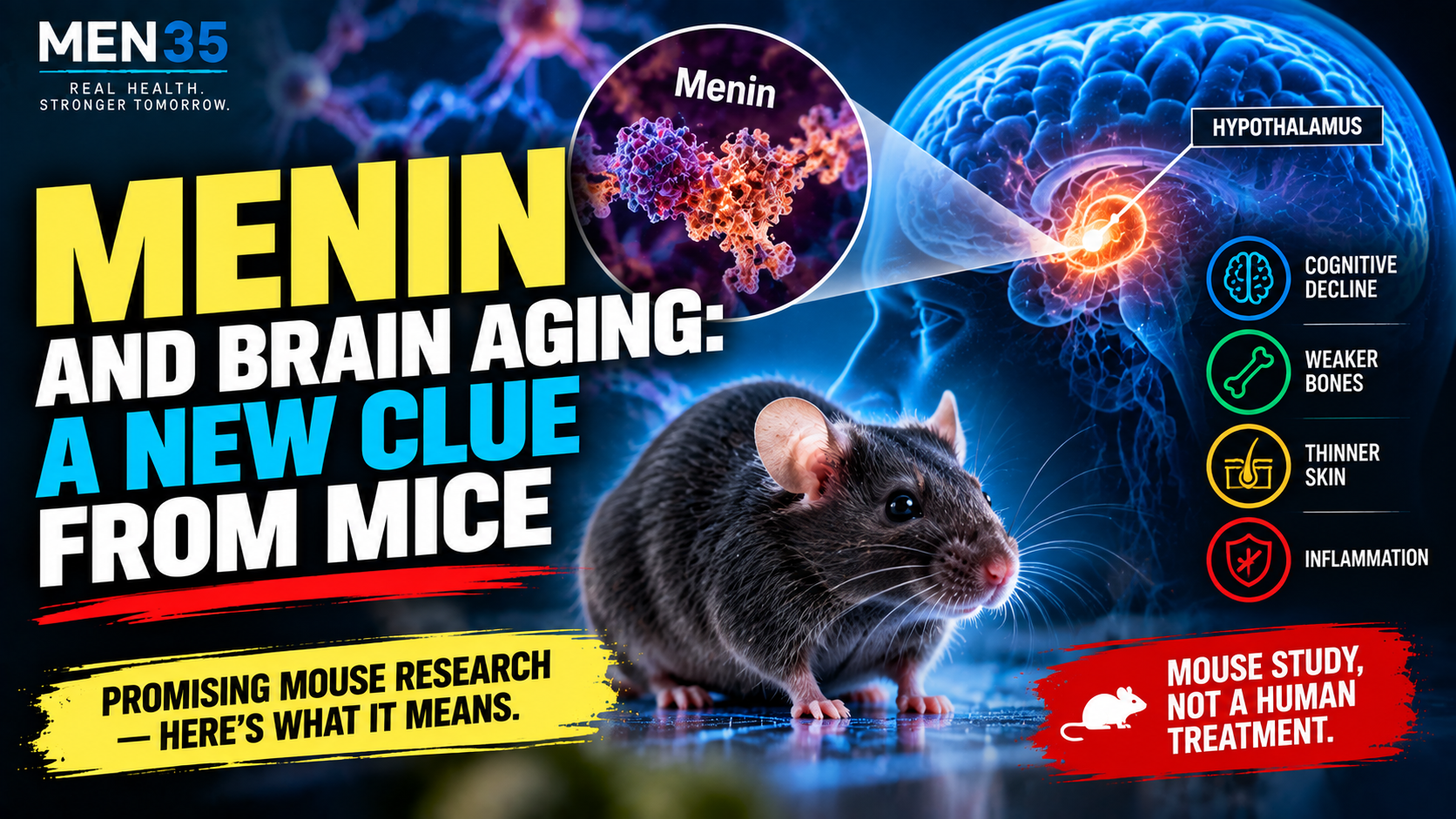
A brain protein called Menin may be involved in the aging process. Research in mice found that Menin levels declined in part of the hypothalamus with age, while restoring the protein improved several age-related changes. The finding is scientifically interesting—but it is still mouse research, not a validated human anti-aging treatment.
𝗞𝗘𝗬 𝗕𝗘𝗡𝗘𝗙𝗜𝗧𝗦
• Explains what Menin is and why researchers are interested in it • Shows how the hypothalamus may influence aging throughout the body • Separates mouse findings from proven human treatments • Explains the connection between Menin, inflammation and cognition • Shows why this research matters for future longevity science
𝗧𝗛𝗘 𝗕𝗥𝗔𝗜𝗡 𝗣𝗥𝗢𝗧𝗘𝗜𝗡 𝗕𝗘𝗛𝗜𝗡𝗗 𝗧𝗛𝗘 𝗦𝗧𝗨𝗗𝗬
Researchers at Xiamen University investigated Menin, a protein involved in regulating gene expression and cellular processes.
Their focus was the hypothalamus—a small but important brain region involved in metabolism, hormone regulation and other functions.
In mice, Menin levels in specific hypothalamic neurons declined with age. The researchers found that reduced Menin was associated with increased hypothalamic inflammation and several features of aging.
𝗪𝗛𝗘𝗡 𝗠𝗘𝗡𝗜𝗡 𝗙𝗘𝗟𝗟, 𝗔𝗚𝗜𝗡𝗚 𝗦𝗜𝗚𝗡𝗔𝗟𝗦 𝗔𝗣𝗣𝗘𝗔𝗥𝗘𝗗
The researchers used genetically modified mice to reduce Menin in specific hypothalamic neurons.
These mice developed several aging-related changes, including reduced bone mass, thinner skin, changes in muscle, increased inflammation and impaired performance on several cognitive tests.
They also had a shorter lifespan than control mice.
This does not prove that Menin decline causes human aging.
It does, however, give researchers a biological mechanism worth investigating.
𝗥𝗘𝗦𝗧𝗢𝗥𝗜𝗡𝗚 𝗠𝗘𝗡𝗜𝗡 𝗖𝗛𝗔𝗡𝗚𝗘𝗗 𝗧𝗛𝗘 𝗣𝗜𝗖𝗧𝗨𝗥𝗘
The most interesting part came when researchers restored Menin expression in the hypothalamus of old mice using gene-delivery technology.
After treatment, the mice showed improvements in several measured aging-related characteristics, including bone mass, skin thickness, inflammation and performance on cognitive and balance tests. The intervention also extended lifespan in the experimental mice.
The study also linked Menin to D-serine metabolism. D-serine supplementation improved some cognitive outcomes in aged mice, suggesting another possible pathway connecting the hypothalamus with brain function.
𝗧𝗛𝗘 𝗛UMAN 𝗖AVEAT 𝗜S 𝗛𝗨𝗚𝗘
This is where the headlines can get ahead of the science.
The research was performed in mice.
The Menin-restoration experiment used targeted gene delivery into the hypothalamus—not a commercially available supplement or routine medical treatment.
There is currently no evidence that increasing Menin in humans will reverse aging, extend lifespan or restore cognition.
The researchers themselves describe important unanswered questions about how Menin declines, how the pathway works and whether it can eventually be translated into useful therapies.
𝗪𝗛𝗬 𝗠𝗘𝗡𝟯𝟱 𝗦𝗛𝗢𝗨𝗟𝗗 𝗖𝗔𝗥𝗘
The bigger story is not a new supplement.
It is the possibility that the brain may play a more important role in coordinating whole-body aging than previously appreciated.
The hypothalamus connects neural, metabolic and inflammatory signals. Understanding how those systems interact could eventually reveal new approaches to preserving cognitive and physical function.
But that research is still developing.
𝗪𝗛𝗔𝗧 𝗧𝗛𝗜𝗦 𝗦𝗧𝗨𝗗𝗬 𝗗𝗢𝗘𝗦 𝗡𝗢𝗧 𝗣𝗥𝗢𝗩𝗘
It does not prove that:
• Menin supplements can slow aging • D-serine is an anti-aging treatment • Menin restoration works in humans • Brain aging can currently be reversed • Menin manipulation is safe as a human therapy • Men over 35 should attempt to alter this pathway
Those would be very different claims from what the mouse experiments actually tested.
𝗠𝗘𝗡𝟯𝟱 𝗧𝗔𝗞𝗘𝗔𝗪𝗔𝗬
Menin is an intriguing piece of the aging puzzle.
In mice, declining Menin in the hypothalamus was associated with inflammation, cognitive decline and other aging-related changes. Restoring the protein improved several of those measures.
For now, though, this is experimental mouse biology—not a human longevity treatment.
𝗧𝗛𝗘 𝗕𝗢𝗧𝗧𝗢𝗠 𝗟𝗜𝗡𝗘
The most valuable longevity discoveries often begin with mechanisms that are not yet treatments.
Menin is one of them.
The science raises an important question about how the brain coordinates aging throughout the body. Whether that discovery eventually becomes useful for humans remains to be established.
For informational purposes only. This is not medical advice — consult a doctor before changing medication, supplements or training.