Anti-aging · Study
Midlife Growth-Hormone Signaling Slowed Mouse Aging Modestly
Fight Aging! Newsletter, September 21st 2026 · 04/10/2026 · added by men35 desk
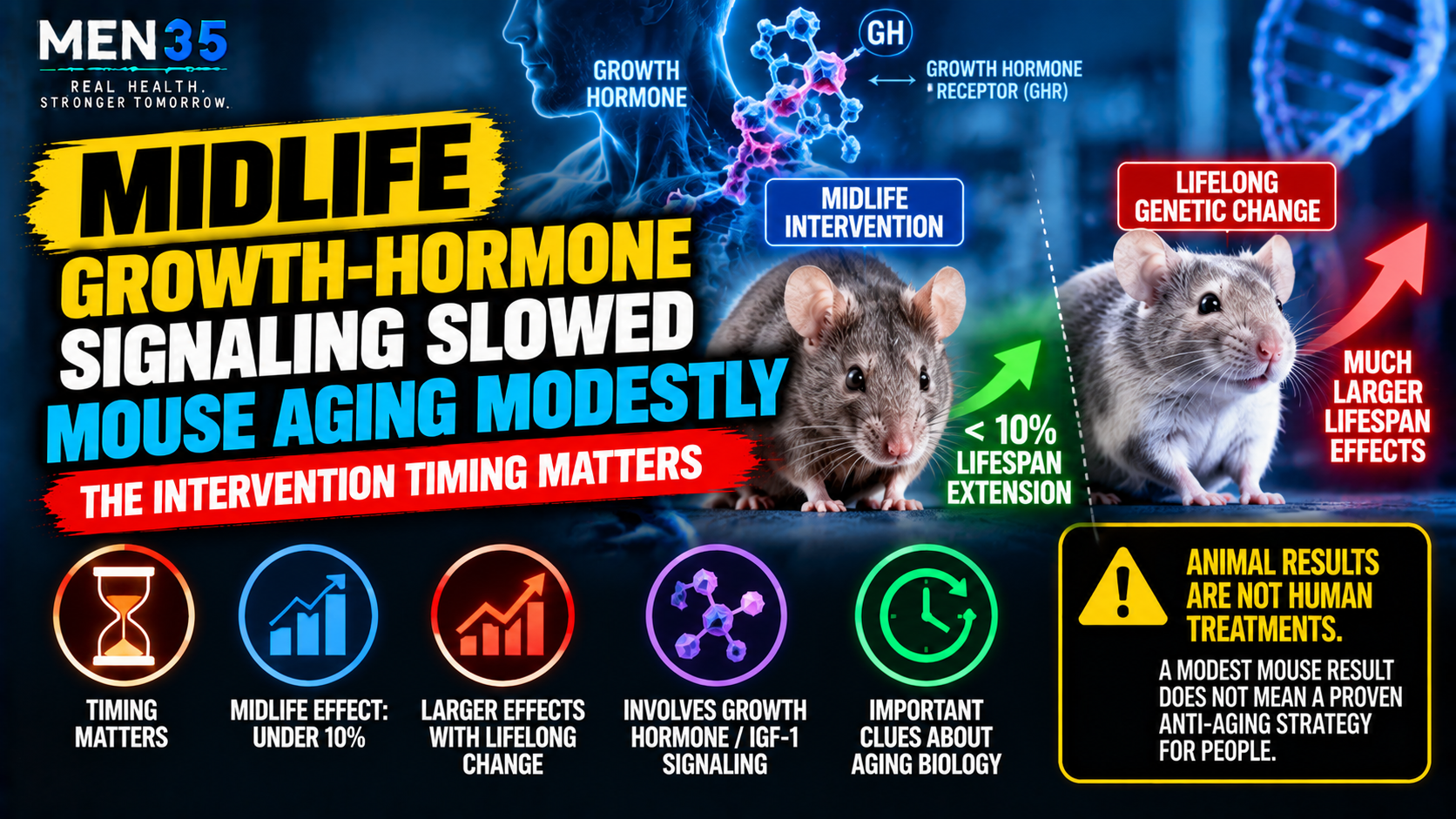
A mouse study suggests that reducing growth-hormone signaling during midlife may slow some aspects of aging. But the effect was modest when the intervention began in midlife, while much larger lifespan effects were seen when the genetic change was present throughout life. The distinction matters: timing can dramatically change the outcome in animal longevity research.
𝗞𝗘𝗬 𝗕𝗘𝗡𝗘𝗙𝗜𝗧𝗦
• Shows why intervention timing matters in aging research • Separates midlife treatment from lifelong genetic changes • Explains the role of growth-hormone signaling • Highlights the limits of mouse longevity studies • Provides an example of why animal results should not become human treatment claims
𝗪𝗛𝗔𝗧 𝗧𝗛𝗘 𝗦𝗧𝗨𝗗𝗬 𝗙𝗢𝗨𝗡𝗗
Researchers studied mice in which the growth hormone receptor could be removed at different stages of life.
The underlying idea is well established in aging research: reduced growth-hormone/IGF-1 signaling has been associated with longevity in several animal models.
But this study asked a more practical question:
What happens if the intervention begins during midlife rather than being present from early development?
𝗧𝗜𝗠𝗜𝗡𝗚 𝗖𝗛𝗔𝗡𝗚𝗘𝗗 𝗧𝗛𝗘 𝗥𝗘𝗦𝗨𝗟𝗧
According to the September 21 Fight Aging! report, removing growth-hormone-receptor signaling during midlife produced a relatively small lifespan extension—less than 10%.
The much larger longevity effects occurred in animals carrying the genetic change throughout life.
That difference is important.
An intervention that changes biology from early life is not equivalent to introducing the same change after decades of normal growth-hormone signaling.
𝗪𝗛𝗬 𝗚𝗥𝗢𝗪𝗧𝗛 𝗛𝗢𝗥𝗠𝗢𝗡𝗘 𝗠𝗔𝗧𝗧𝗘𝗥𝗦
Growth hormone influences growth, metabolism, body composition and the activity of the IGF-1 pathway.
Reducing this signaling can produce longevity-related effects in some animal models, but growth hormone also has important physiological functions.
That makes the question more complicated than simply asking whether “less growth hormone is better.”
𝗧𝗛𝗘 𝗔𝗡𝗧𝗜-𝗛𝗬𝗣𝗘 𝗟𝗘𝗦𝗦𝗢𝗡
This study is a useful reminder that when an intervention begins can matter as much as what the intervention does.
A genetic alteration maintained throughout an animal's life cannot automatically be compared with a therapy started in a 50-year-old human.
And a modest lifespan effect in midlife mice does not establish that manipulating growth-hormone signaling will extend human lifespan.
𝗪𝗛𝗔𝗧 𝗧𝗛𝗘 𝗥𝗘𝗦𝗘𝗔𝗥𝗖𝗛 𝗗𝗢𝗘𝗦 𝗡𝗢𝗧 𝗦𝗔𝗬
The study does not establish that:
• Growth-hormone suppression extends human lifespan • Adults should lower growth-hormone activity • Growth-hormone receptor drugs are longevity treatments • Lifelong genetic effects can be reproduced safely in adults • Lower IGF-1 is universally better for healthy aging
Growth-hormone signaling has legitimate roles in normal physiology, so manipulating it should not be treated as a general wellness strategy.
𝗠𝗘𝗡𝟯𝟱 𝗧𝗔𝗞𝗘𝗔𝗪𝗔𝗬
The most interesting finding may be the size of the difference.
Changing growth-hormone signaling in midlife produced only a modest lifespan effect compared with lifelong genetic alteration.
For longevity research, that is an important reality check: results depend on timing, biology and experimental design.
𝗧𝗛𝗘 𝗕𝗢𝗧𝗧𝗢𝗠 𝗟𝗜𝗡𝗘
Growth-hormone signaling remains an important longevity research pathway, but this mouse study does not provide a human anti-aging treatment.
For MEN35 readers, the lesson is simple: impressive lifelong genetic results should not be presented as if the same intervention could simply be started in midlife and produce the same outcome.
For informational purposes only. This is not medical advice — consult a doctor before changing medication, supplements or training.