Anti-aging · Study
Aging on a Chip: Could Human Tissue Models Close the Mouse-to-Human Gap?
Lifespan, 6 September 2026 · 15/09/2026 · added by men35 desk
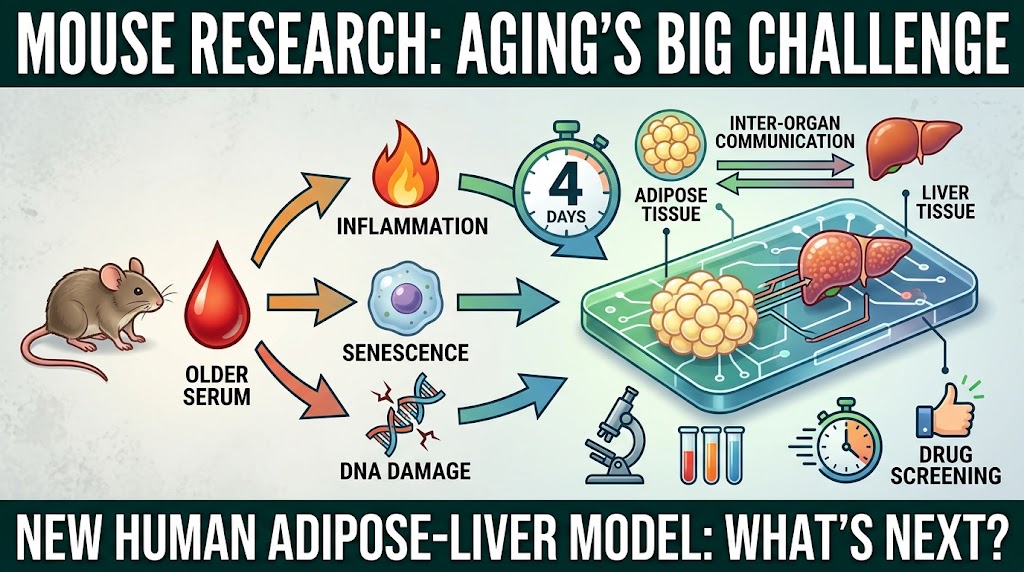
Many discoveries in longevity research begin in animals, but one of the biggest challenges in aging science is determining whether findings in mice will translate to humans. A new study published in Nature Biomedical Engineering offers a different approach: studying aging in interconnected human tissues grown in a laboratory microphysiological system. Researchers developed a model linking human white adipose tissue and liver tissue and exposed it to serum from younger and older human donors. Serum from older donors—aged 62 and above—induced several aging-associated changes in the tissue model, including inflammation, altered glucose and lipid metabolism, cellular senescence, and oxidative DNA damage. For comparison, the researchers used serum from younger donors aged 21–34. Some of these changes appeared in as little as four days, allowing researchers to study biological processes that normally unfold over decades. The model also showed that signals associated with aging in fat tissue could influence the liver, highlighting the importance of communication between organs. This approach could make early drug research more relevant to human biology than relying exclusively on animal models or isolated cells. It may help scientists identify mechanisms, biomarkers, and potential treatments before moving into human studies. However, an aging-on-a-chip model is still a preclinical research tool. It does not reproduce the full complexity of a living human, and results from the system do not establish that a drug will extend human lifespan or improve health in people. Benefits / Key Takeaways More human-relevant research: Uses human-derived tissue models to investigate aging biology. Connects multiple organs: The white adipose tissue–liver model allows researchers to study inter-organ communication. Accelerates early testing: Aging-associated changes were observed in as little as four days. Studies real biological signals: Serum from older and younger donors helped researchers examine how the circulatory environment affects tissue aging. Identifies potential biomarkers: The model may help discover measurable indicators of aging and rejuvenation. Supports drug discovery: Researchers can use these systems to screen potential interventions before human trials. Reduces reliance on animal-only evidence: Human tissue models may help address some limitations of translating findings from rodents. Does not replace clinical trials: A laboratory model cannot establish human safety, efficacy, or lifespan extension.
For informational purposes only. This is not medical advice — consult a doctor before changing medication, supplements or training.