Health · Study
NEW PROTEIN RESEARCH: WHY MUSCLE BECOMES MORE IMPORTANT WITH AGE
PubMed — 2026 Network Meta-Analysis of Protein Supplements and Resistance Training · 20/09/2026 · added by men35 desk
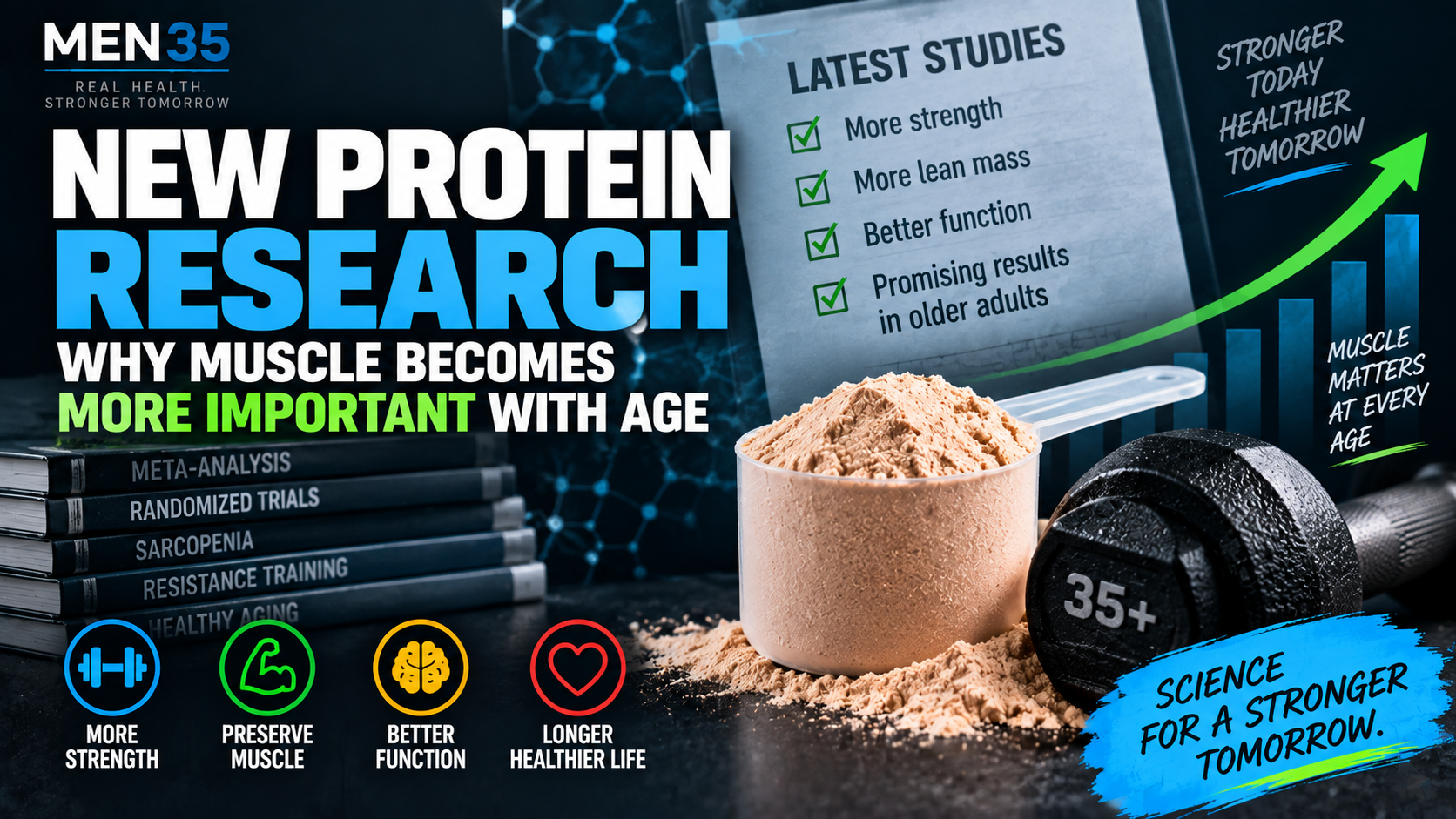
New research continues to examine how protein supplementation interacts with exercise, age and muscle loss. For men 35+, the message is less about chasing the highest possible protein intake and more about combining adequate protein with resistance training consistently. 𝗞𝗘𝗬 𝗕𝗘𝗡𝗘𝗙𝗜𝗧𝗦 • Understand what recent protein research is actually showing. • See why resistance training remains essential. • Learn where whey fits into the evidence. • Understand why research in older adults cannot automatically be applied to every 35-year-old man. 𝗧𝗛𝗘 𝗡𝗘𝗪 𝗘𝗩𝗜𝗗𝗘𝗡𝗖𝗘 Recent systematic reviews continue to support a connection between adequate protein intake, resistance exercise and preservation or improvement of lean mass. A 2026 network meta-analysis examined protein-based supplements combined with strength training in healthy adults. Across 78 studies and 4,755 participants, whey protein showed a statistically significant benefit compared with placebo for both strength and fat-free mass. However, the study also illustrates an important point: different protein supplements produced different results, and the findings should not be interpreted as proof that one supplement is universally necessary. 𝗔 𝟮𝟬𝟮𝟲 𝗟𝗢𝗢𝗞 𝗔𝗧 𝗣𝗥𝗢𝗧𝗘𝗜𝗡 Another recent 2026 analysis examined different protein types, doses and populations in resistance-training studies. Across 36 randomized trials involving 1,552 participants, whey protein showed the largest estimated effect on lean body mass within that particular network. But network meta-analysis results are comparative statistical estimates. They should not be turned into a claim that whey is essential or that other protein sources cannot support muscle. 𝗧𝗛𝗘 𝗔𝗚𝗜𝗡𝗚 𝗤𝗨𝗘𝗦𝗧𝗜𝗢𝗡 The research becomes particularly relevant as men get older. A 2026 systematic review and network meta-analysis of protein or protein-related supplementation combined with resistance or functional exercise examined older adults with sarcopenia or high risk of sarcopenia. The review suggested that adding protein supplementation to exercise may improve muscle strength and appendicular muscle mass. But the researchers also rated the certainty of much of the evidence as very low and emphasized that no single supplementation strategy could be considered definitively superior. That distinction matters. Research can show a signal without proving a universal answer. 𝗪𝗛𝗔𝗧 𝗧𝗛𝗜𝗦 𝗠𝗘𝗔𝗡𝗦 𝗙𝗢𝗥 𝗠𝗘𝗡 𝟯𝟱+ You do not need to wait until 65 to care about muscle. But you also do not need to treat yourself like a frail older adult simply because you turned 35. The smarter strategy is preventive: Maintain resistance training. Eat adequate protein. Stay physically active. Avoid prolonged periods of inactivity. Keep body composition and metabolic health in check. Use protein supplements when they make adequate intake easier. 𝗧𝗛𝗘 𝗕𝗜𝗚𝗚𝗘𝗥 𝗣𝗜𝗖𝗧𝗨𝗥𝗘 The most useful finding across the research is not that one protein powder is magical. It is that protein works within a larger system. Resistance exercise provides the stimulus. Adequate protein supports the remodeling process. Consistency determines whether the strategy continues long enough to matter. 𝗠𝗘𝗡𝟯𝟱 𝗧𝗔𝗞𝗘𝗔𝗪𝗔𝗬 Muscle loss is not something that suddenly begins at retirement age. The habits that protect muscle later in life are built much earlier. For men 35+, adequate protein and resistance training are two practical pieces of that long-term strategy. 𝗧𝗛𝗘 𝗕𝗢𝗧𝗧𝗢𝗠 𝗟𝗜𝗡𝗘 The latest research supports protein as part of a muscle-preservation strategy, particularly when combined with resistance training. But the evidence does not justify turning every protein supplement into a miracle product. Train first. Eat well. Use supplements strategically.
For informational purposes only. This is not medical advice — consult a doctor before changing medication, supplements or training.