Mind · News
NEW SLEEP RESEARCH: WHERE DOES MAGNESIUM FIT?
Journal of Dietary Supplements / Taylor & Francis — 2026 systematic review · 21/09/2026 · added by men35 desk
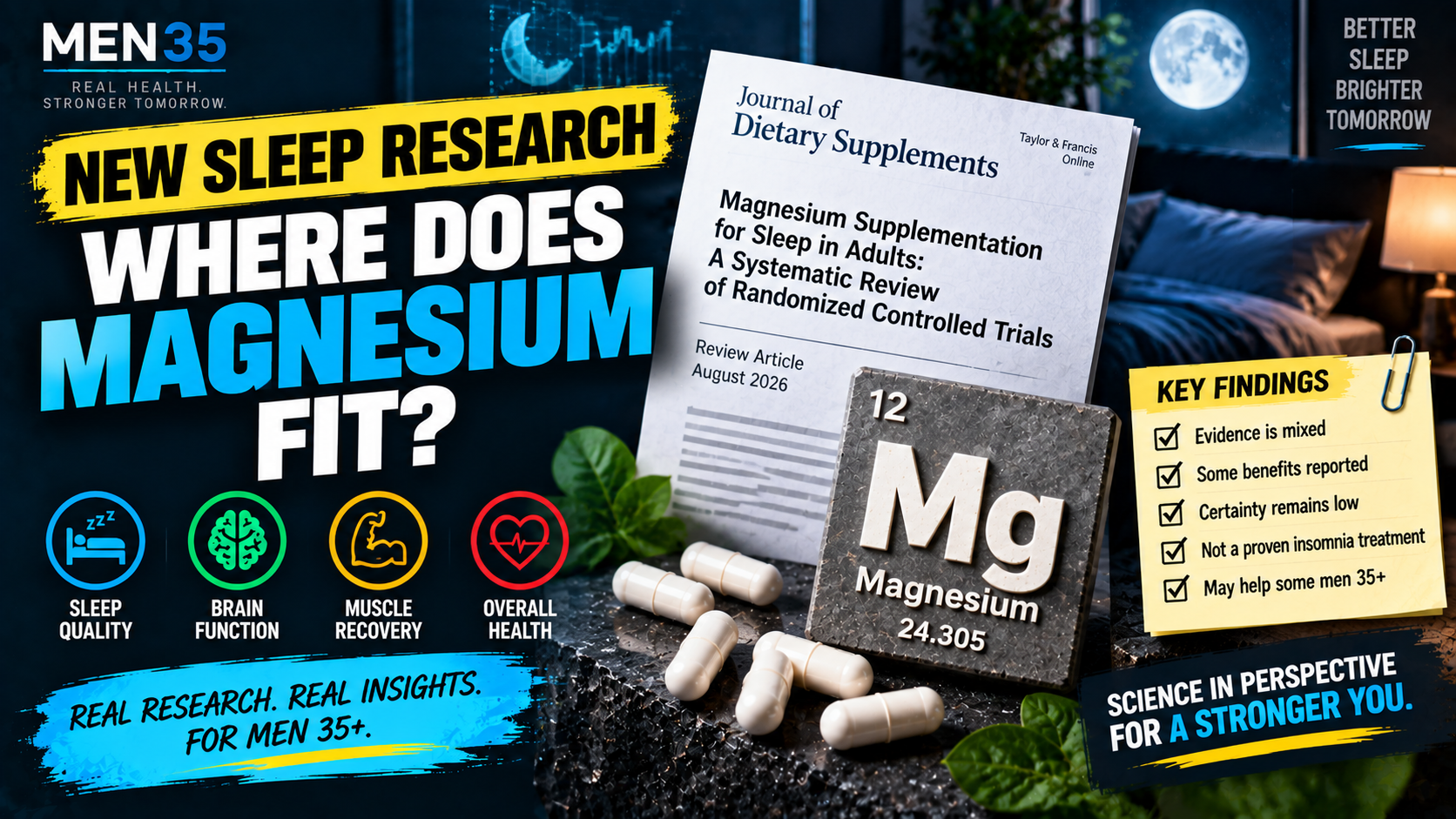
Magnesium is frequently promoted as a natural sleep solution. New research published in 2026 provides a useful reality check: magnesium may help some people with selected sleep outcomes, but the overall evidence remains inconsistent and uncertain. 𝗞𝗘𝗬 𝗕𝗘𝗡𝗘𝗙𝗜𝗧𝗦 • Understand what the newest review found • See why magnesium isn't a proven insomnia treatment • Understand the difference between subjective and objective sleep results • Learn what this means for men 35+ • Put magnesium in the right place within a broader sleep strategy 𝗧HE NEW REVIEW A systematic review published online in August 2026 examined randomized controlled trials of oral magnesium supplementation for sleep in adults. The review included 12 randomized trials focused on sleep, insomnia or poor sleep, plus three additional trials involving sleep disturbances related to cramps or movement conditions. The researchers found substantial variation in magnesium forms, doses, treatment durations, populations and sleep measurements. That makes one simple conclusion difficult. 𝗧HE RESULTS WERE MIXED Some trials reported improvements in selected subjective sleep outcomes. Others found no clear magnesium-specific benefit. Results also differed depending on how sleep was measured. That distinction matters. Someone reporting that they “slept better” is providing useful information—but it isn't equivalent to an objective measurement from polysomnography or research-grade actigraphy. The review found inconsistencies across subjective measures, EEG, actigraphy, consumer wearables and physiological markers. 𝗧HE CERTAINTY WAS LOW Perhaps the most important finding wasn't a dramatic improvement. It was uncertainty. The review rated the certainty of evidence as low or very low. The authors concluded that current evidence does not support routine oral magnesium supplementation as a treatment for insomnia, although modest benefits for selected subjective outcomes may occur in some adults. For MEN35 readers, that's a useful distinction. Magnesium may have a role. The research hasn't established exactly how large that role is—or who benefits most. 𝗪HY DOES MAGNESIUM STILL MATTER? Because magnesium itself is not questionable. It is an essential mineral involved in numerous physiological processes, including nerve function, muscle function and energy metabolism. The uncertainty concerns the additional benefit of taking magnesium supplements specifically to improve sleep. Those are two different questions. 𝗪HAT SHOULD MEN 35+ DO? If sleep is poor, start with the fundamentals: • Consistent sleep and wake times • Adequate physical activity • Sensible caffeine timing • Limiting alcohol, particularly near bedtime • A dark, cool sleep environment • Addressing persistent snoring or possible sleep apnea • Seeking professional help for ongoing insomnia Magnesium can be considered as part of the nutrition conversation, particularly when dietary intake is inadequate. But it shouldn't distract from more established approaches to sleep problems. 𝗪HAT ABOUT MAGNESIUM GLYCINATE? Glycinate is heavily marketed for sleep. However, the 2026 review did not establish one magnesium formulation as definitively superior. No single form can currently be presented as a proven sleep solution. That means MEN35 should be cautious with claims such as “best magnesium for sleep” unless a specific claim is supported by appropriate comparative evidence. 𝗠𝗘𝗡𝟯𝟱 𝗧𝗔𝗞𝗘𝗔𝗪𝗔𝗬 The newest evidence doesn't kill the magnesium-and-sleep idea. It puts it in perspective. Some people may experience modest improvements, but the evidence is inconsistent and the certainty remains low. That's very different from saying magnesium is a proven insomnia treatment. 𝗧𝗛𝗘 𝗕𝗢𝗧𝗧𝗢𝗠 𝗟𝗜𝗡𝗘 Magnesium belongs in the conversation about nutrition and sleep—but not at the center of it. For men 35+, fix the fundamentals first. Consider magnesium when there is a nutritional reason to do so, and don't mistake supplement marketing for clinical evidence.
For informational purposes only. This is not medical advice — consult a doctor before changing medication, supplements or training.