Health · Video
The Fat-Loss Blueprint After 35: Lose Fat Without Sacrificing Muscle
Paul Saladino MD · 30/10/2026 · added by men35 desk
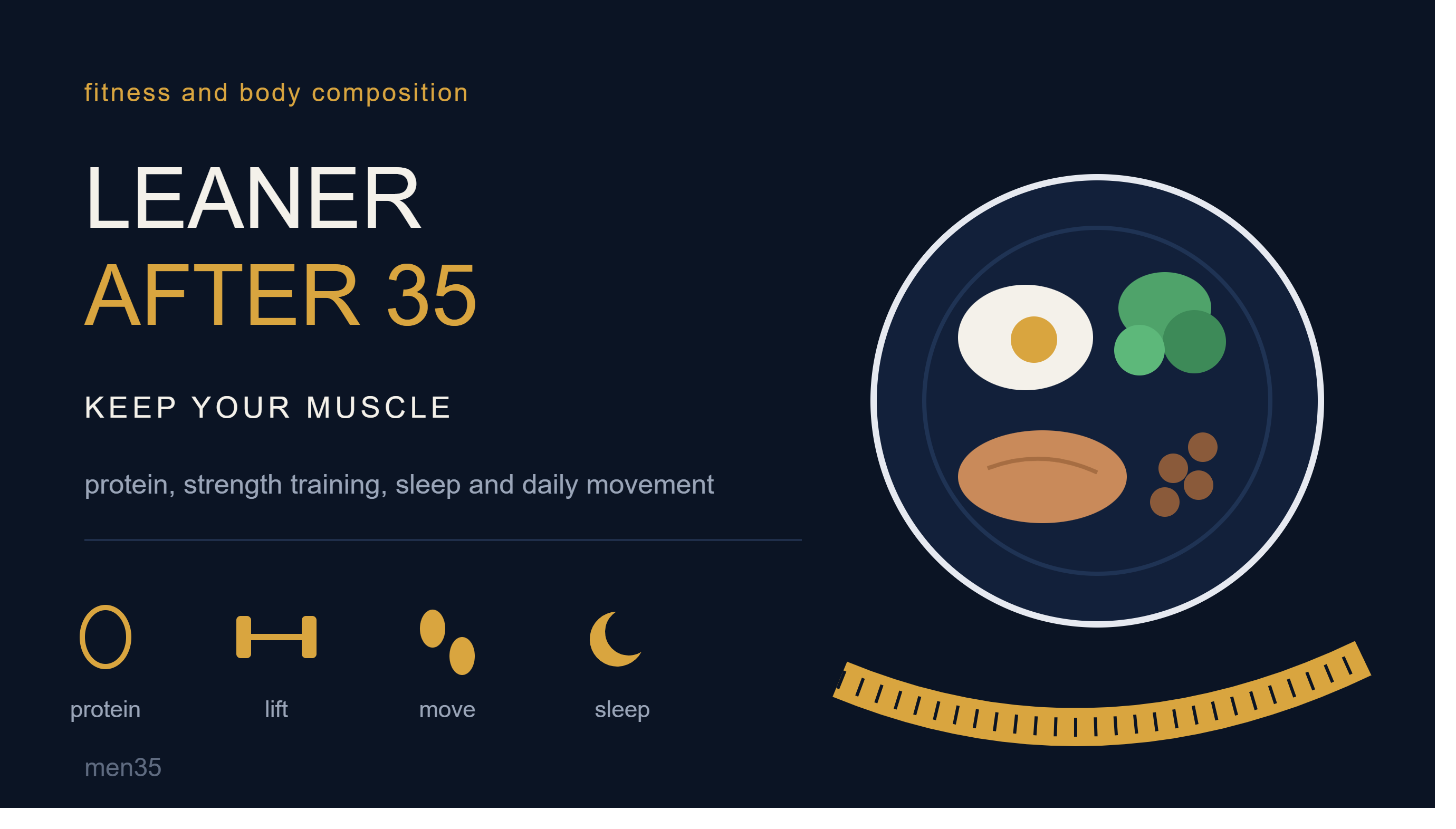
You don’t necessarily need to count every calorie to get leaner after 35. But you do need habits that help regulate appetite, maintain muscle, and keep your overall food intake appropriate. Here is what the evidence supports—and what it doesn’t.
𝗞𝗘𝗬 𝗕𝗘𝗡𝗘𝗙𝗜𝗧𝗦
• Build a sustainable eating routine without obsessive calorie tracking. • Prioritize protein to support muscle maintenance. • Choose filling, minimally processed foods more often. • Combine resistance training with regular daily movement. • Avoid extreme diets and unrealistic body-fat targets.
𝗪𝗛𝗬 𝗦𝗧𝗔𝗬𝗜𝗡𝗚 𝗟𝗘𝗔𝗡 𝗖𝗔𝗡 𝗙𝗘𝗘𝗟 𝗛𝗔𝗥𝗗𝗘𝗥 𝗔𝗙𝗧𝗘𝗥 𝟯𝟱
The familiar pattern is easy to recognize: work gets busier, sleep becomes less consistent, daily movement drops, and waist measurements slowly increase.
Age alone does not make fat loss impossible. But changes in routine, muscle mass, appetite, sleep, and activity can make weight management more challenging.
In the video, Paul Saladino describes maintaining a lean physique without strict calorie counting. His approach emphasizes protein, less-processed foods, strength training, sleep, and daily activity.
Those habits are worth examining. However, his personal body-fat percentage is not proof that the same routine will produce the same result for everyone.
𝗦𝗧𝗔𝗥𝗧 𝗪𝗜𝗧𝗛 𝗙𝗢𝗢𝗗𝗦 𝗧𝗛𝗔𝗧 𝗞𝗘𝗘𝗣 𝗬𝗢𝗨 𝗙𝗨𝗟𝗟
Meals built around protein-rich foods, vegetables, fruit, legumes, and other fibre-rich foods can make it easier to manage hunger.
Examples include eggs with whole-grain toast and fruit, chicken with vegetables and rice, or lentils with yoghurt and salad.
Minimally processed foods are useful, but “natural” does not automatically mean low-calorie. Nuts, oils, honey, and fatty cuts of meat can all contribute substantial energy. You do not have to eliminate them; portion sizes and your overall dietary pattern still matter.
The World Health Organization recommends a varied diet built around fruits, vegetables, legumes, whole grains, and other nutritious foods, with limits on excess free sugars, salt, and unhealthy fats.
𝗣𝗥𝗢𝗧𝗘𝗜𝗡 𝗛𝗘𝗟𝗣𝗦 𝗣𝗥𝗢𝗧𝗘𝗖𝗧 𝗠𝗨𝗦𝗖𝗟𝗘
Muscle becomes particularly important when your goal is to lose fat without looking or feeling weaker.
A 2018 meta-analysis of 49 studies found that increasing protein intake helped support gains in muscle mass and strength during resistance training. The analysis suggested that benefits for muscle mass tended to level off at around 1.6 grams of protein per kilogram of body weight per day, although individual needs vary.
You do not need to copy someone else’s exact protein target. Eggs, fish, poultry, dairy, soy foods, beans, and lentils can all contribute.
If you have kidney disease or another condition that affects protein requirements, seek individualized advice from a qualified healthcare professional.
𝗧𝗥𝗔𝗜𝗡 𝗧𝗢 𝗞𝗘𝗘𝗣 𝗧𝗛𝗘 𝗠𝗨𝗦𝗖𝗟𝗘 𝗬𝗢𝗨 𝗛𝗔𝗩𝗘
Resistance training gives your body a reason to retain and build muscle. Aim to train the major muscle groups consistently, increasing the challenge gradually as your strength improves.
Walking and other aerobic activities support cardiovascular health and help increase energy expenditure. You do not have to choose between lifting weights and cardio; they serve complementary purposes.
For general health, the CDC recommends at least 150 minutes of moderate-intensity aerobic activity per week and muscle-strengthening activity on at least two days.
𝗬𝗢𝗨 𝗗𝗢𝗡’𝗧 𝗡𝗘𝗘𝗗 𝗔 𝗣𝗘𝗥𝗙𝗘𝗖𝗧 𝗗𝗜𝗘𝗧
A sustainable routine should fit your actual life. You can eat carbohydrates, enjoy meals with family, and include foods you like while still working toward a body-composition goal.
Calorie tracking can help some people understand portions, but it is not mandatory for everyone. If you prefer not to track, pay attention to meal structure, hunger, fullness, portion sizes, and trends in your waist measurement and body weight.
Remember that foods such as honey and fruit juice can contribute free sugars; they are not metabolically exempt simply because they are considered natural.
𝗠𝗘𝗡𝟯𝟱 𝗧𝗔𝗞𝗘𝗔𝗪𝗔𝗬
Build meals around nutritious foods, eat enough protein, lift weights, move regularly, and protect your sleep. Track progress using several measures rather than chasing a body-fat number that may be inaccurate or unnecessary.
𝗕𝗢𝗧𝗧𝗢𝗠 𝗟𝗜𝗡𝗘
Staying lean without strict dieting is possible for some people, but it is not effortless or guaranteed. You may not need to count every calorie, yet your overall energy intake still matters. Focus on habits you can maintain for years—not a short-lived transformation.
For informational purposes only. This is not medical advice — consult a doctor before changing medication, supplements or training.